Efficient capacity management is the cornerstone of urgent care success. As fixed-cost operations, urgent care centers must maximize provider utilization to drive profitability, reduce wait times, and improve patient satisfaction. By leveraging data, optimizing scheduling, and aligning services with patient demand, centers can enhance throughput and deliver superior care experiences.
Why Does Capacity Management Matter in Urgent Care?
Effective capacity management transforms operational efficiency into financial growth. When urgent care centers balance provider schedules, visit types, and patient flow, they can reduce bottlenecks, handle more visits per day, and increase revenue.
Key benefits include:
-
Lower wait times and improved patient satisfaction
-
Better utilization of fixed resources (providers, rooms, and staff)
-
More predictable revenue through optimized scheduling
-
Increased profitability from high-value visit prioritization
What Are the Best Strategies for Capacity Optimization?
1. Efficient use of provider time is essential. Prioritizing high-demand services during peak periods maximizes revenue generation. This involves using visit type metrics to forecast demand accurately and optimize staffing.
2. Real-time data and predictive analytics enable urgent care centers to make informed decisions about staffing, scheduling, and service expansion. This data-driven approach ensures that resources are allocated efficiently, reducing wait times and improving patient satisfaction.
3. Service expansion is a strategic move to make your practice relevant for a broader patient population. By expanding beyond urgent care visits -- whether that be new testing or service offerings aligned with patient demand or exploring membership programs -- you may even be able to introduce new revenue streams within your existing capacity.
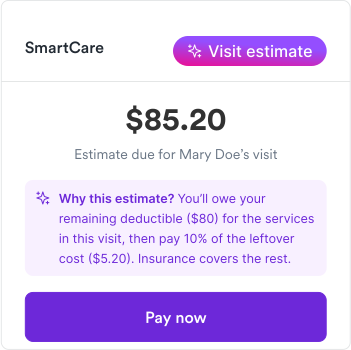
4. Streamlining the booking and payment processes is crucial. Simplifying these processes makes it easier for patients to access services and pay their bills. This can be achieved by minimizing steps in online payment systems and ensuring accurate, transparent billing.
How Can Urgent Care Centers Implement Capacity Management Effectively?
1. Analyze visit volumes by type over specific periods helps identify peak and off-peak times. Using tools to create heat maps, urgent care centers can adjust service availability to match provider supply with patient demand.
2. Optimize schedules by avoiding arbitrary buffer times and ensuring online booking is available throughout operating hours is also vital.
3. Implement telehealth and curbside visits can effectively manage peak times and reduce in-clinic congestion.
4. Staff training and management are crucial for handling full waiting rooms and processing patients effectively. Consistent policies on accepting patients near closing time prevent patient dissatisfaction and ensure smooth workflow. Data-driven decision-making helps in staffing, scheduling, and service expansion. Regularly reviewing and adjusting operations based on real-time data keeps the center agile and responsive to changing demand patterns.
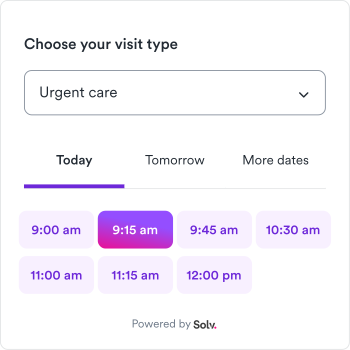
Leveraging Solv’s Visit Type Scheduling can help manage which visits are possible, ensuring high-value visits are prioritized during peak times. This approach can increase average revenue per visit and improve patient satisfaction. Additionally, regularly reviewing staffing models ensures they align with patient demand, leading to higher margins per visit and day.
Your Urgent Care Capacity Management Checklist
| Goal | Action Step | Outcome |
|---|---|---|
| Optimize End-of-Day Appointments | Keep scheduling open until closing; add after-hours telehealth | Capture late-day visits and increase revenue |
| Increase Predictability | Use predictive analytics to forecast and staff efficiently | Fewer bottlenecks and smoother patient flow |
| Streamline Booking & Payment | Simplify booking and offer digital payment | Better patient experience, fewer no-shows |
| Invest in Smart Software | Use platforms designed for urgent care (like Solv) | Operational efficiency and higher patient satisfaction |
Effective capacity management is a cornerstone of successful urgent care operations. By implementing these strategies, urgent care centers can enhance throughput, improve patient satisfaction, and increase profitability. Embrace these best practices to stay ahead in the competitive urgent care landscape and deliver exceptional patient experiences.
Curious to learn more? Watch our June 2024 webinar on capacity management, with insights from Disney Parks. Watch on-demand.
FAQs About Capacity Management in Urgent Care
Q1: How often should urgent care centers review their capacity data?
At least monthly. Frequent review helps identify shifting demand patterns and staffing inefficiencies before they impact profitability.
Q2: What tools can help with urgent care capacity management?
Tools like Solv Analytics, QGenda, or athenaOne offer real-time visibility into visit types, patient flow, and provider utilization.
Q3: How can urgent care centers reduce patient wait times?
By optimizing scheduling, using telehealth to offload simple cases, and adopting online pre-registration to reduce front-desk bottlenecks.
Q4: Is telehealth really profitable for urgent care centers?
Yes. It expands capacity without physical space and retains patients who prefer convenience, especially after-hours.