Urgent care near me
Sane-day doctor visits
Feel better faster. Get care today.
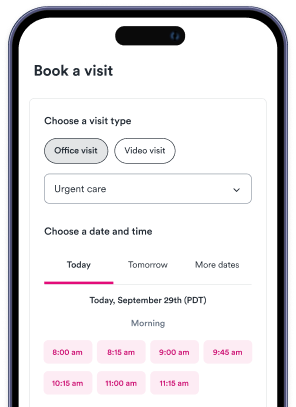
From the clinic or your couch. Find high quality, same-day urgent care for you and your kids. Book an urgent care visit today.

If you've ever stood at an urgent care front desk wondering whether your insurance will cover the visit, you are not alone. Health insurance billing can be confusing, and urgent care sits in a middle zone — it's not a routine primary care appointment, but it's not an emergency room either. Understanding what your plan actually covers before you go saves money and surprises.
If you're uninsured or paying a high out-of-pocket share, see our guide on how much urgent care costs without insurance — typical visit ranges, what drives costs up, and how to ask about self-pay discounts.
Insurance coverage rules are very different for urgent care and emergency rooms. Our comparison of urgent care vs. the ER explains when each setting is appropriate and how cost-sharing differs.
In most cases, yes. The Affordable Care Act (ACA) classifies urgent care as an essential health benefit, which means ACA-compliant health plans sold on the marketplace — as well as most employer-sponsored plans — are required to cover it.1 Coverage also extends to Medicaid and Medicare, though the specific cost-sharing rules differ by program.
The more important question is not whether your plan covers urgent care in principle, but what you will actually pay out of pocket — and that depends on several factors.
Insurance networks are groups of providers and facilities that have contracted rates with your insurer. Visiting an in-network urgent care center means your insurer has pre-negotiated lower rates, and you pay your standard copay or coinsurance. Going out-of-network typically means significantly higher cost-sharing — sometimes double or triple — and in some plan types like HMOs, out-of-network urgent care may not be covered at all except in true emergencies.2
Before you go, search your insurer's provider directory or call the number on your insurance card to confirm in-network status.
A deductible is the amount you pay for covered services before your insurance begins sharing costs. If you haven't met your annual deductible, you may owe the full allowed amount for the urgent care visit — even if it shows as "covered" on your plan. Once the deductible is met, you pay only your copay or coinsurance.1
Deductibles reset every January 1 for most plans, so early-year visits often carry higher out-of-pocket costs.
Some plans charge a flat copay for urgent care — typically $20–$75 — regardless of the total visit cost. Other plans use coinsurance, meaning you pay a percentage (commonly 20–30%) of the allowed amount after meeting your deductible. Check your plan's Summary of Benefits and Coverage (SBC) to know which applies.1
HMO (Health Maintenance Organization) plans typically require you to use in-network providers and may require a referral from your primary care physician even for urgent care. PPO (Preferred Provider Organization) plans usually allow you to see any urgent care provider, with lower costs for in-network visits.2 EPO plans are similar to HMOs but without the referral requirement. Always check your specific plan's rules.
Medicaid covers urgent care visits in all states, though coverage rules and cost-sharing vary by state. Copays for Medicaid beneficiaries are generally very low — often $0 to $4 per visit — or waived entirely for certain populations.3 If you're on Medicaid, bring your state Medicaid card and confirm the urgent care clinic accepts it before your visit.
Medicare Part B covers urgent care visits as outpatient services. In 2025, after meeting the Part B deductible ($257/year), you typically pay 20% of the Medicare-approved amount.4 Medicare Advantage (Part C) plans often have lower copays for urgent care, sometimes $0–$50 per visit. Check your specific plan's Evidence of Coverage document for details.
A few minutes of preparation can prevent billing surprises:
Insurance networks often treat urgent care and primary care visits differently. Understanding urgent care vs. primary care helps you choose the right setting for your needs and your wallet.
Even with insurance, high deductibles can leave you paying full cost for visits early in the year. how to save money on healthcare through self-pay covers practical strategies for keeping your out-of-pocket costs down.
Most urgent care centers offer self-pay or cash-pay discounts, typically 10–30% off the standard rate if you pay upfront.5 Federally Qualified Health Centers (FQHCs) offer care on a sliding-scale fee based on income. Some areas also have free clinics, community health centers, or telehealth options for lower-cost care.
For non-life-threatening conditions, urgent care is significantly cheaper than an ER visit even without insurance — average urgent care self-pay costs run $150–$280, compared to $1,000–$2,500+ at the emergency department.5
Most ACA-compliant plans must cover urgent care as an essential health benefit. However, the amount you pay varies by plan, and out-of-network visits may have higher cost-sharing or limited coverage. Always verify that the urgent care facility is in your plan's network before your visit.
Typical urgent care copays range from $20 to $75 with most employer or marketplace plans. Gold and Platinum plans tend to have lower copays; Bronze plans typically have higher cost-sharing. Your Explanation of Benefits (EOB) or plan documents will list the exact amount.
Emergency room visits generally have much higher cost-sharing — often a $250–$500+ copay or 20% coinsurance — compared to urgent care. The ACA also requires insurers to cover true emergencies at in-network cost-sharing rates even if you visit an out-of-network ER.
Yes. Medicaid covers urgent care visits in most states. Copays for Medicaid beneficiaries are generally very low or zero. Coverage rules vary by state, so check with your state's Medicaid program if you are unsure.
Medicare Part B covers urgent care visits as outpatient services. After meeting the Part B deductible ($257 in 2025), you typically pay 20% of the Medicare-approved amount. Medicare Advantage plans may have different, often lower, cost-sharing structures.
Possibly. If you haven't met your annual deductible, you may receive a bill after insurance processes the claim. Some services — such as lab work sent to an external facility — may be billed separately. Ask the front desk for a cost estimate before your visit and request itemized billing if anything looks incorrect.
If you find yourself going to urgent care without your insurance card, you can check for your insurance information by logging into your online portal through your insurance’s website. If you are unable to find your information through an online portal, you can call your insurance provider and get the information from them over the phone.
Yes, some urgent care clinics can turn you away if you are unable to pay. However, most urgent care clinics accept cash or credit cards. Some clinics may also offer payment plans or financial assistance programs for patients who can't afford to pay their bills in full.
From the clinic or your couch. Find high quality, same-day urgent care for you and your kids. Book an urgent care visit today.

Medically reviewed
View this article's sources and history, and read more about Solv's Content Mission Statement, editorial process, and editorial team.
Solv has strict sourcing guidelines and relies on peer-reviewed studies, academic research institutions, and medical associations. We avoid using tertiary references.
Solv’s team of medical writers and experts review and update our articles when new information becomes available.
Written by Solv Editorial Team
Medically reviewed by: Dr. Rob Rohatsch, MD
Edited by Solv Editorial Team
Edited by Solv Editorial Team
Edited by Solv Editorial Team
Edited by Solv Editorial Team
Edited by Solv Editorial Team
Edited by Solv Editorial Team
Edited by Solv Editorial Team
Edited by Solv Editorial Team
From the clinic or your couch. Find high quality, same-day urgent care for you and your kids. Book an urgent care visit today.