Urgent care near me
 Key points
- Under the Affordable Care Act, most private insurance plans must cover an annual flu shot with no copay, coinsurance, or deductible when you use an in-network provider.
- Medicare Part B covers one flu shot per flu season (and a second shot in the same calendar year if it falls in a different season) at no cost when the provider accepts assignment.
- All children through age 18 who are uninsured, underinsured, Medicaid-eligible, or American Indian/Alaska Native can get free flu shots through the federal Vaccines for Children (VFC) program.
- Uninsured adults can find free or low-cost flu shots at HRSA-funded community health centers, local public health departments, school-based clinics, and many employer or pharmacy programs.
- The CDC recommends most people get vaccinated in September or October, but getting a flu shot any time the virus is circulating still offers meaningful protection.

Yes, most people in the U.S. can get an annual flu shot at no out-of-pocket cost in 2026. The Affordable Care Act (ACA) requires nearly all private health plans to cover the flu vaccine as a preventive service with no copay or deductible when you stay in-network, and Medicare Part B, most Medicaid plans, and the Vaccines for Children program close most of the remaining gaps.1,2,3 If you are uninsured, federally funded community health centers, local public health departments, school clinics, and many pharmacy or employer programs offer free or sliding-scale flu shots.4,5
Who qualifies for a free flu shot?
The CDC recommends an annual flu vaccine for everyone 6 months and older, with rare exceptions.6 Because the ACA classifies the flu shot as a covered preventive service, most insured Americans qualify for one at no cost each season. Coverage at zero cost-sharing typically applies if:
- You have a non-grandfathered private health plan (most Marketplace, employer, and individual plans qualify) and use an in-network provider.2
- You have Medicare Part B and your provider accepts assignment.3
- You are enrolled in Medicaid or CHIP. As of October 2023, most adults with Medicaid and CHIP coverage are guaranteed all ACIP-recommended vaccines, including the flu shot, at no cost.7
- You are a child or teen age 18 or younger who is uninsured, underinsured, Medicaid-eligible, or American Indian/Alaska Native; you qualify for the Vaccines for Children (VFC) program.8
How does insurance cover flu shots?
Under Section 2713 of the Public Health Service Act (the ACA preventive services provision), non-grandfathered private plans must cover immunizations recommended by the CDC's Advisory Committee on Immunization Practices (ACIP) without cost-sharing.1 The seasonal flu vaccine is on that list every year.
What that means in practice:
- No copay, coinsurance, or deductible for the flu shot itself or the administration fee when you stay in-network.2
- Network matters. If you go to an out-of-network pharmacy or clinic, your plan can charge you. Always confirm the location is in-network before walking in.
- Both standard and high-dose formulations are covered. ACIP preferentially recommends high-dose, adjuvanted, or recombinant flu vaccines for adults 65 and older, and these are covered under the same preventive-care rules.9
- Children and adults are both covered. The preventive service rule applies regardless of age, including for dependents on a parent's plan.2
Where can you get a free flu shot without insurance?
Even without health coverage, free or very low-cost flu shots are widely available.
Community health centers (FQHCs)
HRSA funds more than 16,000 community health center sites across the country. These federally qualified health centers provide preventive care, including flu vaccines, on a sliding fee scale based on your income, and no one is turned away for inability to pay.4 You can locate the nearest center at findahealthcenter.hrsa.gov.
Pharmacies
Most national and independent pharmacies offer walk-in flu vaccinations. If you have insurance, the pharmacy will usually bill your plan directly so you pay nothing. If you do not have insurance, many pharmacies still run seasonal promotions or accept payment through state and local vaccine assistance programs.5
Employer programs
Many employers host on-site flu shot clinics or offer vouchers that cover the cost at partner pharmacies. Check with your HR or benefits team in early fall to see whether your workplace is running a clinic this season.5
School-based clinics
Many K-12 schools and universities host flu clinics each fall, sometimes in partnership with their local health department or a community provider. These clinics typically vaccinate students at no cost, and some are open to families.5
Public health departments
Your state or local health department can point you to free vaccination events at community centers, schools, places of worship, and pop-up clinics. Many departments operate their own clinics that vaccinate uninsured adults at no charge, especially during the September-to-November push.5
Does Medicare or Medicaid cover flu shots?
Medicare: Medicare Part B covers one seasonal flu shot per flu season at no cost when your provider accepts assignment. If a second flu season starts within the same calendar year, Medicare will also pay for a second shot in that new season.3 For adults 65 and older, this includes higher-dose, adjuvanted, and recombinant flu vaccines that ACIP preferentially recommends for this age group.9
Medicaid and CHIP: Children under 21 receive all ACIP-recommended vaccines through the Early and Periodic Screening, Diagnostic and Treatment (EPSDT) benefit. As of October 1, 2023, most adults with Medicaid or CHIP coverage are also guaranteed ACIP-recommended vaccines, including flu shots, with no cost-sharing.7 A small number of state Medicaid programs may still have nominal copays, so check with your state Medicaid office if you are unsure.
What should you bring to your appointment?
To keep your visit free and quick, bring:
- A government-issued photo ID.
- Your insurance card (or Medicare/Medicaid card). The provider needs this to bill your plan directly so you owe nothing.
- A list of current medications and known allergies, especially any prior vaccine reactions.
- Your immunization record, if you have one, so the new shot gets logged in the right place.
If you are uninsured, ask the clinic or pharmacy in advance which assistance program they use (VFC for kids, state-funded adult programs, or sliding-fee billing). Confirming this before you arrive helps avoid a surprise bill.
When is the best time to get a flu shot?
The CDC recommends that most people be vaccinated in September or October, ideally by the end of October.6 Some specific exceptions:
- Children 6 months through 8 years who need two doses should get the first dose as soon as vaccine is available so the second dose can be given at least four weeks later.6
- Adults 65 and older and pregnant people in the first or second trimester during July-August should generally wait until September or October to maximize protection through the peak of flu season.6
- Pregnant people in their third trimester during July or August can be vaccinated then to help protect newborns who are too young to be vaccinated.6
If you miss the September-October window, do not skip the shot. Flu activity often runs from October through May, and vaccination still offers meaningful protection any time virus is circulating.6
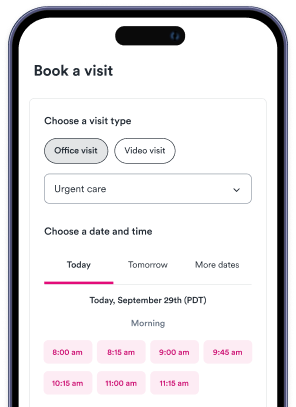
Need a flu shot today? Solv helps you find walk-in flu vaccinations near you, including many that take your insurance.
Frequently asked questions
Can I get a free flu shot at urgent care?
Yes, in most cases. If the urgent care clinic is in-network with your private insurance plan, the flu shot itself is covered as a preventive service with no copay or deductible. Some clinics may charge a visit fee if you are also being treated for another problem, so ask up front whether the visit is billed as preventive-only. Medicare Part B also covers flu shots at urgent care providers that accept assignment.
Do free flu shots include the high-dose senior version?
Yes. ACIP preferentially recommends higher-dose, adjuvanted, or recombinant flu vaccines for adults 65 and older, and these are covered under Medicare Part B and ACA preventive-care rules with no cost-sharing when you use a participating provider. If a pharmacy or clinic tries to charge you extra for the high-dose vaccine, ask whether they billed your plan correctly.
Can undocumented immigrants get free flu shots?
Yes. Federally funded community health centers (FQHCs) provide care, including vaccines, regardless of immigration status and on a sliding fee scale. Many local public health departments and school-based clinics also vaccinate adults and children without asking about immigration status. Children up to age 18 can get free flu shots through the Vaccines for Children program regardless of citizenship.
What if my insurance doesn't list the flu shot as preventive?
If you have a non-grandfathered plan purchased on or after September 2010, the ACA requires it to cover ACIP-recommended vaccines, including the flu shot, with no cost-sharing in-network. A small number of grandfathered plans are exempt. If your plan charged you for an in-network flu shot, call the number on your insurance card and ask for the claim to be reprocessed under the preventive-services benefit.
Is the nasal spray flu vaccine also free?
Yes. The live attenuated nasal spray vaccine (FluMist) is an ACIP-recommended option for non-pregnant people ages 2 through 49, so it is covered under the same ACA preventive-services rules as the injectable flu vaccine. Availability varies by pharmacy and provider, so call ahead if you specifically want the nasal spray.
Can I get a free flu shot and a COVID-19 booster at the same visit?
Yes. The CDC says flu and COVID-19 vaccines can be given at the same visit, and both are covered as preventive services with no cost-sharing under most private plans, Medicare Part B, and most Medicaid programs. Bundling them into one visit is a common way to save a trip during fall vaccination season.

How we reviewed this article
Medically reviewed
View this article's sources and history, and read more about Solv's Content Mission Statement, editorial process, and editorial team.
9 sources
Solv has strict sourcing guidelines and relies on peer-reviewed studies, academic research institutions, and medical associations. We avoid using tertiary references.
- CMS. Background: The Affordable Care Act's New Rules on Preventive Care.
- HealthCare.gov. Preventive health services.
- Medicare.gov. Flu shots.
- HRSA. Find a Health Center.
- CDC. How to Pay for Adult Vaccines.
- CDC MMWR. Prevention and Control of Seasonal Influenza with Vaccines: ACIP Recommendations, 2025-26 Season.
- Medicaid.gov. Quality of Care: Vaccines.
- CDC. Vaccines for Children Program Eligibility. (VFC)
- CDC. Flu and People 65 Years and Older.
Solv’s team of medical writers and experts review and update our articles when new information becomes available.
September 12 2023
Written by Solv Editorial Team
Medically reviewed by: Dr. Rob Rohatsch, MD
August 26 2024
Edited by Solv Editorial Team
May 06 2026
Edited by Solv Editorial Team
May 19 2026
Edited by Solv Editorial Team
May 23 2026
Edited by Solv Editorial Team
May 27 2026
Edited by Solv Editorial Team
May 28 2026
Edited by Solv Editorial Team
June 03 2026
Edited by Solv Editorial Team