Urgent care near me
Sane-day doctor visits
Feel better faster. Get care today.
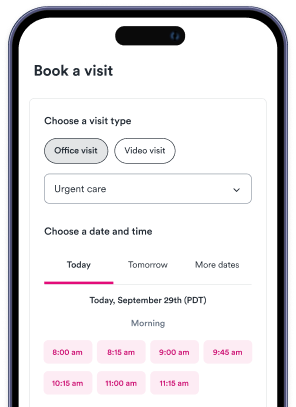
From the clinic or your couch. Find high quality, same-day urgent care for you and your kids. Book an urgent care visit today.
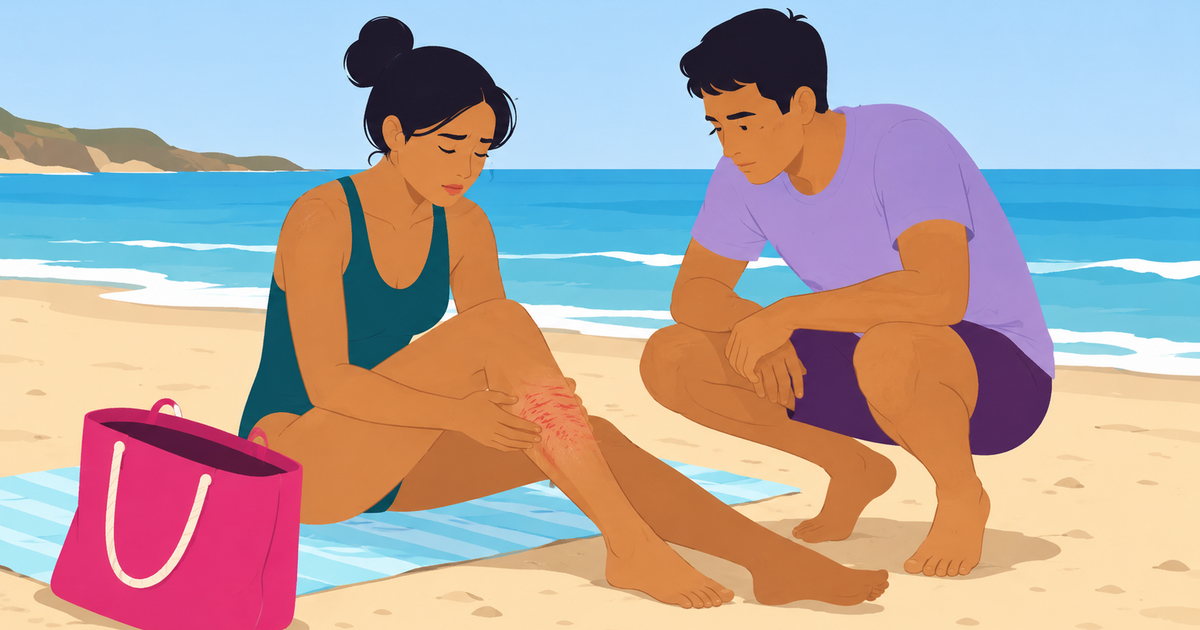
A jellyfish sting is painful, alarming, and almost always manageable with correct first aid on the beach. Most stings in U.S. coastal waters cause localized pain, a raised red welt, and itching that resolves within a few hours. The critical mistakes — rinsing with fresh water, rubbing the skin, or applying urine — are based on persistent myths rather than evidence. A 2025 systematic review published in PMC assessed the best available first aid treatments and found that heat application and proper rinsing offer the most consistent pain relief.
Jellyfish tentacles contain thousands of microscopic stinging cells called nematocysts. When the tentacle makes contact with skin, nematocysts discharge tiny barbed threads that inject venom. According to PMC research on jellyfish envenomation, the venom composition varies significantly by species, which is why no single treatment works optimally for all jellyfish stings. Most North American coastal jellyfish — moon jellies, lion's mane jellyfish, and sea nettles — cause painful but localized reactions. Box jellyfish, found primarily in Indo-Pacific waters, carry the most potent venom and can cause systemic reactions and, rarely, cardiac arrest.
The first priority is removing any visible tentacles without triggering additional venom discharge. Use a stick, credit card, or gloved hand — not bare fingers — to carefully lift off tentacles. Do not rub the area, which can spread nematocysts and activate additional stinging cells. Rinse the area with seawater, not fresh water — fresh water changes the osmotic environment around undischarged nematocysts and can trigger them to fire, increasing venom delivery. After removing tentacles and rinsing, apply heat. A randomized trial of 127 patients published in AAFP found that application of hot packs for 10 minutes reduced pain more effectively than cold packs. Hot water immersion (as hot as tolerable without burning) for 20 minutes is also well-supported by evidence.
Vinegar (acetic acid) is sometimes recommended for jellyfish stings because it inhibits nematocyst discharge in certain species, particularly box jellyfish. However, PMC research on jellyfish sting first aid found that vinegar can increase envenomation from Physalia species (Portuguese man o' war), which is one of the more common stinging creatures in U.S. Atlantic waters. Unless you can identify the jellyfish species with confidence, seawater rinsing followed by heat is the safer and more universally applicable approach. If you're stung by a box jellyfish (rare outside the Indo-Pacific), vinegar is appropriate first aid while waiting for emergency services.
Several widely repeated jellyfish sting treatments lack scientific support. Urinating on a sting has no evidence base — urine composition varies and may worsen envenomation. Applying alcohol, meat tenderizer, or baking soda directly to an active sting without first removing tentacles and rinsing with seawater may trigger additional nematocyst discharge. Rubbing the sting with sand is contraindicated because it activates undischarged nematocysts. PMC research on jellyfish management emphasizes that the quality of evidence across all first aid approaches is low, but seawater rinsing, tentacle removal, and heat have the most consistent support.
After completing first aid, over-the-counter pain relievers — ibuprofen or acetaminophen — help manage residual pain. Topical hydrocortisone cream can reduce inflammation and itching as the sting site heals over the following days. The skin welt and redness typically resolve within 1–2 weeks. Avoid scratching the affected area, which prolongs healing. If itching is significant, an OTC oral antihistamine like cetirizine can help reduce the allergic component of the skin reaction.
Go to the emergency room immediately if you develop difficulty breathing, difficulty swallowing, chest pain, a rapid or irregular heartbeat, widespread hives or swelling beyond the sting site, nausea or vomiting, dizziness or loss of consciousness, or severe pain that doesn't improve with first aid. These are signs of anaphylaxis or systemic envenomation — both medical emergencies. Go to urgent care (rather than the ER) for stings that cover a large area of the body, involve the eyes or mouth, are extremely painful despite home treatment, or show signs of infection after 24–48 hours (increasing redness, warmth, swelling, or pus).
Most jellyfish stings heal at home with proper first aid. If your sting is covering a large area, is near your eyes or mouth, or is not improving after a few hours, urgent care can evaluate the wound and provide prescription-strength pain relief or treatment. Find a nearby urgent care and get same-day care at https://www.solvhealth.com/.
Remove any visible tentacles using a stick, card, or gloved hand — not bare skin. Rinse the area with seawater (not fresh water). Apply heat — a hot pack, hot water immersion, or even hot sand — for 15–20 minutes. Over-the-counter pain relievers like ibuprofen or acetaminophen can help with pain. Do not rub the area or apply urine, alcohol, or fresh water.
It depends on the species. Vinegar (acetic acid) is effective for inhibiting nematocyst discharge from box jellyfish and some other species. However, research published in PMC shows that for Physalia (Portuguese man o' war), vinegar can increase envenomation. If you don't know the species, use seawater to rinse and skip the vinegar.
No. There is no scientific evidence that urine helps treat a jellyfish sting. Urine can vary in composition and may contain substances that worsen envenomation. This myth has persisted despite a lack of supporting evidence in any peer-reviewed research. Use seawater, heat, and OTC pain relief instead.
Most jellyfish sting pain resolves within 1–2 hours with proper first aid including heat application. The raised, red welt or rash that develops may persist for 1–2 weeks as the skin heals. Some species cause more severe or prolonged reactions. If pain is escalating rather than improving over the first hour, seek medical evaluation.
Seek emergency care immediately for difficulty breathing, swallowing, or speaking; widespread hives or swelling beyond the sting site; chest pain; nausea and vomiting; a rapid or irregular heartbeat; loss of consciousness; or severe pain that does not respond to first aid. These signs suggest anaphylaxis or systemic envenomation, which can be life-threatening.
From the clinic or your couch. Find high quality, same-day urgent care for you and your kids. Book an urgent care visit today.

Dr. Linda Halbrook is a Board-Certified Family Medicine physician with over 40 years of experience, dedicated to providing comprehensive care to patients across Texas. She retired from practice but currently serves on the Clinical Services Committee of CommonGood Medical, a non-profit organization serving the uninsured in Collin County.
Medically reviewed
View this article's sources and history, and read more about Solv's Content Mission Statement, editorial process, and editorial team.
Solv has strict sourcing guidelines and relies on peer-reviewed studies, academic research institutions, and medical associations. We avoid using tertiary references.
Solv’s team of medical writers and experts review and update our articles when new information becomes available.
Written by Solv Editorial Team
Medically reviewed by: Dr. Rob Rohatsch, MD
From the clinic or your couch. Find high quality, same-day urgent care for you and your kids. Book an urgent care visit today.