Urgent care near me
 Key points
- Poison ivy rash is caused by urushiol oil triggering allergic contact dermatitis — the rash itself is not contagious.
- Washing skin with soap and water within 10–15 minutes of exposure can significantly reduce rash severity or prevent it entirely.
- Mild-to-moderate rashes respond to OTC hydrocortisone cream, oral antihistamines, and calamine lotion.
- Severe or widespread rashes — especially near the eyes or on genitals — require prescription oral corticosteroids (prednisone).
- The rash 'spreads' because different skin areas react at different rates based on exposure dose — scratching doesn't spread it.
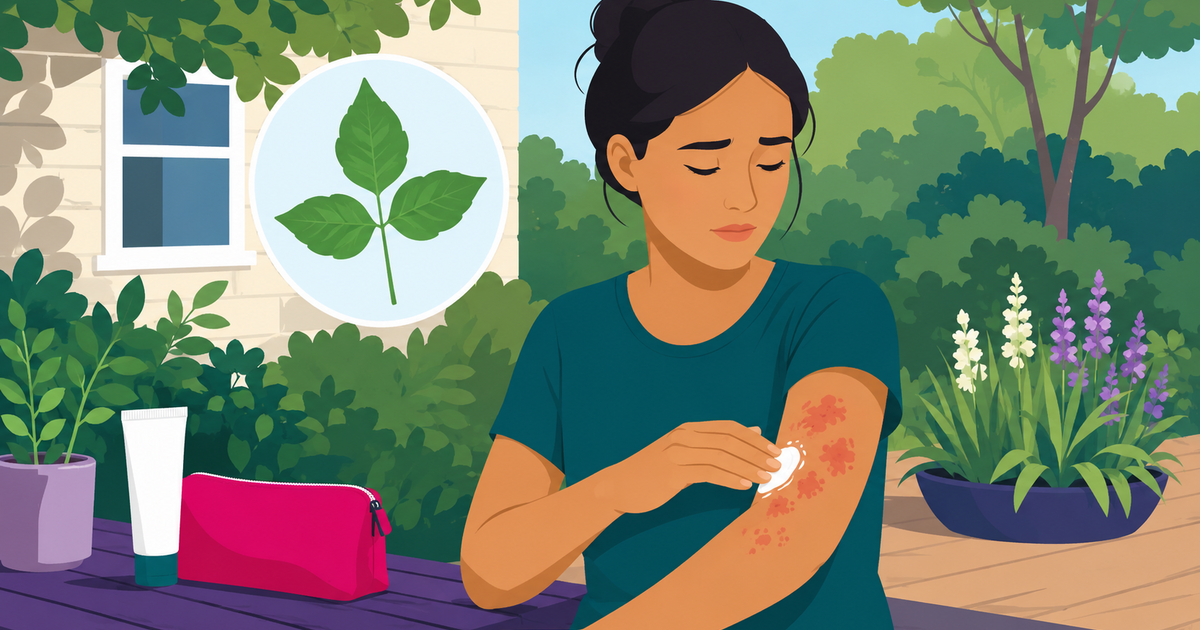
Every summer, millions of Americans brush up against poison ivy, poison oak, or poison sumac and end up with the familiar misery: relentless itching, streaky blisters, and skin that seems to get worse before it gets better. While the rash is rarely dangerous, it can be intensely uncomfortable — and in some cases, genuinely serious. Knowing what actually works, what doesn't, and when to see a provider can make a meaningful difference in how quickly you recover.
What causes the poison ivy rash?
The rash from poison ivy isn't caused by the plant itself — it's caused by urushiol, a clear, oily resin found in the leaves, stems, and roots of poison ivy, poison oak, and poison sumac. When urushiol contacts skin, it binds to skin proteins and triggers an immune response called allergic contact dermatitis. The body essentially mounts an attack on the urushiol-protein complex, producing the inflammation, itching, and blistering that characterize the rash.
Not everyone reacts the first time they're exposed. Sensitization typically requires an initial exposure, after which the immune system is primed to react. Subsequent exposures tend to produce increasingly severe reactions. The rash itself is not contagious — fluid from blisters does not contain urushiol and cannot spread the rash to another person or to other parts of your own body after the oil has been absorbed or washed off.
Urushiol is remarkably potent and persistent. It can remain active on tools, clothing, pet fur, and even under fingernails for months. Contact with these contaminated surfaces can cause a reaction long after the original outdoor exposure. It can also be released into smoke when poison ivy plants are burned — inhaling that smoke can cause serious respiratory irritation and should be treated as a medical emergency.
The most effective first step: wash immediately
The single most effective intervention for poison ivy exposure is washing the affected skin as soon as possible. The urushiol oil can be removed before it fully binds to skin proteins if you act quickly. Washing with soap and water within 10–15 minutes of exposure may prevent the rash entirely or significantly reduce its severity. After 30 minutes, some urushiol has typically begun to bind, but washing is still worth doing — it limits the extent of exposure.
Use lukewarm water and regular soap, and wash gently but thoroughly. Avoid scrubbing aggressively, which can drive the oil deeper into skin. Rinse under running water rather than soaking in a basin, which could spread the oil. Wash under your fingernails and clean any tools, shoes, or clothing that may have contacted the plant using gloves or tongs to avoid re-exposure.
Over-the-counter treatments that help
For mild-to-moderate reactions — localized rash, manageable itching, limited blistering — several over-the-counter options can provide meaningful relief:
- Hydrocortisone cream (1%): A topical corticosteroid that reduces inflammation and itching. Most effective when applied early and consistently. Available without a prescription in 1% strength.
- Calamine lotion: A soothing lotion that helps dry out oozing blisters and provides temporary itch relief. A time-tested option with a good safety profile.
- Oral antihistamines: Diphenhydramine (Benadryl) or cetirizine (Zyrtec) can reduce itching, particularly at night when scratching during sleep is a concern. Note that topical diphenhydramine should be avoided — it can cause its own sensitization reaction on broken skin.
- Colloidal oatmeal baths: Soaking in a lukewarm bath with colloidal oatmeal helps reduce inflammation and soothe irritated skin across larger affected areas.
- Cool compresses: Applying a cool, damp cloth to the rash for 15–30 minutes several times a day reduces inflammation and provides temporary relief.
Avoid hot water on the rash — heat worsens inflammation and intensifies itching. Also avoid topical anesthetics containing benzocaine, which can cause their own allergic reaction on sensitized or broken skin.
When OTC treatment isn't enough
Mild poison ivy responds well to the measures above. But certain presentations require prescription treatment, and trying to manage them at home typically extends suffering without benefit. Signs that you need to see a provider include:
- Rash covering a large portion of the body (more than 25–30% of body surface)
- Rash on the face, particularly near the eyes
- Rash involving the genitals or anal area
- Severe blistering with extensive weeping
- Rash that has not improved after 7–10 days of OTC treatment
- Signs of secondary bacterial infection: increasing pain, warmth, pus, swelling beyond the initial rash border
For severe reactions, providers typically prescribe a course of oral corticosteroids — most commonly prednisone — tapered over 2–3 weeks. A shorter course is associated with rebound of symptoms, which is why the full taper matters. Prescription-strength topical steroids may be used for more localized severe reactions, particularly on the face. If there is any sign of secondary infection, antibiotics may be added.
Understanding why the rash seems to "spread"
One of the most frustrating aspects of poison ivy is the perception that the rash keeps spreading after treatment begins. New patches appearing one to three days after the initial rash is common — and alarming — but usually not a sign of spreading in the true sense. Different areas of skin have different thicknesses. Thinner skin, like the inner wrist or eyelids, reacts faster and more intensely. Thicker skin on the palms or soles reacts more slowly and may not show symptoms until days later.
This staged appearance makes it look like the rash is progressing when in fact all the reactions were triggered by the same initial exposure. Once urushiol has been washed away and absorbed, no new spreading is occurring through scratching or blister fluid contact. Understanding this can reduce anxiety during recovery — you're not making it worse by normal movement, and the new patches will follow the same healing trajectory as the original ones.
When to visit urgent care
Urgent care is a convenient and appropriate option when your poison ivy rash is beyond what OTC treatments can handle. Providers at urgent care can prescribe oral prednisone for widespread or severe reactions, evaluate whether a rash has become secondarily infected, and prescribe antibiotics if needed. If the rash is near your eyes and causing significant swelling or visual changes, go to urgent care or the ER promptly — eye involvement from poison ivy can rarely cause serious complications. Solv can help you find a nearby urgent care, check real-time wait times, and book a same-day visit so you're not stuck suffering through a rash that has a straightforward fix.
Frequently asked questions
How long does poison ivy rash last?
Poison ivy rash typically peaks 3–5 days after exposure and resolves within 1–3 weeks. Treatment reduces severity and speeds healing.
Does scratching spread poison ivy?
No. Once urushiol has been absorbed or washed off, scratching cannot spread it. New patches appearing over several days are due to varying skin thickness affecting reaction rate.
What OTC products work for poison ivy?
Hydrocortisone 1% cream reduces inflammation; calamine lotion soothes and dries oozing; oral antihistamines help with itching; colloidal oatmeal baths are soothing.
When do I need prescription treatment for poison ivy?
See a provider if the rash covers a large area, is on your face, eyes, or genitals, if blisters are extensively weeping, or if OTC treatment hasn't helped after a week.
Can I get treatment for poison ivy at urgent care?
Yes. Urgent care can prescribe oral corticosteroids for severe reactions and assess whether a rash has become secondarily infected.

Dr. Linda Halbrook is a Board-Certified Family Medicine physician with over 40 years of experience, dedicated to providing comprehensive care to patients across Texas. She retired from practice but currently serves on the Clinical Services Committee of CommonGood Medical, a non-profit organization serving the uninsured in Collin County.
How we reviewed this article
Medically reviewed
View this article's sources and history, and read more about Solv's Content Mission Statement, editorial process, and editorial team.
5 sources
Solv has strict sourcing guidelines and relies on peer-reviewed studies, academic research institutions, and medical associations. We avoid using tertiary references.
- Poison ivy, oak, and sumac: information and advice. (March 31, 2023)
- Allergic contact dermatitis. (September 18, 2022)
- Poison plant exposures. (June 1, 2022)
- Contact dermatitis. (October 15, 2023)
- Weinberg L, et al.. Poison Ivy, Poison Oak, and Poison Sumac. JAMA. (2024)
Solv’s team of medical writers and experts review and update our articles when new information becomes available.
May 25 2026
Written by Solv Editorial Team
Medically reviewed by: Dr. Rob Rohatsch, MD
May 26 2026
Edited by Solv Editorial Team
June 03 2026
Edited by Solv Editorial Team