Urgent care near me
 Key points
- Sports physicals assess whether a young athlete is healthy enough to safely participate in organized sports
- The exam includes a medical history review and physical examination covering heart, lungs, vision, and musculoskeletal health
- Bring your school or league's specific physical form, plus a list of medications and any relevant medical records
- Urgent care sports physicals typically cost $20 to $50 for self-pay and take about 20 to 30 minutes
- Same-day appointments are usually available and athletes can often be cleared the same day paperwork is due
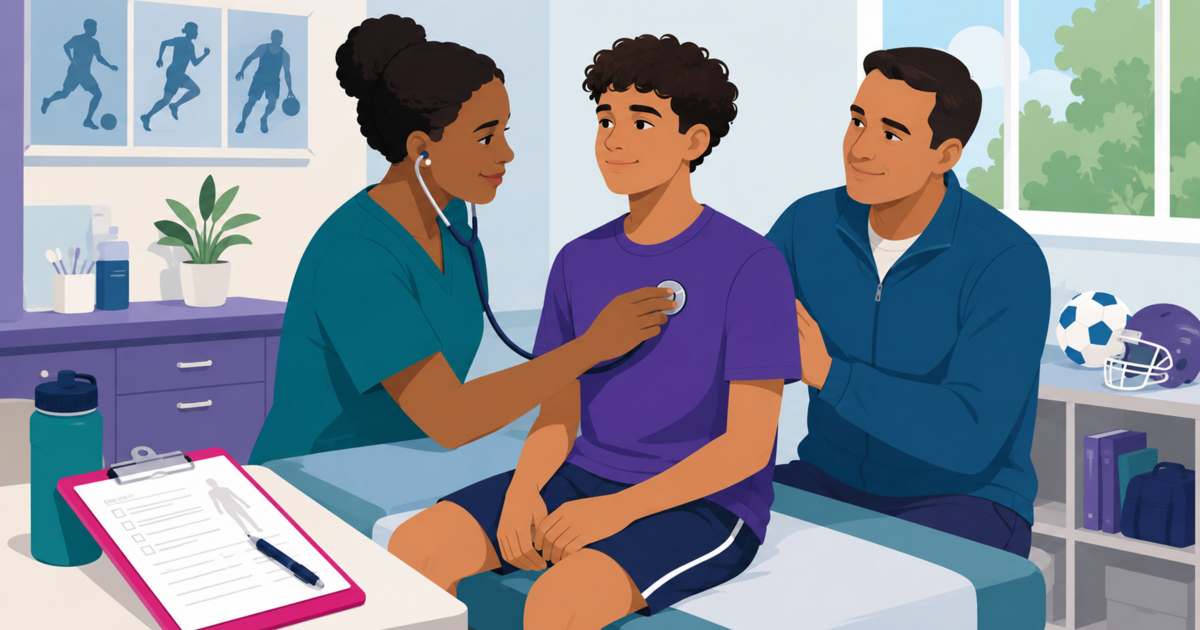
If your child plays a school sport or joins a recreational league, a sports physical — also called a pre-participation physical examination (PPE) — is almost certainly required before the season starts. Urgent care clinics are a convenient, affordable option for completing this requirement, often without the wait for a primary care appointment. Here's what the exam involves and what to bring.
What is a sports physical?
A sports physical is a focused medical evaluation designed to assess whether a young athlete is healthy enough to safely participate in organized sports. It is not a substitute for a full annual wellness exam, though it covers many of the same physical components. Most schools and sports organizations require a current sports physical — typically completed within the past 12 months — before allowing a student to practice or compete.
What does the exam cover?
The American Academy of Family Physicians recommends a standardized sports physical that includes two main parts:
Medical history review: The provider will ask about personal and family medical history, including:
- Prior injuries, surgeries, or hospitalizations
- Chronic conditions such as asthma, diabetes, or seizures
- History of concussion or repeated head injuries
- Family history of sudden cardiac death or heart conditions in relatives under age 50
- Current medications, supplements, or allergies
- Menstrual history for female athletes
Physical examination: The hands-on portion typically includes:
- Height, weight, and BMI
- Blood pressure and pulse
- Vision screening
- Heart and lung auscultation
- Abdominal exam
- Skin and lymph node check
- Musculoskeletal assessment of range of motion, strength, and prior injury sites
- Neurological screening
What to bring to the appointment
To make the visit efficient, bring the following:
- The school or league's sports physical form
- A list of current medications and dosages
- Any relevant medical records, especially for known heart conditions, recent concussion, or orthopedic issues
Call ahead or check the clinic's website to confirm they complete sports physicals and accept your school's specific form. Most urgent care providers are happy to fill out whatever paperwork you bring.
How long does it take and what does it cost?
A sports physical at urgent care typically takes 20 to 30 minutes. Many clinics offer flat-rate sports physicals ranging from $20 to $50 for self-pay patients — often less expensive than a specialist co-pay and faster than waiting for a primary care appointment. If your child has a concerning finding, the provider may refer you to a specialist, but the physical itself can still be completed and cleared for most conditions.
When to visit urgent care for a sports physical
Urgent care is a practical option when your child's season starts soon, your pediatrician has a long wait for non-sick appointments, or you want a quick, affordable clearance. Same-day appointments are typically available, and walk-ins are accepted at most locations. Athletes can often be cleared and back to practice the same day.
Frequently asked questions
Do urgent care clinics do sports physicals?
Yes. Most urgent care clinics offer sports physicals and can complete the clearance paperwork the same day. Call ahead to confirm they accept your school's specific form and whether an appointment is needed or walk-ins are welcome.
How long is a sports physical good for?
Most schools and sports organizations accept a sports physical completed within the past 12 months. Some states or organizations may have different requirements, so check with your school or league before scheduling.
Can a child fail a sports physical?
A provider may withhold clearance or recommend further evaluation if they detect something concerning, such as an irregular heartbeat, uncontrolled asthma, or a recent concussion. Most children are cleared without issue, but the physical is designed to catch conditions that could pose a safety risk during intense exercise.
Is a sports physical the same as an annual physical?
No. A sports physical is a focused exam for athletic participation and does not include all components of a well-child checkup, such as developmental screening or immunization review. Children should still see their pediatrician for annual wellness visits.
What age do kids need a sports physical?
Most school sports programs require a sports physical starting in middle school, around age 11 to 12, though some youth leagues require them earlier. Requirements vary by state and organization — check with your school's athletic department for the specific policy.

Dr. Linda Halbrook is a Board-Certified Family Medicine physician with over 40 years of experience, dedicated to providing comprehensive care to patients across Texas. She retired from practice but currently serves on the Clinical Services Committee of CommonGood Medical, a non-profit organization serving the uninsured in Collin County.
How we reviewed this article
Medically reviewed
View this article's sources and history, and read more about Solv's Content Mission Statement, editorial process, and editorial team.
5 sources
Solv has strict sourcing guidelines and relies on peer-reviewed studies, academic research institutions, and medical associations. We avoid using tertiary references.
- Preparticipation physical evaluation. American Academy of Family Physicians. (2019)
- Sports physicals. American Academy of Pediatrics. (October 2022)
- Preparticipation physical evaluations. American Academy of Pediatrics. (2019)
- Cardiac conditions and sports participation. American Academy of Pediatrics. (2022)
- Benefits of physical activity. CDC. (June 16, 2023)
Solv’s team of medical writers and experts review and update our articles when new information becomes available.
August 11 2026
Written by Solv Editorial Team
Medically reviewed by: Dr. Rob Rohatsch, MD
August 11 2026
Edited by Solv Editorial Team