Urgent care near me
 Key points
- Most nighttime belly pain in toddlers is caused by gas, constipation, or anxiety — and resolves with simple home measures.
- Pain location matters: right lower quadrant pain (especially with fever or vomiting) raises concern for appendicitis.
- Pain that comes in waves, causes a child to draw their knees to their chest, and is accompanied by 'currant jelly' stool (blood + mucus) may indicate intussusception — a medical emergency.
- Fever combined with belly pain and urinary symptoms suggests a UTI, which is common and treatable in toddlers.
- Any belly pain that wakes a sleeping child and intensifies over several hours warrants same-day medical evaluation.
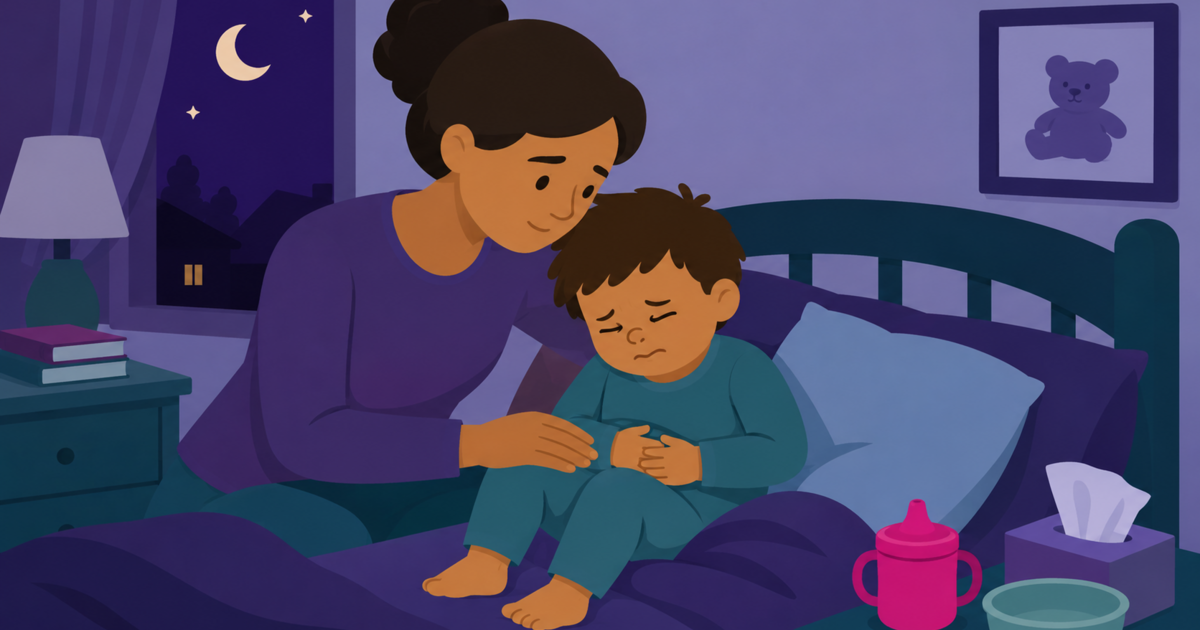
There are few things more unsettling than a toddler waking up at 2 a.m. clutching their stomach and crying in pain. In most cases, the cause is benign — gas, constipation, or the discomfort of a growing belly doing its overnight work. But some causes of nighttime abdominal pain in young children require urgent evaluation. Knowing the difference between reassuring signs and red flags can help you make a calm, informed decision about whether to watch and wait or head for care.
The most common causes: gas, constipation, and anxiety
The vast majority of belly pain episodes in toddlers — day or night — are functional, meaning they don't have a dangerous structural cause. Gas is the most frequent culprit. Toddlers swallow air when they eat, cry, or drink through sippy cups and straws, and trapped gas can cause sharp, crampy pain that's uncomfortable enough to wake them up. The pain typically resolves once the gas passes.
Constipation is another common cause. Toddlers who have hard stools, strain during bowel movements, or go several days without a bowel movement can develop cramping and diffuse abdominal discomfort. The pain tends to be located around the lower abdomen or around the belly button and may come and go. A warm bath, gentle belly massage, and dietary adjustments (more water, fiber-rich foods) are often enough to resolve it.
What surprises many parents is how often emotional stress and anxiety show up as physical belly pain in very young children. Even toddlers who can't articulate worry will sometimes experience stomachaches around transitions — a new sibling, starting daycare, or disruptions in routine. This kind of pain typically has no fever, no vomiting, and resolves when the child is distracted or comforted.
Pain location as a guide
One of the most useful clues in evaluating abdominal pain is where the pain is located. In toddlers, pinpointing location can be tricky — they often just point to their belly button regardless of where it actually hurts — but observing where they guard (tense their muscles) or where they flinch when touched can give you useful information.
- Around the belly button: Often gas, early appendicitis, or a viral illness affecting the gut.
- Lower right quadrant: Raises concern for appendicitis, especially if accompanied by fever, vomiting, or loss of appetite.
- Lower abdomen broadly: May suggest constipation, UTI, or bladder pain.
- Diffuse, hard to localize: Often a sign of gas, stomach flu (gastroenteritis), or a functional cause.
Pain that migrates from around the belly button to the lower right abdomen over several hours is a classic (though not universal) pattern for appendicitis and should always be evaluated promptly.
When it could be appendicitis
Appendicitis in toddlers is less common than in older children and adults, but it does occur — and it can be harder to recognize. Young children may not be able to describe the classic progression of symptoms, and their pain behavior can look similar to many other causes. According to the American Academy of Family Physicians, the rate of perforation (rupture) in young children is higher than in older patients, partly because the diagnosis is often delayed.
Signs that should raise concern for appendicitis in a toddler include: fever of 100.4°F or higher, vomiting that doesn't stop after one or two episodes, a child who walks hunched forward or refuses to stand upright, extreme tenderness when you gently press on the lower right abdomen, and pain that has been consistently worsening for more than a few hours rather than coming and going. If you see this combination, go directly to an emergency room — this is not a watch-and-wait situation.
Intussusception: a less common but serious cause
Intussusception occurs when one part of the intestine telescopes into an adjacent section, creating a blockage. It most commonly affects infants between 3 months and 3 years of age. The hallmark is intermittent, severe, cramping pain that causes the child to draw their knees to their chest and cry intensely — followed by periods of seeming calm or even sleepiness between episodes.
As intussusception progresses, the child may vomit (sometimes with bile) and eventually pass what is described as "currant jelly" stool — a mixture of blood and mucus that indicates intestinal injury. This is a medical emergency. If your toddler has cyclical, severe pain with these accompanying features, go to an emergency room immediately. Intussusception is typically diagnosed with ultrasound and treated with an air or contrast enema performed by a radiologist.
UTIs and belly pain in toddlers
Urinary tract infections are often overlooked as a cause of abdominal pain in very young children because toddlers typically can't describe the burning or urgency that older children report. Instead, a UTI in a toddler may present as fever with no obvious source, belly or lower back pain, crying during urination or diaper changes, foul-smelling or cloudy urine, and general irritability.
The CDC and pediatric health organizations note that UTIs are more common in girls and in uncircumcised boys under age 2, but can occur in any toddler. A urine sample — obtained by catheter in very young children who are not toilet-trained — can confirm the diagnosis. Treatment is straightforward with the appropriate antibiotic, and most children improve within a few days.
Red flags to know before morning
Not every episode of nighttime belly pain needs a 2 a.m. urgent care visit. Many episodes of gas pain resolve within 20–30 minutes, especially once the child passes gas or has a bowel movement. But certain signs should prompt you to seek care rather than wait for morning:
- Pain that woke the child from deep sleep and has not improved after 30–60 minutes
- Fever above 101°F alongside belly pain
- Vomiting more than twice, or vomit that appears green (bilious)
- Blood in stool — bright red, dark maroon, or the "currant jelly" appearance
- Pain that is clearly worsening rather than fluctuating
- A child who is inconsolably crying or cannot be distracted even briefly
- Pain localized to the lower right abdomen
If any of these are present, urgent evaluation is appropriate. Severe distress or suspected intussusception or appendicitis should go directly to the emergency department.
When to visit urgent care
If your toddler has belly pain that has lasted more than two hours without improvement, comes with fever or repeated vomiting, or seems to be getting worse rather than better, visit a nearby urgent care clinic for same-day evaluation. Urgent care providers can examine your child, order a urine test or imaging, and help determine whether the cause is something that can be managed at home or requires emergency care.
Frequently asked questions
Why does my toddler's stomach hurt at night?
Nighttime belly pain in toddlers most often stems from gas, constipation, or the natural slowing of digestion during sleep. Stress and anxiety — even in very young children — can also cause stomach pain that surfaces when they settle down for the night.
How can I tell if my toddler's stomach pain is serious?
Watch for red flags: pain that wakes them from deep sleep, fever over 101°F, vomiting more than twice, pain in the lower right side of the abdomen, blood in stool, or pain so intense the child can't be distracted or comforted. Any of these warrant prompt medical attention.
What does appendicitis feel like in a toddler?
In toddlers, appendicitis is harder to recognize than in older children. Look for pain that starts around the belly button and migrates to the lower right abdomen, accompanied by fever, loss of appetite, and vomiting. The child may walk hunched or refuse to let you press their abdomen.
Can a toddler have a UTI with belly pain?
Yes. Urinary tract infections in toddlers can present as belly pain rather than the classic burning during urination that older children describe. Other clues include fever, irritability, foul-smelling urine, or crying during diaper changes.
When should I take my toddler to urgent care for belly pain?
Take your toddler to urgent care if the pain has lasted more than two hours without improvement, if they have fever, persistent vomiting, blood in stool, or if the pain seems to be getting worse. If they seem in severe distress or pain is in the lower right abdomen, go directly to an emergency room.

Dr. Linda Halbrook is a Board-Certified Family Medicine physician with over 40 years of experience, dedicated to providing comprehensive care to patients across Texas. She retired from practice but currently serves on the Clinical Services Committee of CommonGood Medical, a non-profit organization serving the uninsured in Collin County.
How we reviewed this article
Medically reviewed
View this article's sources and history, and read more about Solv's Content Mission Statement, editorial process, and editorial team.
6 sources
Solv has strict sourcing guidelines and relies on peer-reviewed studies, academic research institutions, and medical associations. We avoid using tertiary references.
- American Academy of Pediatrics / HealthyChildren.org. Abdominal pain in children.
- American Academy of Pediatrics / HealthyChildren.org. Intussusception.
- American Academy of Family Physicians. Appendicitis: diagnosis and management. AAFP.
- Shaikh N, et al.. Prevalence of urinary tract infection in childhood: a meta-analysis. Pediatr Infect Dis J. (2008)
- National Institute of Diabetes and Digestive and Kidney Diseases. Constipation in children. NIH / NIDDK.
- CDC. Urinary tract infection.
Solv’s team of medical writers and experts review and update our articles when new information becomes available.
August 11 2026
Written by Solv Editorial Team
Medically reviewed by: Dr. Rob Rohatsch, MD
August 11 2026
Edited by Solv Editorial Team