Urgent care near me
Sane-day doctor visits
Feel better faster. Get care today.
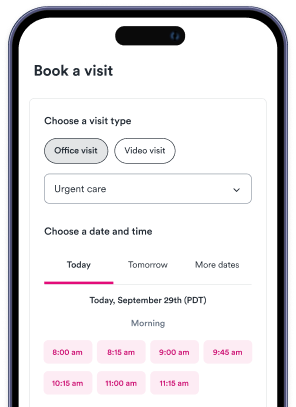
From the clinic or your couch. Find high quality, same-day urgent care for you and your kids. Book an urgent care visit today.

Yes — almost all urgent care centers have on-site X-ray equipment. X-ray imaging is one of the most fundamental diagnostic tools in acute care, and the vast majority of urgent care clinics offer it as a walk-in service. You do not need an appointment or a referral to get an X-ray at most urgent care locations.
X-ray imaging at urgent care is commonly used to evaluate:
X-ray does not visualize soft tissue injuries (ligament tears, muscle strains, cartilage damage) well. If a soft tissue injury is suspected, your provider may refer you for an MRI.
Urgent care typically performs standard plain film (two-dimensional) X-rays. Common views include:
Urgent care centers generally do not perform CT scans, MRIs, or fluoroscopy in-house, though some larger or hospital-affiliated locations do have CT capability. If advanced imaging is needed, the provider will refer you to a hospital or imaging center.
The procedure is straightforward and typically takes under five minutes:
Your treating provider will review the images and discuss findings with you during the same visit. In some urgent care systems, images are also sent to a radiologist for a formal read, which may be available within hours to a day.
Yes. The FDA states that the radiation dose from a diagnostic X-ray is low and that the benefits of medical imaging clearly outweigh the risks for medically indicated studies.1 To put it in perspective, a standard chest X-ray exposes you to approximately the same amount of radiation you receive naturally from the environment over about 10 days.
The FDA recommends that providers and patients consider imaging only when it is clinically indicated — a standard that trained urgent care providers apply when ordering studies.1 If you are pregnant or may be pregnant, tell your provider before the X-ray; the technician can take additional precautions to minimize fetal exposure.
Cost depends on the body part imaged, the number of views taken, and your insurance plan. Most major insurance plans — including commercial plans, Medicare, and Medicaid managed care — cover medically necessary X-rays at urgent care. You may owe a copay or have the cost applied to your deductible.
Out-of-pocket costs for urgent care X-rays are generally lower than the same imaging at a hospital outpatient department or emergency room. If you are uninsured or want a cost estimate, call the clinic’s billing team before your visit. Some urgent care centers post self-pay pricing online.
Urgent care is appropriate for stable injuries and non-emergency imaging needs. Go directly to the emergency room if you have:
These presentations require emergency stabilization, surgical backup, and imaging resources — including CT and fluoroscopy — beyond what most urgent care centers can provide.
If you need an X-ray for a non-emergency injury or symptom, urgent care is the fastest and most cost-effective option for most patients. Use Solv to find a walk-in urgent care center near you, verify they offer on-site imaging, and get same-day care.
Yes — almost all urgent care centers have on-site X-ray equipment and trained staff. X-ray is available as a walk-in service at most locations; no appointment or referral is required.
Yes — most urgent care centers can perform X-rays on pediatric patients. Lead shielding is used to protect the reproductive organs and other sensitive areas. The radiation dose from a single diagnostic X-ray is very low. For a stable suspected fracture without signs of nerve or vascular injury, urgent care is appropriate. If there is significant deformity, an open fracture, or neurological symptoms, go to the emergency room.
Always tell the technician if you are pregnant or may be pregnant — additional shielding can be applied, or imaging can be deferred. Also mention metal implants, pacemakers, or recent surgeries near the area being imaged, as these can affect image quality or positioning. Remove jewelry and metal accessories from the area being X-rayed before your scan.
In most cases, yes. Your treating provider reviews the images and discusses findings with you during the same visit. At some urgent care systems, images are also sent to a radiologist for a formal read, which arrives within hours to 24 hours. If the radiologist's interpretation differs from the initial read, the clinic will contact you by phone and update your care plan accordingly.
Many urgent care systems can send imaging results to your primary care provider upon request, via shared EHR, direct fax, or a patient portal. Ask at discharge whether the clinic can forward records to your PCP. Bringing a copy of the imaging report — and a CD of images if available — to any follow-up appointments is recommended, particularly if orthopedic or surgical follow-up is needed.
Most urgent care centers only offer plain film X-rays. Some larger or hospital-affiliated urgent care locations have CT capability. If you need an MRI or advanced CT, your provider will refer you to a hospital or imaging center.
The healthcare professionals who perform X-rays at urgent care centers are typically licensed radiology technicians who have undergone specialized training in medical imaging.
The cost of getting an X-ray at an urgent care center will depend on several factors, including your insurance coverage and the specific type of X-ray you require. However, many urgent care centers offer affordable pricing options for patients who are uninsured or underinsured.
From the clinic or your couch. Find high quality, same-day urgent care for you and your kids. Book an urgent care visit today.

Medically reviewed
View this article's sources and history, and read more about Solv's Content Mission Statement, editorial process, and editorial team.
Solv has strict sourcing guidelines and relies on peer-reviewed studies, academic research institutions, and medical associations. We avoid using tertiary references.
Solv’s team of medical writers and experts review and update our articles when new information becomes available.
Written by Solv Editorial Team
Medically reviewed by: Dr. Rob Rohatsch, MD
Edited by Solv Editorial Team
Edited by Solv Editorial Team
Edited by Solv Editorial Team
Edited by Solv Editorial Team
Edited by Solv Editorial Team
Edited by Solv Editorial Team
From the clinic or your couch. Find high quality, same-day urgent care for you and your kids. Book an urgent care visit today.