Urgent care near me
Sane-day doctor visits
Feel better faster. Get care today.
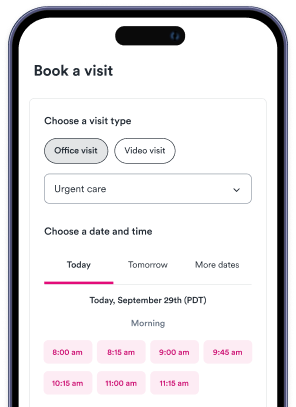
From the clinic or your couch. Find high quality, same-day urgent care for you and your kids. Book an urgent care visit today.

Yes — many urgent care centers offer ultrasounds. Point-of-care ultrasound (POCUS) has become a standard diagnostic tool in urgent and emergency settings, allowing clinicians to evaluate symptoms and make faster treatment decisions without sending patients to a separate imaging facility. That said, not every urgent care location has an ultrasound machine or trained staff on hand, so calling ahead is always the right first step.
This is just one of many things urgent care handles — see the full list of urgent care services.
Many urgent care clinics offer point-of-care ultrasound as part of their on-site diagnostic services. POCUS refers to ultrasound performed by the treating clinician at the point of care — as opposed to a scheduled study read later by a radiologist — and it has been formally endorsed for emergency and urgent care use by the American College of Emergency Physicians (ACEP) and the American Institute of Ultrasound in Medicine (AIUM).1,2
Availability varies significantly by clinic. Larger urgent care centers and those affiliated with health systems are more likely to have ultrasound equipment and credentialed providers. Smaller or independent locations may not. If you need an ultrasound, call your nearest urgent care center before walking in to confirm the service is available that day.
Urgent care ultrasounds are generally limited to focused, point-of-care applications. The most common types include:
Used to evaluate abdominal pain, assess organs (liver, gallbladder, kidneys, spleen), and screen for conditions such as gallstones, kidney stones, or free fluid in the abdomen. The Mayo Clinic notes that abdominal ultrasound is one of the most commonly ordered imaging studies for unexplained abdominal pain.3
Used to assess early pregnancy viability, evaluate pelvic pain, or look for ovarian cysts. Most urgent care centers that offer obstetric ultrasound perform limited studies — confirming fetal cardiac activity and gestational age, for example — rather than the comprehensive anatomy scans performed at an OB/GYN or maternal-fetal medicine office.
Used to identify abscesses, foreign bodies in soft tissue, joint effusions, and tendon or muscle injuries. These are particularly well-suited to urgent care because the findings directly guide same-visit treatment (such as abscess drainage).
Used to evaluate blood flow and screen for deep vein thrombosis (DVT). If a DVT is suspected based on symptoms (leg swelling, tenderness, redness), a Doppler ultrasound can help rule it in or out quickly.
For the focused diagnostic applications above, urgent care ultrasound is a clinically sound option. ACEP guidelines explicitly recognize point-of-care ultrasound as an appropriate tool for emergency and acute care settings.1 The FDA classifies diagnostic ultrasound as safe when performed by appropriately trained providers, noting that the benefits far outweigh risks for indicated uses.4
Where hospital and specialized imaging centers have an advantage:
If your urgent care provider identifies something concerning on ultrasound, they will typically refer you to a hospital, imaging center, or specialist for confirmatory or advanced imaging.
Common reasons a provider at urgent care might order or perform an ultrasound include:
Preparation depends on the type of study your provider orders:
Wear comfortable, loose-fitting clothing. Bring your insurance card and a list of current medications. If you have prior imaging (X-rays, CT, prior ultrasound reports), bring those records or have them sent ahead if possible.
Cost depends on your insurance plan and the specific study performed. Most major insurance plans — including employer-sponsored PPOs, HMOs, Medicaid managed care plans, and Medicare Advantage — cover medically necessary ultrasounds. You may owe a copay, coinsurance, or have the cost applied to your deductible depending on your plan design.
For patients paying out of pocket, urgent care ultrasound costs are generally lower than the same study at a hospital outpatient department. Call the clinic’s billing department before your visit to get a cost estimate.
Urgent care is appropriate for stable, non-emergency symptoms. Go directly to the emergency room if you experience:
These situations require the full resources of an emergency department — including surgical backup, advanced imaging, and critical care — that an urgent care center cannot provide.
If you need an ultrasound for a non-emergency symptom, urgent care is often the fastest, most convenient path to an answer. Use Solv to find an urgent care center near you that offers ultrasound services, confirm availability before your visit, and get same-day care without the wait of a hospital outpatient imaging department.
Yes — early pregnancy with pain or vaginal bleeding is one of the most common reasons for urgent care ultrasound. Providers use a limited OB ultrasound to assess fetal cardiac activity, gestational age, and the location of the pregnancy to rule out ectopic pregnancy. If findings are unclear or a complication is suspected, you will be referred to an OB or emergency department for a more comprehensive evaluation.
A focused, limited ultrasound at urgent care typically takes 10 to 20 minutes. More complex studies covering multiple abdominal structures may take longer. Including check-in, provider evaluation, and discharge, plan for one to two hours total. Full diagnostic ultrasounds requiring formal radiology interpretation are sometimes sent to a radiologist, with results available within hours to one business day.
In most cases, yes. The provider performing or reviewing the ultrasound will discuss findings with you during your visit. However, for complex or diagnostic studies sent to a radiologist for formal interpretation, a complete written report may not be available until the next business day. The clinic will contact you if the radiologist's read changes the initial assessment or requires follow-up.
Urgent care providers trained in point-of-care ultrasound can identify findings consistent with ectopic pregnancy — such as no visible intrauterine gestational sac in a patient with a positive pregnancy test and pelvic pain. However, a definitive diagnosis of ectopic pregnancy typically requires formal OB ultrasound and serial hCG levels. If urgent care findings raise concern for ectopic pregnancy, you will be sent to the emergency department immediately, as ectopic pregnancy is a surgical emergency.
Many urgent care centers can share imaging results and reports with your OB or primary care provider upon request, via fax, shared EHR, or patient portal. Ask at discharge whether the clinic can forward records directly. If you have a follow-up OB appointment scheduled, bringing a copy of the report and any images on CD will help your provider review the findings in context.
Yes — many urgent care centers can perform focused ultrasound on pediatric patients. Common indications include suspected appendicitis, soft tissue masses, or musculoskeletal evaluation. For complex pediatric cases, or if a child is in significant distress, a pediatric emergency department with pediatric radiology capabilities is the more appropriate setting. Call ahead to confirm your urgent care center's pediatric ultrasound capabilities before bringing a child in.
Some benefits of getting an ultrasound at an urgent care center include convenience, access to qualified medical professionals, and cost-effectiveness.
Yes, you may be able to get an ultrasound at your primary care physician's office or through a specialist referral. If you have a medical emergency, you should go to the emergency room, which is also capable of performing ultrasounds.
From the clinic or your couch. Find high quality, same-day urgent care for you and your kids. Book an urgent care visit today.

Medically reviewed
View this article's sources and history, and read more about Solv's Content Mission Statement, editorial process, and editorial team.
Solv has strict sourcing guidelines and relies on peer-reviewed studies, academic research institutions, and medical associations. We avoid using tertiary references.
Solv’s team of medical writers and experts review and update our articles when new information becomes available.
Written by Solv Editorial Team
Medically reviewed by: Dr. Rob Rohatsch, MD
Edited by Solv Editorial Team
Edited by Solv Editorial Team
Edited by Solv Editorial Team
Edited by Solv Editorial Team
Edited by Solv Editorial Team
Edited by Solv Editorial Team
From the clinic or your couch. Find high quality, same-day urgent care for you and your kids. Book an urgent care visit today.