Urgent care near me
 Key points
- Thanksgiving is the leading day of the year for home cooking fires, and turkey fryers can reach 350°F — enough to cause third-degree burns.
- About 13,000 people are treated for holiday decoration injuries each year, with falls making up nearly half of all incidents.
- Candle fires account for 13 percent of home fires in December, and Christmas trees are most fire-prone from December 22 through early January.
- 1 in 6 Americans gets a foodborne illness each year — holiday gatherings and improper turkey thawing are common contributors.
- Hypothermia can develop at temperatures as low as 40°F, and flu season typically peaks between December and February.
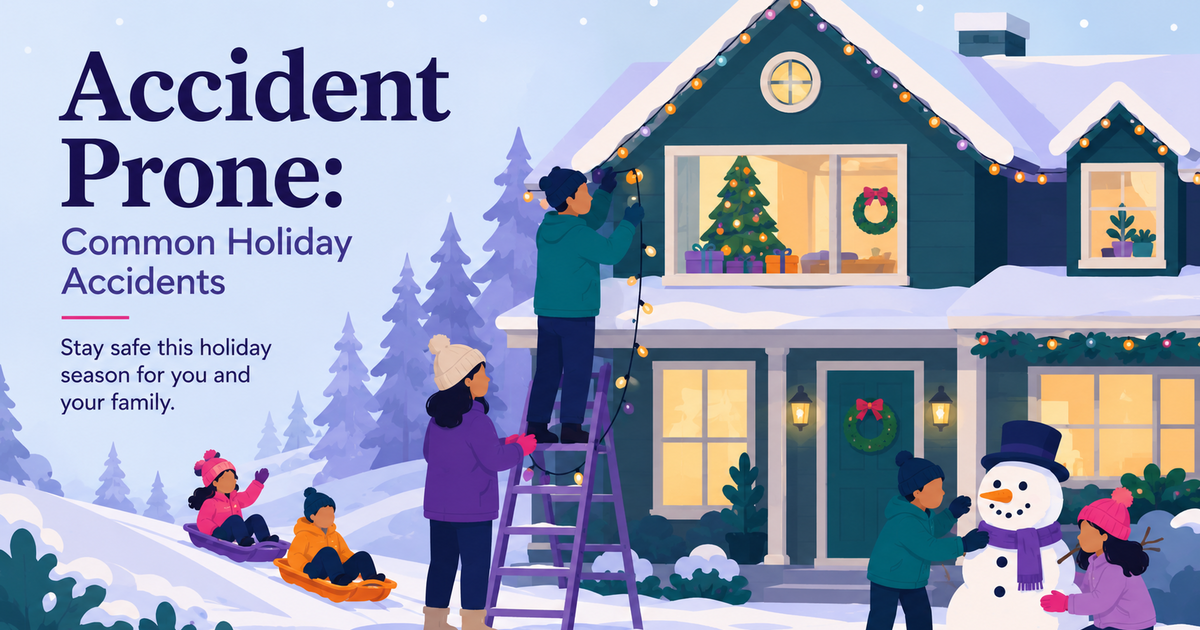
The holiday season brings together the things most likely to cause injuries: open flames, crowded kitchens, ladders, cold temperatures, and rushed travel. Emergency departments and urgent care centers consistently see spikes in certain types of injuries from Thanksgiving through New Year's Day. Understanding which risks are highest — and what warning signs mean you need care — can help you stay safe and know when to get help.
Cooking fires and turkey fryer burns
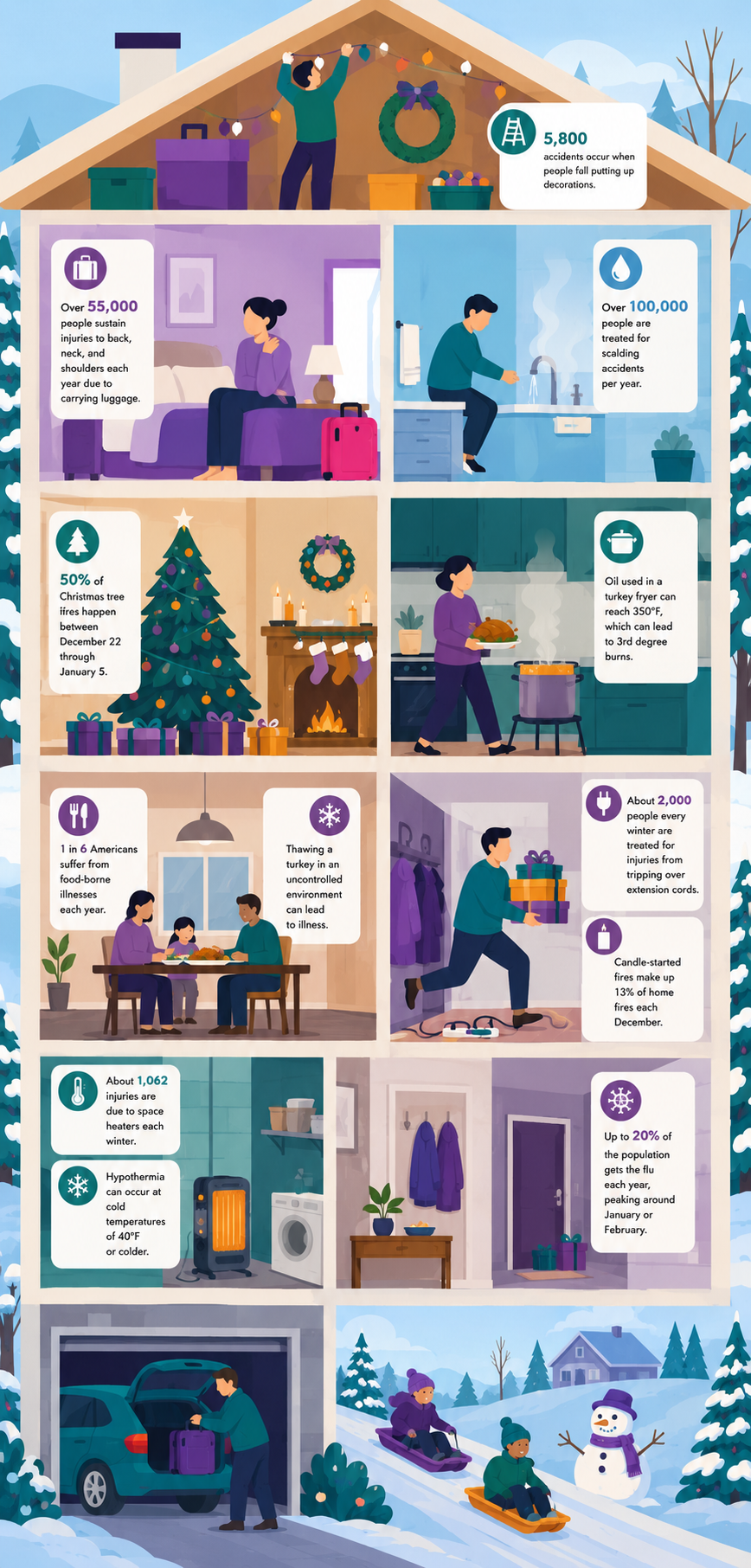
Thanksgiving is the leading day of the year for home cooking fires in the United States, according to the National Fire Protection Association. Turkey fryers pose a particularly serious risk: the oil used for deep-frying can reach 350 degrees Fahrenheit, a temperature capable of causing third-degree burns in seconds. The NFPA estimates that deep fryer fires cause an average of five deaths, 60 injuries, and more than $15 million in property damage annually. Burn injuries — both from cooking fires and scalding from hot liquids — send over 100,000 people to medical facilities for treatment each year. If you or someone in your household sustains a burn that blisters, covers a significant area, or involves the hands, face, or joints, seek immediate medical care.
Holiday decoration injuries and falls
Roughly 13,000 people are treated in emergency rooms each year for injuries related to holiday decorating, according to the Consumer Product Safety Commission. Nearly half of those injuries involve falls — about 5,800 incidents occur when people fall while hanging lights, placing ornaments, or climbing ladders to reach high spaces. Extension cords create a separate hazard throughout the season: approximately 2,000 people are treated annually for lacerations, sprains, and other injuries caused by tripping over them. When using a ladder for decorating, always have a second person present and keep both feet on the rungs — never stand on the top two steps.
Holiday fire hazards: candles and Christmas trees
Candles account for 13 percent of home fires during December, a month that is consistently among the leading months for residential fires nationwide. Christmas trees add to that risk: according to NFPA research, roughly half of all Christmas tree fires occur between December 22 and early January, the period when trees are driest. Most tree fires begin with electrical problems — faulty light strings, overloaded outlets, or lights left on overnight. The fix is straightforward: use tested, listed lights, turn them off when you go to bed, and water your tree daily to slow drying. Never place candles near a tree, curtains, or other flammable material.
Food safety during the holidays
One in six Americans suffers from a foodborne illness each year, and holiday gatherings create the conditions for it: large quantities of food prepared in advance, dishes left at room temperature for extended periods, and unfamiliar kitchen routines. Turkey handling is a leading source of holiday food poisoning. Thawing a turkey at room temperature or in standing water allows bacteria to multiply rapidly on the outer surface while the interior remains frozen. The safe methods are refrigerator thawing (allow 24 hours per 4–5 pounds of turkey), cold water thawing with water changes every 30 minutes, or thawing in the microwave followed by immediate cooking. Symptoms of foodborne illness — nausea, vomiting, diarrhea, and cramping — typically appear within hours to days of exposure and usually resolve on their own, though severe dehydration or high fever warrants a visit to urgent care.
Cold weather, travel, and seasonal illness
Hypothermia can develop at air temperatures as low as 40 degrees Fahrenheit, particularly when combined with wind, rain, or wet clothing. Early signs include intense shivering, confusion, slurred speech, and drowsiness. If you suspect hypothermia, move the person indoors, remove wet clothing, and apply warm — not hot — blankets. Call 911 for severe cases.
Space heaters cause about 1,062 injuries each winter, most involving burns from contact with the heating element or fires started when heaters are placed too close to furniture or bedding. Keep space heaters at least three feet from anything flammable, and never leave them running unattended.
Holiday travel adds another layer of physical strain. Over 55,000 people sustain back, neck, and shoulder injuries each year from carrying luggage — use wheeled bags where possible and lift with your legs, not your back. And travel concentrates another risk: flu. Up to 20 percent of the U.S. population gets influenza each year, with flu season typically peaking between December and February. Getting vaccinated before the holidays is the most effective protective measure.
When to visit urgent care
Most holiday injuries and illnesses can be evaluated and treated at an urgent care center without a trip to the emergency room. Urgent care is appropriate for minor burns, lacerations that need stitches, sprains and strains, mild symptoms of food poisoning, and respiratory illnesses including flu. Search for urgent care near you on Solv to find a clinic with same-day availability — and check in online before you leave home to reduce wait time. If you experience chest pain, difficulty breathing, a deep burn covering a large area, signs of hypothermia, or any rapidly worsening condition, go to the nearest emergency room.
Frequently asked questions
What are the most common holiday injuries?
The most common holiday injuries include burns from cooking and turkey fryers, falls while decorating, cuts and sprains from extension cords, and back injuries from lifting luggage. Holiday gatherings also increase the risk of foodborne illness and respiratory infections like the flu.
How dangerous are turkey fryers?
Turkey fryers are one of the most significant holiday fire hazards. The oil reaches about 350 degrees Fahrenheit and can cause third-degree burns in seconds. The National Fire Protection Association recommends never using a turkey fryer on a deck, porch, or inside a garage, and keeping it away from any structures.
Can you get hypothermia at 40 degrees Fahrenheit?
Yes. Hypothermia can develop when the air temperature drops to 40°F or colder, especially when combined with wind, rain, or wet clothing. Warning signs include intense shivering, confusion, slurred speech, and extreme fatigue. Move to a warm location immediately and seek medical care if symptoms are severe.
How do I safely thaw a turkey?
The USDA recommends three safe thawing methods: in the refrigerator (24 hours per 4-5 pounds), in cold water with the turkey submerged and water changed every 30 minutes, or in the microwave followed by immediate cooking. Never thaw a turkey on the counter at room temperature.
When should I go to urgent care for a holiday injury?
Urgent care is appropriate for minor burns that blister, lacerations needing stitches, sprains and strains, flu symptoms, and mild food poisoning with dehydration. For chest pain, serious burns covering a large area, suspected hypothermia, or any rapidly worsening condition, go to the emergency room.
How can I prevent holiday decoration injuries?
Use a stable ladder with a second person present, secure extension cords against walls to prevent tripping, inspect light strands before use and replace any with frayed wires, and keep candles away from Christmas trees and other flammable decorations.
What are some common injuries during the winter season?
Common winter injuries include those due to tripping over extension cords, scalding accidents, injuries due to space heaters, and hypothermia.
Where can I seek medical attention if I have a holiday-related accident?
If you find yourself needing medical attention, you can find a nearby urgent care center to get the help you need.

How we reviewed this article
Medically reviewed
View this article's sources and history, and read more about Solv's Content Mission Statement, editorial process, and editorial team.
10 sources
Solv has strict sourcing guidelines and relies on peer-reviewed studies, academic research institutions, and medical associations. We avoid using tertiary references.
- National Fire Protection Association. Thanksgiving is leading day of the year for U.S. home cooking fires. (2025)
- National Fire Protection Association. Home cooking fire safety.
- National Park Service. Deep fried turkey fire safety.
- Consumer Product Safety Commission. Make it a home safe home for the holidays. (2024)
- National Fire Protection Association. Christmas tree fire statistics.
- National Fire Protection Association. Candle fire safety.
- Centers for Disease Control and Prevention. Food safety facts and statistics.
- U.S. Department of Agriculture Food Safety and Inspection Service. Turkey basics: safe thawing.
- Centers for Disease Control and Prevention. Winter weather and cold: prevention.
- Centers for Disease Control and Prevention. Flu . (influenza)
Solv’s team of medical writers and experts review and update our articles when new information becomes available.
December 04 2018
Written by Solv Editorial Team
Medically reviewed by: Dr. Rob Rohatsch, MD
May 27 2026
Edited by Solv Editorial Team
May 28 2026
Edited by Solv Editorial Team
June 03 2026
Edited by Solv Editorial Team