Urgent care near me
Sane-day doctor visits
Feel better faster. Get care today.
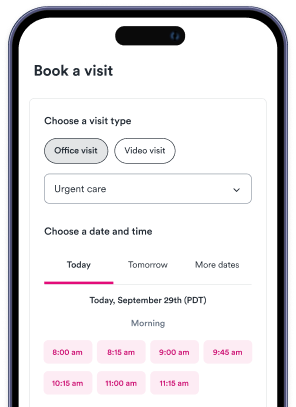
From the clinic or your couch. Find high quality, same-day urgent care for you and your kids. Book an urgent care visit today.

You wake up on a Sunday morning with an ear that's been aching all night, or a holiday weekend leaves you with a sprained ankle and no way to reach your primary care doctor. Urgent care centers exist for exactly these moments. The short answer is yes — most urgent care clinics are open on weekends and many are open on major holidays, though hours can vary by location. Understanding what to expect before you head out can save you time and unnecessary stress.
The majority of urgent care centers are open seven days a week. On weekdays, many clinics stay open until 8 p.m. or later. Weekend hours are typically a bit shorter, with most locations running from 8 or 9 a.m. to 4 or 5 p.m., though some extend into the evening. The growth in urgent care availability reflects genuine demand: research published in JAMA Internal Medicine found that visits to urgent care centers for low-acuity conditions rose significantly between 2008 and 2015, driven in part by their convenient hours and walk-in access.
Because weekend hours vary by operator and location, the safest approach is to confirm hours before you go. You can search for clinics near you on Solv to see real-time availability and current wait times — which often run shorter than emergency department waits.
Holidays are where hours become less predictable. Most urgent care centers remain open on major holidays but operate on reduced schedules — typically 8 or 9 a.m. to 4 or 5 p.m. rather than their usual close time. Full closures are most common on Thanksgiving Day and Christmas Day, though even then many chains keep at least one location open in each market.
Holidays like Memorial Day, Labor Day, Fourth of July, and New Year's Day typically see reduced but operational hours at the majority of clinics. When primary care offices are closed and emergency rooms are crowded with seasonal illness, an open urgent care center can be the most practical option for conditions that are uncomfortable or worrying but not life-threatening.
Walk-in wait times tend to be longer on weekends and holidays because primary care offices are closed, pushing more patients to urgent care. Some clinics let you save your spot in line online or via an app before you arrive — a feature worth using if it's available at your chosen clinic. Staffing on weekends and holidays may differ slightly from weekday operations, but nurse practitioners and physician assistants who staff urgent care centers are trained to handle the full scope of non-emergency care. A 2019 systematic review in Medical Care found that patient satisfaction at urgent care and retail clinics was comparable to primary care offices for similar conditions, partly because of shorter total visit times.
Bring your insurance card and a photo ID. Many urgent care centers also accept patients without insurance and post self-pay rates, which are often substantially lower than equivalent emergency department charges.
Urgent care is appropriate for a wide range of non-life-threatening conditions, including:
Research from Health Affairs estimates that roughly 14 to 27 percent of emergency department visits involve conditions that could be safely and appropriately managed at an urgent care center — with meaningfully lower costs and shorter waits for patients. If you're unsure whether your situation requires an emergency room, the general rule is to go to the ER for chest pain, difficulty breathing, suspected stroke, serious head injury, or any condition where symptoms are rapidly worsening.
If you're dealing with a non-emergency illness or injury and your regular doctor is unavailable — whether that's a weekend morning, a holiday afternoon, or a weekday evening after office hours — an urgent care center is a practical first stop. With more than 14,000 urgent care centers now operating across the United States, according to the Urgent Care Association, most patients have a conveniently located option that doesn't require an appointment. Search for urgent care near you on Solv to see which clinics are open right now, compare current wait times, and check in online before you leave home.
Yes, the majority of urgent care centers are open seven days a week. Weekend hours are typically shorter — usually 8 or 9 a.m. to 4 or 5 p.m. — but most clinics do operate on Saturdays and Sundays.
Most urgent care centers on weekends open between 8 and 9 a.m. and close between 4 and 5 p.m. Some locations in high-traffic areas offer extended hours into the evening. Check the clinic's listing on Solv for current hours before you go.
Many clinics operate on reduced hours on Thanksgiving and Christmas, and some close entirely on those two holidays. Availability varies by chain and location — checking hours online or calling ahead is especially important on major holidays.
You can search on Solv to see real-time hours and availability for urgent care centers near you, including on weekends and holidays. You can also call the clinic directly for the most accurate information.
Urgent care can handle most non-emergency conditions including ear infections, strep throat, sinus infections, UTIs, minor cuts, sprains and strains, mild fevers, and rashes. For chest pain, difficulty breathing, or suspected stroke, go to the emergency room.
Yes, for conditions appropriate for urgent care, the cost is typically much lower than an emergency department visit — both in out-of-pocket expenses and total visit time. Research suggests a significant share of ER visits for minor conditions could be handled at urgent care with lower costs.
Yes, many urgent care clinics are open 24 hours a day and 365 days a year, including holidays and weekends.
There are approximately 9,000 urgent care centers across the United States.
From the clinic or your couch. Find high quality, same-day urgent care for you and your kids. Book an urgent care visit today.

Medically reviewed
View this article's sources and history, and read more about Solv's Content Mission Statement, editorial process, and editorial team.
Solv has strict sourcing guidelines and relies on peer-reviewed studies, academic research institutions, and medical associations. We avoid using tertiary references.
Solv’s team of medical writers and experts review and update our articles when new information becomes available.
Written by Solv Editorial Team
Medically reviewed by: Dr. Rob Rohatsch, MD
Edited by Solv Editorial Team
Edited by Solv Editorial Team
Edited by Solv Editorial Team
Edited by Solv Editorial Team
Edited by Solv Editorial Team
Edited by Solv Editorial Team
From the clinic or your couch. Find high quality, same-day urgent care for you and your kids. Book an urgent care visit today.