Urgent care near me
Sane-day doctor visits
Feel better faster. Get care today.
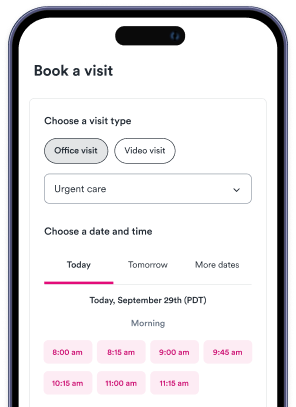
From the clinic or your couch. Find high quality, same-day urgent care for you and your kids. Book an urgent care visit today.
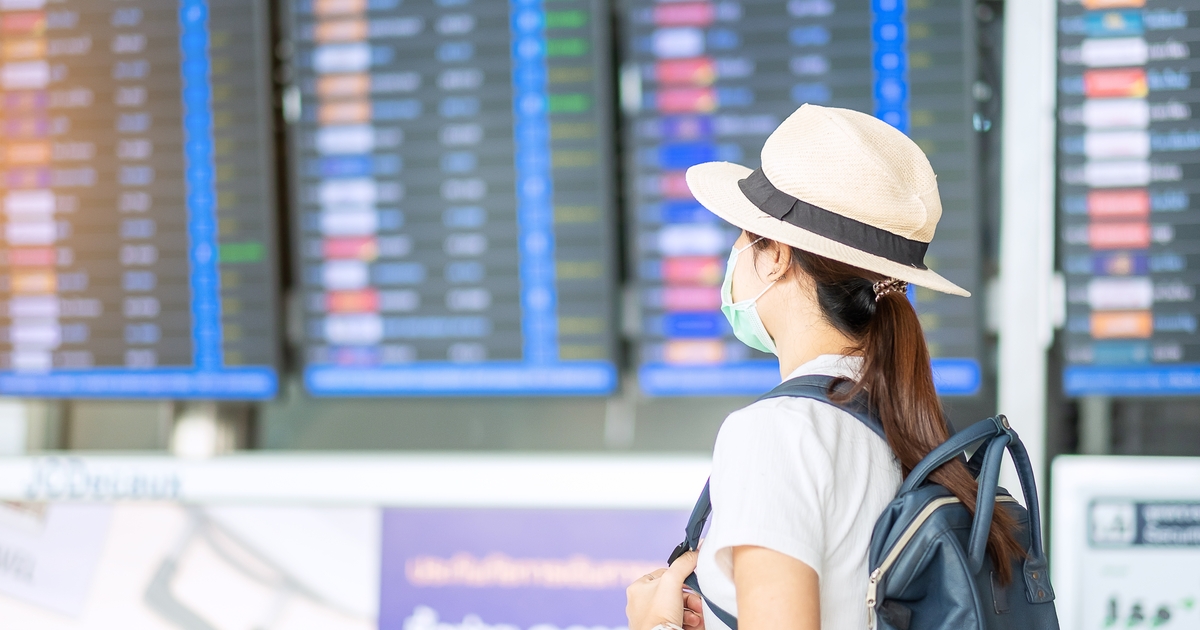
Hawaii no longer requires COVID-19 testing or proof of vaccination to enter the state — those mandatory programs ended in 2022.1 Testing is still widely available and useful in three situations: before you travel if you've been exposed, after you arrive and feel sick, or before you fly home if symptoms appear during your trip. This guide covers where to get tested across the islands and what kind of test to choose.
No. Hawaii's Safe Travels program, pre-travel testing requirements, and quarantine rules all ended in 2022. Travelers arriving from the U.S. mainland or internationally do not need a negative test, proof of vaccination, or to fill out a travel and health form.1 A few private operators — some cruise lines, certain tours, and large events — may still set their own policies, so check before you go.
Even without mandatory testing, getting tested makes sense in several scenarios:
Urgent care clinics in Honolulu, Kapolei, Pearl City, and Kailua offer same-day rapid antigen and PCR testing. CVS, Walgreens, and Longs Drugs locations across the island stock at-home tests and offer scheduled in-pharmacy testing. The Daniel K. Inouye International Airport has on-site testing partners for outbound travelers.
Same-day testing is available in Kahului, Lahaina, and Kihei at urgent care clinics and community health centers. Kahului Airport offers on-site testing through Worksite Labs and similar partners. Lahaina-area testing capacity recovered after the 2023 wildfires.
Lihue, Kapaa, and Princeville have urgent care clinics offering rapid testing. Wilcox Medical Center in Lihue and the Kauai Veterans Memorial Hospital provide PCR testing. Pharmacies stock at-home tests across the island.
Kona, Hilo, and Waimea have urgent care clinics with same-day testing. The Hawaii District Health Office maintains updated lists of community testing partners.1
Antigen tests detect viral proteins from a nasal swab. Results come back in 15 to 30 minutes. They are most accurate when you have symptoms or a recent known exposure. If you test negative but feel sick, the FDA recommends repeating the test after 48 hours.3,4
PCR — and other nucleic acid amplification tests (NAATs) — are the gold standard for COVID-19 detection. They are more sensitive than antigen tests, especially early in infection or when you have no symptoms.2 Results typically come back within 24 to 72 hours, though some labs offer same-day options.
FDA-authorized at-home antigen tests are widely available at Hawaiian pharmacies. They work the same way clinic antigen tests do. Repeat testing after 48 hours improves accuracy.4,5
Federal coverage of routine COVID testing ended in 2023. Today, costs vary:
Confirm pricing and insurance acceptance with the clinic before you arrive.
Isolate from others, especially anyone over 65 or immunocompromised. Most adults with mild illness can recover where they are with rest, fluids, and over-the-counter symptom relief. If you're at higher risk for severe COVID, contact a clinician — antivirals like Paxlovid work best within five days of symptom onset and can be prescribed at urgent care or by a pharmacist in Hawaii.
If you need a COVID test while you're in Hawaii — for symptoms, exposure, or pre-flight peace of mind — find and book same-day care on Solv by ZIP code or island. Most urgent care clinics also handle treatment in the same visit if you test positive. For severe symptoms (trouble breathing, chest pain, confusion), go to the nearest ER.
No. Hawaii lifted its mandatory pre-travel testing and vaccination requirements and currently has no statewide entry rules tied to COVID-19. Individual cruise lines, tours, or events may still set their own policies.1
Urgent care clinics, CVS, Walgreens, Longs Drugs, and many community health centers offer rapid antigen tests on all major islands. Honolulu's Daniel K. Inouye International Airport and Kahului Airport on Maui have on-site testing options. Solv lets you search same-day availability by ZIP code.
PCR (NAAT) tests are the gold standard for sensitivity. Rapid antigen tests are highly accurate when you have symptoms and a moderate-to-high viral load. They can miss early infections, so repeat testing after 48 hours improves reliability.2,3
Coverage varies. Many private plans still cover medically necessary testing when ordered by a provider; routine travel screening is often out-of-pocket. Cash prices typically run $25 to $150 for rapid tests and $75 to $250 for PCR. Confirm with the clinic before testing.
Yes. Antiviral options like Paxlovid are prescribed at urgent care clinics, pharmacies with prescribing pharmacists, and primary care offices across Hawaii. Treatment works best within the first five days of symptoms, so test early.
Yes. Testing positive doesn't legally prevent you from flying, but knowing your status helps you mask, isolate from family on arrival, and seek antivirals at home. Most airlines no longer require negative tests for domestic travel.
From the clinic or your couch. Find high quality, same-day urgent care for you and your kids. Book an urgent care visit today.

Medically reviewed
View this article's sources and history, and read more about Solv's Content Mission Statement, editorial process, and editorial team.
Solv has strict sourcing guidelines and relies on peer-reviewed studies, academic research institutions, and medical associations. We avoid using tertiary references.
Solv’s team of medical writers and experts review and update our articles when new information becomes available.
Written by Solv Editorial Team
Medically reviewed by: Dr. Rob Rohatsch, MD
Edited by Solv Editorial Team
Edited by Solv Editorial Team
Edited by Solv Editorial Team
Edited by Solv Editorial Team
Edited by Solv Editorial Team
From the clinic or your couch. Find high quality, same-day urgent care for you and your kids. Book an urgent care visit today.