Urgent care near me
Key points
- About 90-98% of sinus infections are viral — antibiotics will not help and should be reserved for bacterial cases with specific features.
- Saline nasal irrigation is one of the most effective non-drug treatments for sinus congestion and pressure.
- Nasal corticosteroid sprays like Flonase reduce inflammation and modestly speed recovery in both viral and bacterial sinusitis.
- Antibiotics are appropriate when symptoms are severe at the start, worsen after improving, or persist beyond 10 days.
- Seek urgent care or the ER for severe headache, eye swelling, vision changes, or stiff neck — these can signal serious complications.

Sinus infections (sinusitis) are one of the top reasons adults visit urgent care, affecting about 31 million Americans per year. Most are caused by viruses — which means antibiotics will not help — but the pain, pressure, and congestion can feel miserable for one to two weeks. There are evidence-based steps that genuinely speed recovery and relieve symptoms, and knowing when to ask for antibiotics can save you from an unnecessary prescription.
Are most sinus infections viral or bacterial?
About 90 to 98 percent of acute sinus infections are viral, typically following a cold. Viral sinusitis cannot be cured with antibiotics and usually resolves within 7 to 10 days. Bacterial sinusitis is less common but more likely when symptoms are severe at the start, or when cold-like symptoms worsen after initially improving. The 2025 Clinical Practice Guideline on Adult Sinusitis emphasizes that clinicians should distinguish viral from bacterial sinusitis before prescribing antibiotics — watchful waiting is appropriate for most cases (PMID 40741969).
What actually helps a sinus infection resolve faster?
For viral sinusitis — the vast majority of cases — these evidence-based measures relieve symptoms and support recovery. Saline nasal irrigation using a neti pot or saline squeeze bottle helps clear mucus and reduce congestion; multiple studies support this as one of the most effective non-drug treatments. Nasal corticosteroid sprays like fluticasone (Flonase) reduce nasal inflammation and can modestly speed recovery. Staying well-hydrated thins mucus secretions. Steam from a hot shower or humidifier loosens thick mucus. Acetaminophen or ibuprofen reduces sinus headache and facial pain. Pseudoephedrine (Sudafed) reduces nasal swelling but nasal decongestant sprays should not be used for more than three days to avoid rebound congestion.
When are antibiotics needed for a sinus infection?
Antibiotics are appropriate for bacterial sinusitis: symptoms that are severe from the onset (high fever above 102 degrees F, severe facial pain), symptoms that worsen after initially improving ("double sickening"), or symptoms that fail to improve after 10 days. When antibiotics are warranted, amoxicillin-clavulanate is currently the first-line choice for most adults. Doxycycline is an alternative for penicillin-allergic patients.
What complications should you watch for?
Most sinus infections resolve without complications, but rare serious problems can develop. Seek urgent care or the ER promptly for: severe headache different from your usual headaches, stiff neck, high fever above 103 degrees F, vision changes or pain around the eye, swelling around the eye socket, forehead swelling, or any neurological symptoms. These can signal infection spreading to the orbit or brain, which requires immediate evaluation.
When should you see a doctor for a sinus infection?
See a doctor if your sinus symptoms are severe from the start, if they worsen after seeming to improve, or if they have not improved after 10 days. Urgent care can evaluate whether sinusitis is likely bacterial, prescribe antibiotics when warranted, and rule out complications — typically in a single same-day visit.
How Solv can help
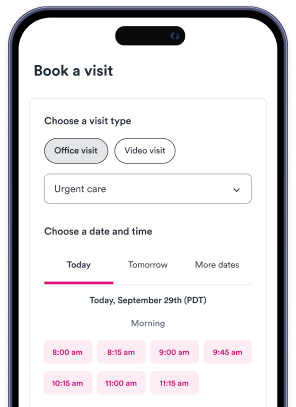
If your sinus infection is not getting better on its own, urgent care can assess your symptoms and get you on the right treatment plan. Solv makes it easy to book same-day urgent care near you. Visit solvhealth.com to find a location today.
Frequently asked questions
How long does a sinus infection last without antibiotics?
Most viral sinus infections resolve in 7 to 10 days. Bacterial sinusitis may last longer but often also improves without antibiotics; watchful waiting for up to 10 days is appropriate for most cases.
Does blowing your nose make a sinus infection worse?
Aggressive nose blowing can push mucus back into the sinuses. Blowing gently, one nostril at a time, is recommended to avoid this.
Can I go to urgent care for a sinus infection?
Yes. Urgent care can evaluate your symptoms, determine whether antibiotics are needed, and prescribe them same-day if warranted.
What color mucus means a sinus infection is bacterial?
Yellow or green mucus does not reliably indicate a bacterial infection — it is a normal part of viral sinus infections too. Clinicians use symptom duration, severity, and clinical judgment.
What is the fastest way to get rid of a sinus infection?
For viral sinusitis: saline rinses, nasal steroids, steam, and hydration. For confirmed bacterial sinusitis: antibiotics combined with the above.

Dr. Linda Halbrook is a Board-Certified Family Medicine physician with over 40 years of experience, dedicated to providing comprehensive care to patients across Texas. She retired from practice but currently serves on the Clinical Services Committee of CommonGood Medical, a non-profit organization serving the uninsured in Collin County.
How we reviewed this article
Medically reviewed
View this article's sources and history, and read more about Solv's Content Mission Statement, editorial process, and editorial team.
5 sources
Solv has strict sourcing guidelines and relies on peer-reviewed studies, academic research institutions, and medical associations. We avoid using tertiary references.
- Executive Summary of the Clinical Practice Guideline on Adult Sinusitis Update. (Aug 2025)
- Sinus Infection . (Sep 19, 2024) (Sinusitis)
- Acute Rhinosinusitis in Adults. (Aug 15, 2023)
- Sinusitis. (Feb 15, 2024)
- Sinusitis. (Oct 15, 2024)