Urgent care near me
Key points
- Most forehead bumps are benign: hematomas after minor injuries, sebaceous cysts, lipomas, or inflamed hair follicles.
- A head bump with confusion, vomiting, severe headache, or vision changes is a potential concussion or brain injury — seek emergency care immediately.
- Sebaceous cysts are painless, round, and movable under the skin — they only need treatment if they become infected or cosmetically bothersome.
- Hard, immovable bumps or ones that are rapidly growing, changing shape, or present for weeks without explanation warrant medical evaluation.
- Urgent care can evaluate post-injury forehead bumps for concussion, order imaging if needed, and help diagnose unexplained lumps.
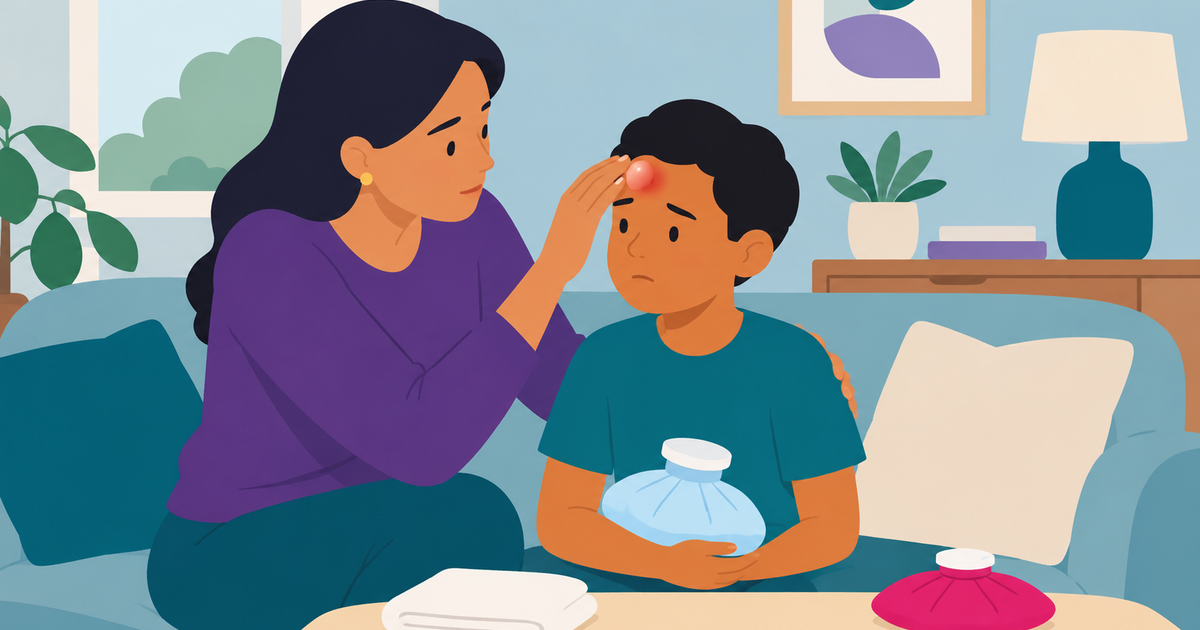
Finding a bump on your forehead can be alarming, but most bumps are benign and don't require emergency care. The cause — and the appropriate response — depends on how the bump appeared, what it looks and feels like, and whether you have other symptoms. This guide covers the most common causes and helps you decide when a bump on your forehead warrants medical attention.
Injury-related bumps: hematomas
A bump that appears after a fall or impact is typically a hematoma — a pocket of blood that collects in the soft tissue under the skin. The area may be swollen, tender, and bruised. Most minor head bumps in adults and older children are harmless and resolve on their own within 1–2 weeks. Applying ice wrapped in a cloth for 20 minutes at a time during the first 24 hours can reduce swelling.6 If the ice wrap produces pain, remove it for a few seconds off and on to prevent over cooling the skin and possible frostbite.
However, a head injury that involves loss of consciousness, confusion, vomiting, severe headache, or vision changes should be evaluated immediately for concussion or more serious brain injury. Do not wait to see if symptoms improve.
Sebaceous cysts
A painless, round, movable bump under the skin of the forehead is often a sebaceous (epidermal inclusion) cyst — a benign sac of keratin that develops when a hair follicle becomes blocked. Sebaceous cysts grow slowly, are usually soft-to-firm, and are almost never dangerous. Avoid trauma to the cyst as the sebum from the cyst is inflammatory if it escapes the sac, mimicking infection. They only need treatment if they become infected (red, warm, tender), inflamed or are bothersome — in those cases, a provider can drain or surgically remove them.2
Lipomas
A lipoma is a soft, movable, painless lump of fatty tissue just beneath the skin. Lipomas can develop on the forehead and scalp and typically grow slowly over years. They're benign and rarely require treatment unless they grow large, become painful, or are cosmetically bothersome — in which case surgical removal is straightforward.4
Folliculitis and acne
A small, red, possibly pus-filled bump is more likely to be a pimple or folliculitis (an infected hair follicle) than anything more serious. These typically resolve with warm compresses and consistent cleansing. Recurrent or spreading folliculitis may require a short course of topical or oral antibiotics prescribed by a provider.
When to see a doctor for a bump on your forehead
Seek care if the bump:
- Appeared after a head injury with accompanying headache, confusion, vomiting, or vision changes — seek emergency care immediately
- Is hard and immovable (unlike the soft texture of a cyst or lipoma)
- Is rapidly growing or changing shape
- Becomes increasingly inflamed or painful — signs of an infected cyst
- Has persisted for more than a few weeks without a clear cause
- Has irregular borders, unusual color changes, or abnormal skin texture — features that warrant evaluation to rule out skin cancer
When to visit urgent care
Urgent care is a good first stop for a bump on the forehead that appeared after a head injury — even a mild one — especially if you want to rule out a concussion or fracture. For an unexplained growing lump, an urgent care provider can evaluate it and determine whether a specialist referral (to a dermatologist or surgeon) is appropriate. Use Solv to find urgent care near you that sees both injury-related and non-injury concerns.
Frequently asked questions
Why do I have a bump on my forehead?
Common causes include a minor head injury (hematoma), sebaceous cyst, lipoma, or inflamed hair follicle. Most are benign. A bump that is hard and immovable, rapidly growing, or appeared without any injury should be evaluated by a provider.
Is a bump on my forehead dangerous?
Most forehead bumps are harmless. However, any bump after a head injury that comes with headache, confusion, nausea, or vision changes may indicate a concussion or serious brain injury — seek emergency care right away in those cases.
What does a sebaceous cyst on the forehead feel like?
A sebaceous cyst typically feels round, soft-to-firm, and movable under the skin. It is usually painless unless infected. Infected cysts become red, warm, and tender and may need drainage by a provider.
Can urgent care check a bump on my forehead?
Yes. Urgent care can examine the bump, check for signs of concussion or fracture after a head injury, order imaging if needed, and evaluate unexplained lumps. They can also provide referrals to dermatology or surgery if warranted.
When should I go to the ER for a head bump?
Go to the ER if you lost consciousness, are confused or disoriented, have a severe or worsening headache, are vomiting, or notice vision changes. These are warning signs of a serious traumatic brain injury that requires immediate evaluation.

Dr. Linda Halbrook is a Board-Certified Family Medicine physician with over 40 years of experience, dedicated to providing comprehensive care to patients across Texas. She retired from practice but currently serves on the Clinical Services Committee of CommonGood Medical, a non-profit organization serving the uninsured in Collin County.
How we reviewed this article
Medically reviewed
View this article's sources and history, and read more about Solv's Content Mission Statement, editorial process, and editorial team.
7 sources
Solv has strict sourcing guidelines and relies on peer-reviewed studies, academic research institutions, and medical associations. We avoid using tertiary references.
- MedlinePlus. Lump under the skin. (March 2022)
- StatPearls. Epidermal Inclusion Cyst. (January 2024)
- StatPearls. Cyst. (January 2024)
- MedlinePlus. Lipoma. (May 2022)
- StatPearls. Lipoma. (January 2024)
- MedlinePlus. Head Injuries. (2024)
- MedlinePlus. Concussion. (2023)
Solv’s team of medical writers and experts review and update our articles when new information becomes available.
October 26 2026
Written by Solv Editorial Team
Medically reviewed by: Dr. Rob Rohatsch, MD