About one in five American adults lives with a mental illness each year, yet fewer than half receive treatment. The most cited barrier isn't stigma — it's cost. According to the 2024 National Survey on Drug Use and Health, more than a third of adults who needed mental health treatment reported they didn't have insurance coverage for it, and another 40 percent said their plan wouldn't pay enough of the cost.1 If that sounds familiar, it's worth knowing that free and low-cost mental health care does exist — and some of it is available to you right now.
Start with a Federally Qualified Health Center
Federally Qualified Health Centers, or FQHCs, are community clinics funded by the federal government to provide care in medically underserved areas. By law, every FQHC must offer a sliding fee scale — meaning your cost is based on your household income, not a fixed rate. A session that costs $200 at a private practice may cost $20 or less at an FQHC, and patients below a certain income threshold may qualify for a $0 visit.3
Most FQHCs offer behavioral health services alongside primary care, including individual therapy, psychiatric evaluations, and medication management. You can find an FQHC near you using the free locator at findahealthcenter.hrsa.gov, maintained by the Health Resources and Services Administration.
See if your employer offers an EAP
If you're employed — even part-time at some companies — your workplace may offer an Employee Assistance Program, or EAP. EAPs provide free, confidential counseling sessions to employees dealing with anxiety, depression, grief, relationship stress, and other personal challenges. Most programs offer three to eight sessions at no cost to the employee, with a referral to longer-term care if needed.4
EAP benefits are separate from your health insurance plan. You can use them even if you declined your employer's medical coverage. Ask your HR department or check your company's benefits portal to find out whether an EAP is available and how to access it.
Every state funds a network of community mental health centers (CMHCs) designed specifically for people who can't afford private care. These centers offer individual therapy, group therapy, psychiatric services, and crisis support — typically on a sliding scale or with income-based fee waivers for uninsured patients.
Wait times at CMHCs can be longer than at private practices, but they offer a reliable path to ongoing care. SAMHSA's treatment locator at findtreatment.gov lets you search by location and filter for facilities that accept uninsured or self-pay patients.2
Consider telehealth therapy
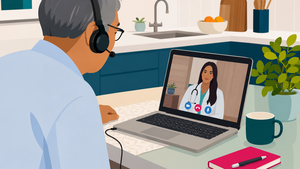
Telehealth has made mental health care more accessible and, in many cases, more affordable. Many platforms offer self-pay rates — typically $50–$100 per session — that are substantially lower than in-person private-practice fees. Some offer income-based pricing for patients with limited means.
FQHCs that provide telehealth services apply their sliding fee scale to virtual visits, so income-qualified patients pay the same reduced rate they would in person. For people with transportation barriers, inflexible work schedules, or anxiety about in-person appointments, telehealth can remove several layers of friction at once.
Use SAMHSA's free referral resources
The Substance Abuse and Mental Health Services Administration (SAMHSA) offers two tools that can connect you to care immediately, at no cost:
- National Helpline (1-800-662-HELP): A free, confidential, 24/7 referral service available in English and Spanish. Counselors connect callers to local treatment facilities, support groups, and community organizations — with no insurance required.2
- FindTreatment.gov: A searchable national database of mental health and substance use treatment providers. Filters include payment type, allowing you to narrow results to free, sliding-scale, or Medicaid-accepting programs.
Neither resource requires health insurance or prior authorization to use.
When to visit urgent care for a mental health concern
Some mental health situations can't wait for a scheduled appointment. If you are experiencing a severe panic attack that won't resolve, a depressive episode that is affecting your ability to function, or any thoughts of harming yourself or others, seek care the same day. Call or text 988 — the Suicide and Crisis Lifeline — for immediate, free support from a trained counselor. In 2025, the 988 Lifeline received more than 8 million contacts.5
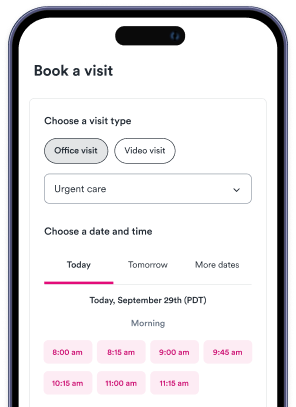
For acute mental health concerns that don't rise to a life-threatening emergency — including a first panic attack, severe anxiety, or a mental health episode without a regular provider — a nearby urgent care clinic can provide same-day evaluation and a referral to appropriate follow-up care.
Frequently asked questions
What is the cheapest way to get mental health care without insurance?
Federally Qualified Health Centers (FQHCs) are legally required to offer mental health services on a sliding fee scale based on your income — some patients qualify for $0 visits. SAMHSA's free helpline (1-800-662-4357) can connect you to local programs the same day.
Can I get therapy if I have no money?
Yes. Community mental health centers and FQHCs provide low- or no-cost therapy based on income. If you're employed, your workplace's Employee Assistance Program (EAP) may offer several free counseling sessions at no cost to you, even if you declined employer health coverage.
What is SAMHSA's National Helpline and is it free?
SAMHSA's National Helpline (1-800-662-HELP / 1-800-662-4357) is a free, confidential, 24/7 service available in English and Spanish. It refers callers to local mental health facilities, community organizations, and support groups regardless of insurance status.
Does urgent care treat mental health issues?
Yes. Urgent care can evaluate and provide initial treatment for acute mental health concerns such as severe anxiety, panic attacks, or depressive episodes — especially when you don't have a regular provider. For life-threatening crises, call 988 or go to an emergency room.
What is a sliding scale for therapy?
A sliding scale is a fee structure where the cost of care is adjusted based on your household income. Federally Qualified Health Centers and community mental health centers use sliding scales so that lower-income patients pay less — sometimes as little as $0 per session.
Is telehealth therapy affordable without insurance?
Many telehealth platforms offer self-pay rates of $50–$100 per session, which is typically lower than in-person private-practice fees. FQHCs that offer telehealth apply their sliding-fee scale to virtual visits, so income-qualified patients pay the same reduced rate they would in person.
 Urgent care near me