Urgent care near me
Wegovy pill from $149/month
The FDA-approved weight loss pill is here
No injections. Just once-daily Wegovy® with proven results—up to 17% average weight loss in trials.
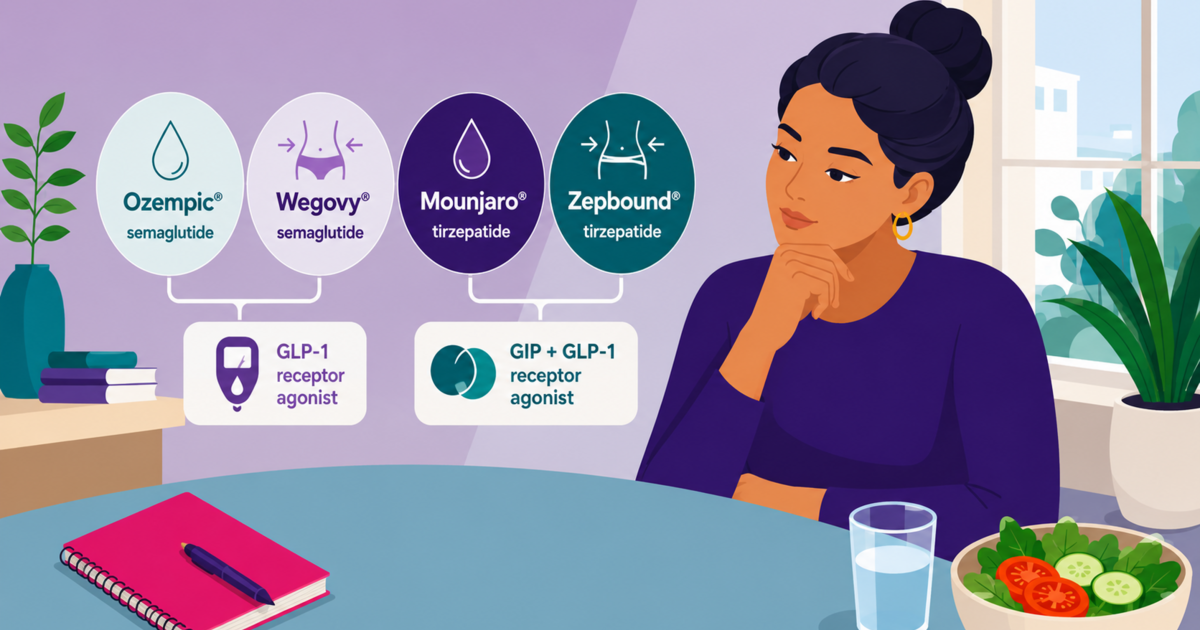
If you've heard the names Ozempic, Wegovy, Mounjaro, and Zepbound mentioned in the same breath, you're not alone in wondering how they differ. All four medications have reshaped conversations about weight loss and diabetes treatment over the past several years — yet many people are surprised to learn that the drugs come in just two active ingredients. Understanding which drug does what, how each works in the body, and what separates them on cost and eligibility can help you have a more informed conversation with your provider.
The simplest way to understand these four drugs is to group them by active ingredient. Semaglutide is the molecule behind both Ozempic and Wegovy. Tirzepatide is the molecule behind both Mounjaro and Zepbound. The brand names differ because the FDA approves drugs for specific indications — not just ingredients — and the two formulations of each drug target different patient populations.
Both pairs are administered as once-weekly subcutaneous injections, and both use a gradual dose-escalation schedule to reduce gastrointestinal side effects during the first several months of treatment.
Semaglutide belongs to a class called GLP-1 receptor agonists. GLP-1 (glucagon-like peptide-1) is a hormone naturally released in the gut after eating. It stimulates insulin secretion, suppresses glucagon, slows gastric emptying, and signals the brain's satiety centers. By mimicking this hormone, semaglutide improves blood sugar control and reduces appetite.
Tirzepatide goes a step further. It is a dual GIP and GLP-1 receptor agonist — meaning it activates both the GLP-1 pathway and the GIP (glucose-dependent insulinotropic polypeptide) pathway simultaneously. GIP is another gut-derived hormone with its own effects on insulin release and fat metabolism. The addition of GIP receptor activity is believed to be one reason tirzepatide tends to produce greater average weight loss than semaglutide in head-to-head and comparative studies.
In the SURMOUNT-1 trial, participants taking the highest dose of tirzepatide (15 mg) lost an average of 22.5% of their body weight over 72 weeks. In the STEP 1 trial of semaglutide at 2.4 mg, participants lost approximately 14.9% of body weight over 68 weeks. Both results are substantially larger than what was seen with older weight-loss medications, but the gap between the two drugs is clinically meaningful for many patients.
All four medications carry the same FDA black-box warning — the most serious type — regarding the potential risk of thyroid C-cell tumors. This warning is based on animal studies in rodents, and it has not been confirmed in humans. However, people with a personal or family history of medullary thyroid carcinoma (MTC) or Multiple Endocrine Neoplasia syndrome type 2 (MEN 2) should not take any of these medications.
Common side effects across all four drugs include nausea, vomiting, diarrhea, constipation, and abdominal pain — particularly during dose escalation. More serious but rare risks include pancreatitis, gallbladder disease, and kidney injury (often secondary to dehydration from gastrointestinal symptoms). Patients are typically counseled to eat smaller meals, avoid high-fat foods, and stay well hydrated, especially early in treatment.
Because both Ozempic and Mounjaro are indicated for diabetes, prescribing them for weight loss in people without diabetes is considered off-label use. Insurance coverage often depends on the specific indication listed on the prescription, which is one reason cost can vary so dramatically from patient to patient.
Without insurance, all four medications carry list prices that can exceed $900–$1,300 per month, putting them out of reach for many patients. Manufacturer savings programs — Novo Nordisk's savings card for Wegovy and Eli Lilly's savings card for Zepbound — can significantly reduce out-of-pocket costs for commercially insured patients, but often don't apply to Medicare or Medicaid beneficiaries.
The rise of compounding pharmacies offering semaglutide and tirzepatide at lower prices has expanded access, but the FDA has raised concerns about quality control in compounded formulations. Reported issues include dosing errors, contamination, and the use of salt forms of semaglutide that may not behave identically to the FDA-approved base form. Anyone considering a compounded GLP-1 medication should discuss the risks with their prescribing provider and confirm the pharmacy's accreditation status.
Insurance coverage for weight-loss indications (Wegovy and Zepbound) remains inconsistent. Many employer-sponsored plans have added coverage as evidence of cardiovascular benefit has grown — the SELECT trial demonstrated that semaglutide reduced major cardiovascular events in non-diabetic people with obesity — but coverage gaps remain common.
The decision between semaglutide and tirzepatide is rarely made by the patient alone. Providers consider your primary diagnosis (diabetes vs. weight management), insurance formulary, tolerance of side effects, and your weight-loss goals. For patients whose primary concern is blood sugar control, either Ozempic or Mounjaro may be appropriate. For patients primarily focused on weight reduction and who have not responded well to semaglutide, tirzepatide may offer a meaningful advantage.
Neither drug is a substitute for lifestyle changes. Both are intended to be used alongside a reduced-calorie diet and increased physical activity, and the best outcomes in clinical trials were seen in participants who maintained those behaviors throughout treatment.
If you experience severe abdominal pain, persistent vomiting, signs of low blood sugar, or an allergic reaction while taking any of these medications, visit a nearby urgent care clinic for same-day evaluation. Urgent care can also help if you have questions about starting or managing a GLP-1 medication and cannot get a timely appointment with your regular provider.
Both contain semaglutide, but at different doses. Ozempic maxes out at 2 mg weekly for type 2 diabetes management; Wegovy goes up to 2.4 mg weekly and is FDA-approved specifically for chronic weight management in adults with obesity or overweight with a weight-related condition.
Yes — both contain tirzepatide, the same active ingredient. Mounjaro is indicated for type 2 diabetes; Zepbound is the same drug approved for chronic weight management. The difference is the FDA indication and the branded packaging.
Clinical trials suggest tirzepatide (Mounjaro/Zepbound) produces greater average weight loss than semaglutide (Ozempic/Wegovy). In the SURMOUNT-1 trial, participants lost up to 22.5% of body weight on the highest tirzepatide dose. Semaglutide's STEP 1 trial showed approximately 15% weight loss at 2.4 mg.
Some urgent care providers can prescribe GLP-1 receptor agonists for appropriate patients, though most prefer that management of these medications happen with a primary care provider who can monitor labs and dosing over time. Ask your specific clinic what weight-loss services they offer.
Compounded versions are not FDA-approved and have been subject to quality control concerns. The FDA has issued warnings about dosing errors and contamination in some compounded formulations. Always discuss the source and safety of any compounded medication with your prescribing provider.
No injections. Just once-daily Wegovy® with proven results—up to 17% average weight loss in trials.

Dr. Linda Halbrook is a Board-Certified Family Medicine physician with over 40 years of experience, dedicated to providing comprehensive care to patients across Texas. She retired from practice but currently serves on the Clinical Services Committee of CommonGood Medical, a non-profit organization serving the uninsured in Collin County.
Medically reviewed
View this article's sources and history, and read more about Solv's Content Mission Statement, editorial process, and editorial team.
Solv has strict sourcing guidelines and relies on peer-reviewed studies, academic research institutions, and medical associations. We avoid using tertiary references.
Solv’s team of medical writers and experts review and update our articles when new information becomes available.
Written by Solv Editorial Team
Medically reviewed by: Dr. Rob Rohatsch, MD
No injections. Just once-daily Wegovy® with proven results—up to 17% average weight loss in trials.