Urgent care near me
Sane-day doctor visits
Feel better faster. Get care today.
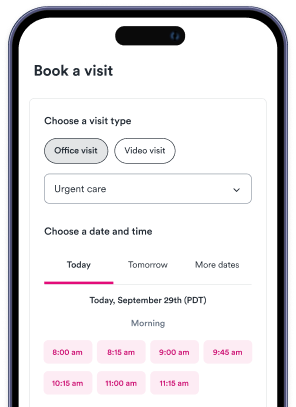
From the clinic or your couch. Find high quality, same-day urgent care for you and your kids. Book an urgent care visit today.
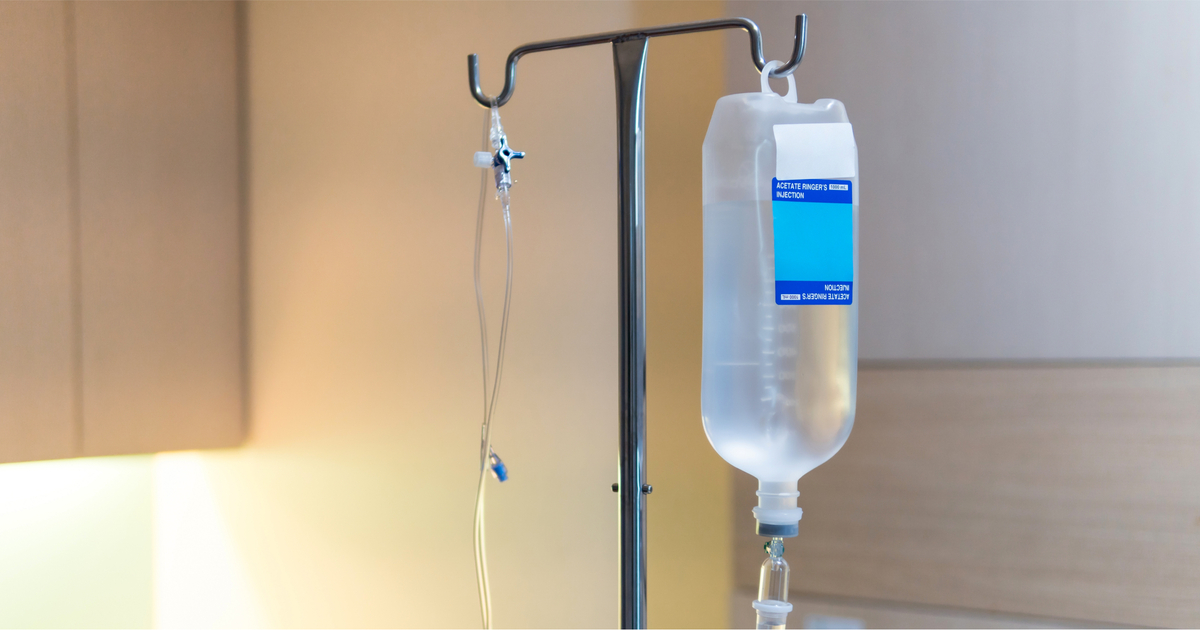
Yes — many urgent care centers offer intravenous (IV) fluid administration as a same-day service. IV fluids are used when the body needs fluid and electrolytes faster than oral hydration can deliver them, such as during severe vomiting, significant dehydration, or heat illness. That said, not every urgent care location has IV capabilities, so it is worth calling ahead to confirm before you arrive.
If you're not sure whether urgent care is the right place for your symptom, our complete guide to what urgent care treats can help.
IV fluid therapy is an established service at many urgent care centers, particularly larger, multi-site operators and those affiliated with health systems. IV fluids are administered under the supervision of a licensed provider — typically a physician, nurse practitioner, or physician assistant — and delivered by a registered nurse or medical assistant trained in IV placement.
Not all urgent care locations offer this service. Smaller or independently owned clinics may refer patients who need IV hydration to an emergency department. Call the clinic before your visit to confirm IV fluid availability.
IV fluids are indicated when oral hydration is insufficient or not possible. Common reasons urgent care providers recommend IV fluid treatment include:
Crystalloid solutions — primarily normal saline (0.9% NaCl) and lactated Ringer’s solution — are the first-line fluids for volume replacement in dehydration and most acute care settings, according to clinical guidance published in the NCBI Bookshelf.1
The type of IV fluid administered depends on the clinical indication:
The experience is straightforward:
A standard IV infusion at urgent care typically takes 30 to 60 minutes, depending on the volume ordered and the rate of infusion. A 1-liter bag of normal saline is the most common order and runs at rates that deliver it in roughly 30–60 minutes. If medications are added or additional fluids are needed, the total time may be longer. You can expect to be in the clinic for one to two hours from check-in to discharge.
Cost varies depending on the volume of fluid, any medications added, and your insurance coverage. Many insurance plans cover IV hydration when it is medically necessary — ordered by a provider for a documented clinical condition. Elective or wellness IV drip services are typically not covered by insurance and are paid out of pocket.
If you are concerned about cost, call the clinic’s billing team before your visit to understand what your plan covers and to get an out-of-pocket estimate.
Go directly to the emergency room if you have:
The Mayo Clinic notes that severe dehydration requiring hospitalization should be treated with IV fluids in an emergency setting where close monitoring of electrolytes and fluid balance is available.2 Urgent care is appropriate for moderate, uncomplicated presentations.
If you are dealing with dehydration, vomiting, or heat illness and need more than oral fluids, urgent care IV hydration can help you recover faster without the cost and wait of an ER visit. Use Solv to find an urgent care center near you that offers IV services, and confirm availability before you arrive.
Most urgent care centers offer IV hydration on a walk-in basis, but not every location has IV capabilities. Call ahead to confirm the service is available before you go. Arriving earlier in the day is advisable — IV treatment takes 30 to 60 minutes, and some clinics have limited capacity later in the day.
Many urgent care centers can administer IV fluids to pediatric patients, but IV placement in young children requires specific clinical experience. Call ahead to confirm the clinic treats children and is comfortable with pediatric IV placement. For significantly dehydrated infants or toddlers, or children who are lethargic or unresponsive, go directly to a pediatric emergency department.
No. Insurance does not cover elective IV hydration marketed for hangover recovery, energy, or general wellness — these are considered lifestyle services, not medically necessary care. IV fluids prescribed by a provider for a documented medical condition (dehydration, vomiting, heat exhaustion) are typically covered. If coverage matters, ask the clinic to confirm the diagnosis code before treatment begins.
Insurance typically covers IV hydration when it is medically necessary and ordered by a provider. Elective wellness IV drips are generally not covered and must be paid out of pocket. Call your insurer or the clinic’s billing team to confirm your coverage.
Urgent care IV treatment is appropriate for moderate, uncomplicated dehydration and similar presentations. The ER is the right choice for severe dehydration with altered mental status, suspected DKA, sepsis, or any life-threatening condition requiring close monitoring and emergency resources.
IV placement involves a brief pinch when the needle is inserted. Once the catheter is in place, most patients feel no discomfort. You can sit or recline comfortably during the infusion.
When you receive IV fluids at an urgent care clinic, you can expect the healthcare provider to assess your current state of health, review your medical history, take your vital signs, and screen you for any allergies you may have. If you require IV fluids, they will prep you for the procedure and monitor you for any adverse reactions during the entire course of your treatment.
While complications from receiving IV fluids are rare, they may include allergic reactions or fluid overload. If you experience any concerning symptoms after the treatment, it is important to contact your healthcare provider immediately.
From the clinic or your couch. Find high quality, same-day urgent care for you and your kids. Book an urgent care visit today.

Medically reviewed
View this article's sources and history, and read more about Solv's Content Mission Statement, editorial process, and editorial team.
Solv has strict sourcing guidelines and relies on peer-reviewed studies, academic research institutions, and medical associations. We avoid using tertiary references.
Solv’s team of medical writers and experts review and update our articles when new information becomes available.
Written by Solv Editorial Team
Medically reviewed by: Dr. Rob Rohatsch, MD
Edited by Solv Editorial Team
Edited by Solv Editorial Team
Edited by Solv Editorial Team
Edited by Solv Editorial Team
Edited by Solv Editorial Team
Edited by Solv Editorial Team
From the clinic or your couch. Find high quality, same-day urgent care for you and your kids. Book an urgent care visit today.