Urgent care near me
Sane-day doctor visits
Feel better faster. Get care today.
From the clinic or your couch. Find high quality, same-day urgent care for you and your kids. Book an urgent care visit today.
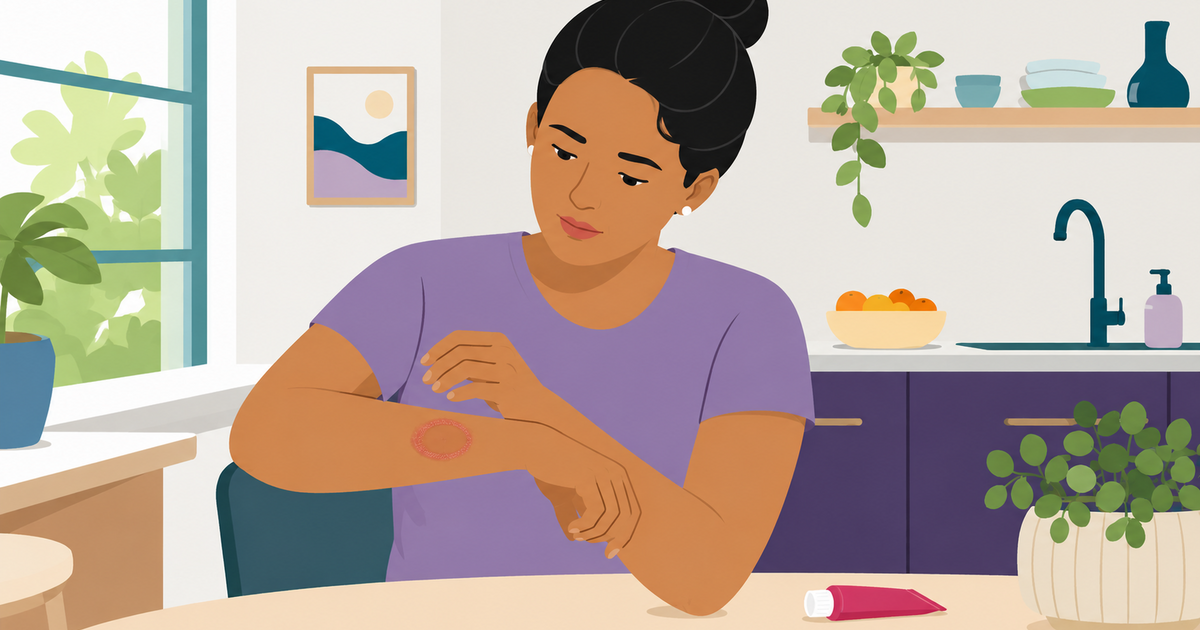
Ringworm has a misleading name — there's no worm involved. It's a fungal skin infection caused by dermatophytes, the same family of fungi responsible for athlete's foot and jock itch. The "ring" describes the rash itself: a circular, raised, scaly border that expands outward as the fungus spreads. According to the CDC, most ringworm infections on the skin clear up with over-the-counter antifungal treatment within 2–4 weeks.
Ringworm (tinea corporis on the body, tinea capitis on the scalp) is caused by fungi in the genera Trichophyton, Epidermophyton, and Microsporum, according to StatPearls (NIH). These fungi live on dead skin cells, hair, and nails, and thrive in warm, moist environments. Infection spreads through direct contact with infected skin, infected animals (especially cats), or contaminated objects like towels, clothing, combs, and gym equipment. Children are especially susceptible because their immune systems are still developing and they frequently share personal items.
The hallmark of ringworm on the body is a ring-shaped rash with a raised, red, scaly border and a clearer center. The patch typically starts small and expands over days to weeks. It may be itchy, and the edges can develop small blisters. On the scalp, ringworm causes patchy hair loss, scaliness, and sometimes small black dots where hair has broken off at the scalp surface. In people with darker skin tones, the redness may appear darker or more subtle. A single infection can cause multiple rings, and the patches may merge if untreated.
For skin infections on the body, the CDC recommends OTC antifungal creams, ointments, or lotions applied to the affected area and a 1–2 inch border around it for 2–4 weeks. Effective OTC options include clotrimazole, miconazole, terbinafine, and tolnaftate. Apply twice daily and continue for the full course even after the rash disappears — stopping early allows the fungus to regrow. The CDC explicitly warns against using steroid creams or hydrocortisone on ringworm; corticosteroids suppress local immunity and allow the fungus to spread more widely, sometimes creating a severe, hard-to-treat infection called tinea incognito. Scalp ringworm is a different situation entirely — it requires prescription oral antifungal medication (typically griseofulvin or terbinafine taken for 1–3 months) because topical treatments cannot penetrate the hair follicle.
Ringworm spreads through direct skin-to-skin contact with an infected person or animal, and through shared items like towels, clothing, hairbrushes, and gym equipment. NIH clinical guidance notes that the fungus can survive on surfaces for extended periods, making environmental decontamination important. To reduce spread: wash hands frequently, do not share personal items, shower promptly after contact sports or gym use, keep feet dry, wear sandals in public showers and pool areas, and wash and dry pet bedding regularly if a pet has been diagnosed. Keep the infected area covered with clothing or a bandage until treatment is well underway.
See a doctor if the rash does not improve after 2–4 weeks of consistent OTC antifungal treatment, if the infection is on the scalp (which always requires prescription oral medication), if the rash covers a large area of the body or involves the face, if the skin around the rash looks infected (increased redness, warmth, swelling, pain or pus), or if you are immunocompromised. Children with scalp ringworm should see a pediatrician or dermatologist promptly, as the infection can cause permanent hair loss if untreated. Nail ringworm (tinea unguium) is also difficult to treat and almost always requires prescription medication.
If your rash isn't clearing up, has spread, or you're not certain it's ringworm, a quick urgent care visit can confirm the diagnosis and get you a prescription if needed — usually without waiting days for a dermatology appointment. Find an urgent care near you and book instantly at https://www.solvhealth.com/.
Ringworm typically starts as a small, scaly, itchy patch that expands outward into a ring shape. The edges of the ring are raised, red, and sometimes blister-like, while the center may appear clearer. On the scalp, it causes patchy hair loss and scaliness rather than a classic ring. The appearance varies by body location and skin tone.
Yes. Ringworm spreads through direct contact with an infected person, animal, or contaminated surface. It's common to catch it from pets (especially cats), shared gym equipment, towels, or clothing. Infected individuals should avoid sharing personal items and keep the rash covered until treatment is underway.
With consistent OTC antifungal treatment applied twice daily, most skin ringworm infections clear up in 2–4 weeks. Scalp ringworm treated with prescription oral antifungals typically takes 1–3 months. Continue treatment for the full recommended course even after the rash appears to have resolved.
No. The CDC explicitly warns against using steroid creams or ointments on ringworm. Corticosteroids suppress the immune response in the skin and allow the fungus to spread more widely, often creating a harder-to-treat infection. If a rash is itchy and you're unsure of the cause, see a provider before applying any steroid cream.
Scalp ringworm (tinea capitis) always requires a prescription oral antifungal because topical creams cannot penetrate the hair follicle. Skin ringworm that doesn't improve after 2–4 weeks of OTC treatment, covers a large area, involves the face or nails, or occurs in an immunocompromised person also warrants a prescription and provider evaluation.
From the clinic or your couch. Find high quality, same-day urgent care for you and your kids. Book an urgent care visit today.

Dr. Linda Halbrook is a Board-Certified Family Medicine physician with over 40 years of experience, dedicated to providing comprehensive care to patients across Texas. She retired from practice but currently serves on the Clinical Services Committee of CommonGood Medical, a non-profit organization serving the uninsured in Collin County.
Medically reviewed
View this article's sources and history, and read more about Solv's Content Mission Statement, editorial process, and editorial team.
Solv has strict sourcing guidelines and relies on peer-reviewed studies, academic research institutions, and medical associations. We avoid using tertiary references.
Solv’s team of medical writers and experts review and update our articles when new information becomes available.
Written by Solv Editorial Team
Medically reviewed by: Dr. Rob Rohatsch, MD
From the clinic or your couch. Find high quality, same-day urgent care for you and your kids. Book an urgent care visit today.