Urgent care near me
 Key points
- Mastitis is breast inflammation that can include redness, swelling, pain, fever, and flu-like symptoms — most often in the first 6 weeks of breastfeeding.
- Continue breastfeeding or pumping — frequent milk removal is the most important treatment and won't harm your baby.
- Cold compresses, ibuprofen, and gentle breast support are now recommended; deep tissue massage and heat are no longer advised by the Academy of Breastfeeding Medicine.
- See a clinician if symptoms last more than 24 hours, you have a fever over 101°F, or you notice a hard, painful lump that doesn't drain with feeding.
- Antibiotics are needed when bacterial mastitis is diagnosed; severe cases can develop into a breast abscess that requires drainage.

Mastitis is inflammation of breast tissue, most often in people who are breastfeeding or chestfeeding. It can cause a painful, red, warm patch on the breast along with flu-like symptoms such as fever, chills, and body aches. Most cases improve within 24 to 48 hours with frequent milk removal, rest, ibuprofen, and cold compresses — but bacterial mastitis needs antibiotics, and a small number of cases progress to an abscess that requires drainage.1 Urgent care can evaluate symptoms, prescribe lactation-safe antibiotics, and refer for imaging if an abscess is suspected.
What is mastitis and what causes it?
The Academy of Breastfeeding Medicine (ABM) now describes mastitis as a spectrum that starts with ductal narrowing and inflammation and can progress to bacterial infection or abscess.1 Older terms like "blocked duct" and "plugged duct" are being phased out — the underlying problem is usually inflammation and tissue edema rather than a literal blockage.
Common contributors include oversupply, infrequent or skipped feedings, tight bras or sling straps, nipple trauma, and disruption of the breast microbiome (sometimes after antibiotic use).2 Mastitis is most common in the first six weeks postpartum but can occur at any point during breastfeeding.
What are the symptoms of mastitis?
Early signs are localized: a wedge-shaped area of the breast becomes tender, firm, red, and warm. As inflammation progresses, systemic symptoms can develop:2,3
Fever above 101°F (38.3°C), chills or sweats, fatigue and body aches, nausea, and a fast heart rate. The affected area may feel hard and painful even when the breast is otherwise drained. On darker skin tones, redness can be subtle — look for warmth, shininess, or a slight color change compared with the rest of the breast.
How is mastitis treated at home?
The ABM's 2022 protocol updated the home-care playbook based on new evidence:1
Continue breastfeeding or pumping on demand. Milk from a mastitis-affected breast is safe for your baby and frequent removal is the most important treatment. Avoid the older advice to "empty" the breast aggressively — overstimulation can worsen inflammation. Use cold compresses (not heat) between feedings to reduce swelling. Take ibuprofen (400 mg every 6 hours as needed) to address pain and inflammation; acetaminophen can be added for fever. Wear a supportive but not tight bra. Skip deep tissue massage — gentle lymphatic stroking toward the armpit is now preferred.
When do you need antibiotics for mastitis?
If symptoms haven't improved within 24 hours of consistent home care, or if you have a fever over 101°F that persists, contact a clinician. Bacterial mastitis is typically treated with a 10- to 14-day course of dicloxacillin or cephalexin — both are compatible with breastfeeding.4 If you have a penicillin allergy or your symptoms suggest MRSA (such as recent hospital exposure, an abscess, or no improvement after first-line antibiotics), clindamycin or trimethoprim-sulfamethoxazole may be prescribed.
Take the full course even if you start feeling better quickly. Continue breastfeeding throughout antibiotic treatment.
When should you go to urgent care for mastitis?
Urgent care is appropriate when you need same-day evaluation but aren't in crisis. Reasons to go include:
Fever over 101°F that persists more than 24 hours; a hard, painful lump that doesn't improve with feeding or pumping; worsening redness or red streaks spreading on the breast; a cracked nipple with discharge or pus; or repeated episodes of mastitis. Bring your insurance card, a list of any medications, and the date of your last feeding so the clinician can plan your treatment around your nursing schedule.
How do you know if a breast abscess has formed?
A breast abscess is a collection of pus that forms when mastitis doesn't fully resolve. It feels like a fluctuant (soft, fluid-filled) lump that often does not improve with feeding, and the overlying skin may be red and very tender. Imaging — usually a bedside ultrasound — confirms the diagnosis, and treatment is needle aspiration or incision and drainage, often performed by an urgent care provider, surgeon, or radiologist.5 You can typically continue breastfeeding on the affected side after drainage.
When should you go to the ER instead?
Go to the emergency department rather than urgent care if you have signs of sepsis — a fever above 103°F with confusion, rapid breathing, or low blood pressure — or if the red, swollen area is rapidly expanding. These can signal a serious infection that needs IV antibiotics.
Next steps
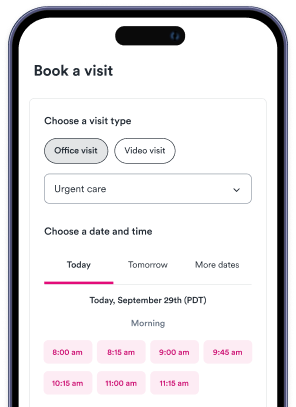
If you're a nursing parent with new breast pain, redness, or fever, start home care now and watch the clock. If you're not better in 24 hours — or if you're worse — book a same-day visit through Solv to get evaluated, prescribed lactation-safe antibiotics if needed, and reassured that you can keep breastfeeding through treatment.
Frequently asked questions
Can I still breastfeed if I have mastitis?
Yes. Continuing to breastfeed or pump is the most important part of treatment — milk from the affected breast is safe for your baby, even if you're on antibiotics. Stopping suddenly can worsen inflammation and increase the risk of an abscess. If feeding on the affected side is too painful, hand expression or gentle pumping on that side is acceptable until you can resume.
How long does mastitis usually last?
With consistent home care, most symptoms improve within 24 to 48 hours. Localized soreness can linger for several days even after the redness and fever resolve. If symptoms aren't trending better within 24 hours of starting cold compresses, ibuprofen, and frequent feeds, see a clinician — bacterial mastitis typically needs a 10- to 14-day antibiotic course.
Will my baby get sick if I have mastitis?
No. Mastitis is an inflammation of breast tissue, not an illness that's passed through milk. Your baby is not at risk from feeding on the affected side. The protective antibodies in breast milk actually help defend your baby against the bacteria that may be involved.
Can mastitis happen if I'm not breastfeeding?
Yes, but it's uncommon. Non-lactational mastitis can occur with nipple piercings, smoking, autoimmune conditions, or following breast surgery. Inflammatory breast cancer can mimic mastitis in non-nursing people, so any redness or swelling that doesn't resolve in two to three weeks needs imaging and a clinician evaluation.
Are there ways to prevent mastitis from coming back?
Frequent, complete feedings on a flexible schedule are the strongest preventive step. Avoid tight bras and underwires that compress ducts, treat nipple cracks promptly, and address oversupply with your lactation consultant if you're prone to engorgement. Probiotic supplements have mixed evidence and aren't a substitute for milk removal.
What's the difference between a clogged duct and mastitis?
The Academy of Breastfeeding Medicine no longer uses 'clogged duct' as a distinct diagnosis — it's now considered part of the same inflammatory spectrum. A localized tender lump without fever is on the milder end; the same lump plus fever, chills, and a red wedge is mastitis. Treatment is similar: frequent feeds, cold compresses, and ibuprofen, with antibiotics added if systemic symptoms persist.

How we reviewed this article
Medically reviewed
View this article's sources and history, and read more about Solv's Content Mission Statement, editorial process, and editorial team.
5 sources
Solv has strict sourcing guidelines and relies on peer-reviewed studies, academic research institutions, and medical associations. We avoid using tertiary references.
- Mitchell KB, et al. Academy of Breastfeeding Medicine Clinical Protocol #36: The Mastitis Spectrum, Revised 2022. Breastfeeding Medicine.
- Blackmon MM, et al. Acute Mastitis. StatPearls Publishing. National Library of Medicine.
- Cleveland Clinic. Mastitis: Symptoms, causes, and treatment.
- Drugs and Lactation Database . Dicloxacillin. National Library of Medicine. (LactMed)
- Mayo Clinic. Mastitis: Diagnosis and treatment.
Solv’s team of medical writers and experts review and update our articles when new information becomes available.
September 15 2022
Written by Solv Editorial Team
Medically reviewed by: Dr. Rob Rohatsch, MD
May 01 2026
Edited by Solv Editorial Team
May 02 2026
Edited by Solv Editorial Team
May 06 2026
Edited by Solv Editorial Team
May 19 2026
Edited by Solv Editorial Team
May 20 2026
Edited by Solv Editorial Team
May 23 2026
Edited by Solv Editorial Team
June 03 2026
Edited by Solv Editorial Team