Urgent care near me
Sane-day doctor visits
Feel better faster. Get care today.
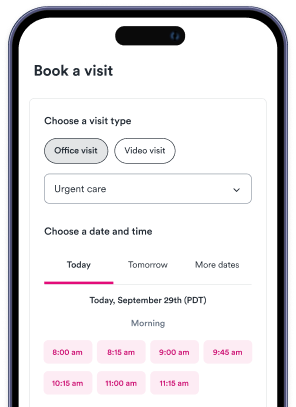
From the clinic or your couch. Find high quality, same-day urgent care for you and your kids. Book an urgent care visit today.

Dehydration in adults ranges from a mild inconvenience — thirst, darker urine — to a medical emergency that can cause confusion, rapid heart rate, and organ stress. Summer heat, vigorous outdoor activity, and illnesses involving fever or vomiting all accelerate fluid loss and raise the risk. According to StatPearls (NIH), adult dehydration presents across a spectrum from mild to severe, and recognizing the stage you're in determines whether you need water and rest or a trip to urgent care for IV fluids.
Early, mild dehydration causes symptoms that are easy to dismiss: thirst, dry or sticky mouth, a mild headache, fatigue, and urine that appears darker than usual — deep yellow rather than the pale straw color of adequate hydration. StatPearls (NIH) notes that thirst itself is a late indicator in adults, meaning the body is already somewhat depleted by the time you feel it strongly. Reduced urine frequency is another reliable early marker — most adequately hydrated adults urinate every 2–4 hours; going significantly longer without urinating signals mounting fluid deficit.
As dehydration progresses, symptoms become more physically disruptive. Moderate dehydration produces dizziness or lightheadedness when standing up (orthostatic hypotension), muscle cramps, dry skin that tents when pinched, a rapid heartbeat, and decreased or absent urine output. Urine, if any is produced, is dark amber or brown. Severe dehydration — a medical emergency — adds confusion or disorientation, extreme fatigue, sunken eyes, rapid and shallow breathing, low blood pressure, and in extreme cases, loss of consciousness. According to NIH clinical guidance, severe dehydration requires immediate intravenous fluid replacement.
For mild-to-moderate dehydration without vomiting, oral rehydration is effective and appropriate. PMC research on oral rehydration therapy notes that reduced-osmolarity oral rehydration solutions (ORS) are more effective than plain water because they replace sodium, potassium, and glucose alongside fluid — all of which are lost in sweat, vomiting, and diarrhea. Sports drinks contain electrolytes but are often high in sugar; medical-grade ORS formulations are preferable for significant fluid loss. Plain water is fine for mild dehydration from routine daily activity in a hot environment. Avoid alcohol, which increases fluid loss. Rehydrate gradually — drinking large amounts of plain water rapidly can dilute sodium levels and cause its own complications.
Adults over 65 are at significantly higher risk because the sense of thirst diminishes with age and kidney function changes affect fluid regulation. People who work or exercise outdoors in summer heat, those with illnesses involving fever, vomiting, or diarrhea, people taking diuretic medications, and individuals with diabetes are all at elevated risk. The CDC notes that outdoor workers and athletes in hot weather environments face acute dehydration risk and should drink fluids proactively rather than waiting for thirst. Approximately 2–3 liters of fluid daily is the NIH-cited baseline for most adults, with greater amounts needed in heat or during illness.
Seek medical attention if you are unable to keep fluids down due to vomiting, if you are producing no urine or urine is very dark for several hours, if you feel dizzy or faint when standing, if you are confused or unusually disoriented, or if you have a fever above 103°F alongside signs of dehydration. Older adults and people with heart disease or kidney disease should seek evaluation earlier in the course of dehydration because complications arise more quickly. Do not try to push through severe symptoms at home — IV fluids can correct dehydration within 1–2 hours at an urgent care center.
If you're past the point where sipping sports drinks is helping — if you're dizzy, can't hold fluids down, or haven't urinated in hours — urgent care is the right next step. Many urgent care centers offer IV fluids and same-day treatment for dehydration without the wait of an emergency room. Find a location near you at https://www.solvhealth.com/.
The earliest signs include thirst, dry or sticky mouth, darker than usual urine (deep yellow rather than pale straw), reduced urination, fatigue, and mild headache. These early-stage symptoms indicate mild dehydration that can be corrected with increased fluid intake, including oral rehydration solutions.
Urine color is one of the simplest self-checks. Pale yellow urine suggests adequate hydration; dark yellow or amber urine suggests dehydration. The skin turgor test (pinch the skin on the back of your hand — if it takes more than 2 seconds to return to normal, dehydration may be present) is used clinically but has limited accuracy in older adults. Feeling dizzy when standing up (orthostatic hypotension) is a more reliable sign of moderate-to-severe dehydration.
Moderate consumption of caffeinated beverages like coffee or tea does not cause net dehydration in habitual drinkers, according to research reviewed by NIH. While caffeine has a mild diuretic effect, the fluid in these beverages more than compensates for increased urine output at normal intake levels. That said, caffeinated drinks are not as effective as water or oral rehydration solutions for rehydrating after significant fluid loss.
IV fluids are needed when a person cannot drink adequate amounts due to nausea, vomiting, or altered consciousness; when dehydration is severe (confusion, rapid heart rate, inability to stand without dizziness, little or no urine for hours); or when oral rehydration therapy fails. Urgent care centers can administer IV fluids for most cases of dehydration without requiring an emergency room visit.
NIH guidance suggests most adults need approximately 2–3 liters of total fluid per day from all sources, including food. Individual needs vary based on body size, activity level, climate, and health status. Hot weather, exercise, fever, diarrhea, and vomiting all increase fluid requirements significantly above baseline.
From the clinic or your couch. Find high quality, same-day urgent care for you and your kids. Book an urgent care visit today.

Dr. Linda Halbrook is a Board-Certified Family Medicine physician with over 40 years of experience, dedicated to providing comprehensive care to patients across Texas. She retired from practice but currently serves on the Clinical Services Committee of CommonGood Medical, a non-profit organization serving the uninsured in Collin County.
Medically reviewed
View this article's sources and history, and read more about Solv's Content Mission Statement, editorial process, and editorial team.
Solv has strict sourcing guidelines and relies on peer-reviewed studies, academic research institutions, and medical associations. We avoid using tertiary references.
Solv’s team of medical writers and experts review and update our articles when new information becomes available.
Written by Solv Editorial Team
Medically reviewed by: Dr. Rob Rohatsch, MD
From the clinic or your couch. Find high quality, same-day urgent care for you and your kids. Book an urgent care visit today.