Urgent care near me
 Key points
- Every first aid kit should include assorted bandages, antiseptic, antibiotic ointment, and medical tape for complete wound care.
- Scissors and tweezers are essential tools — keep them clean and dedicated to the kit so they're sterile when you need them.
- Hydrocortisone cream relieves itching from bites and rashes; instant cold packs reduce swelling when applied within 30 minutes of injury.
- Alcohol-based hand sanitizer (60%+ alcohol) lets you disinfect your hands before treating a wound when soap and water aren't available.
- Seek urgent care for wounds that won't stop bleeding, deep cuts, burns that blister, signs of infection, or tick bites in high-risk areas.
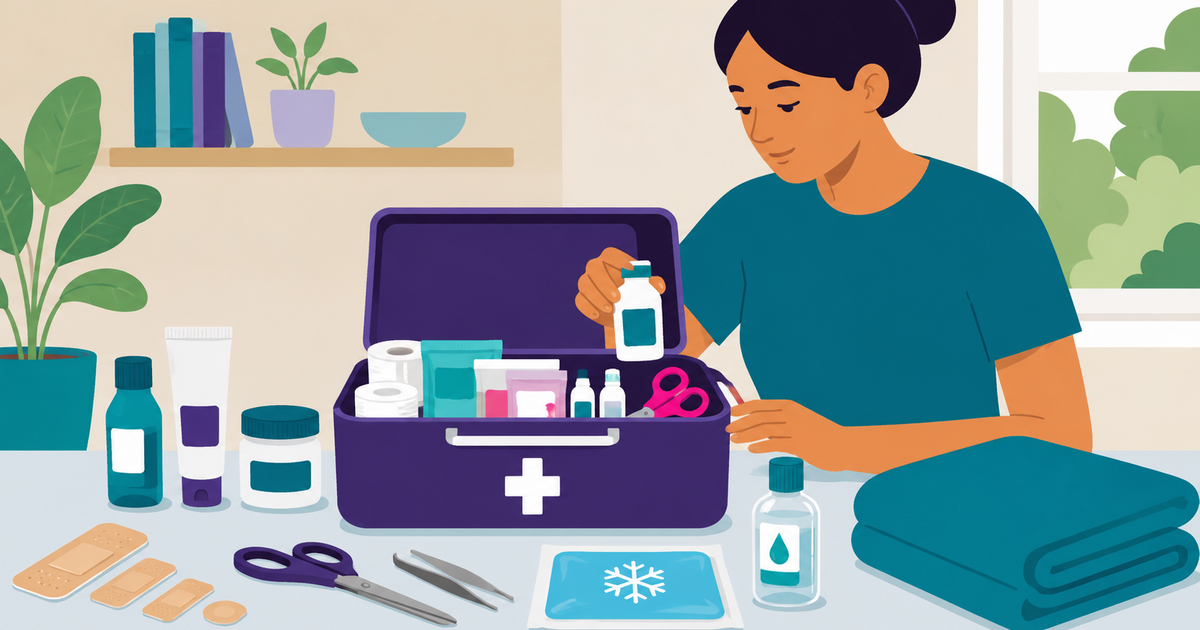
A well-stocked first aid kit is one of the most practical things you can keep at home — and one of the most commonly neglected. Most injuries that send people to the emergency room are minor enough that prompt, proper first aid at home could have reduced pain, prevented infection, or avoided a trip to the doctor altogether. The American Red Cross and Ready.gov both recommend keeping a kit accessible in your home, your car, and when traveling. Here is what every kit should include and why each item earns its place.
Wound care: the core of any kit
The items you'll reach for most often are the ones designed to clean, cover, and protect wounds.
Assorted bandages. Stock a range of sizes — small adhesive strips for fingertip cuts, medium bandages for scrapes, and larger non-stick pads for deeper abrasions or burns. MedlinePlus recommends keeping sterile gauze pads as well, which conform better to irregular wounds and allow for more absorbent coverage than adhesive bandages alone. Store bandages in a sealed plastic bag inside the kit to keep them dry and sterile until use.
Antiseptic solution or wipes. Cleaning a wound before covering it is not optional — any cut, scrape, or puncture can become infected if debris and bacteria are left behind. Antiseptic wipes or a solution like povidone-iodine or hydrogen peroxide are effective for initial cleaning. Puncture wounds and bites carry a higher infection risk and may need professional evaluation regardless of size.
Antibiotic ointment. Antiseptic cleans the wound; antibiotic ointment keeps it that way during healing. Applying a thin layer under a bandage reduces the risk of bacterial infection and helps maintain the moist environment that promotes faster tissue repair. Check the expiration date when restocking your kit — expired ointments lose potency.
Medical tape. Unlike ordinary tape, medical-grade tape is designed to hold bandages securely without irritating skin or leaving residue. It also allows for broader coverage when gauze needs to be secured over a wound. A roll of medical tape is versatile enough to apply pressure, reinforce loose bandages, and support minor splints.
Essential tools
Scissors. Dedicated first aid scissors — ideally bandage scissors with a blunt lower blade — serve several uses: cutting tape, trimming gauze, opening packaging, and in some cases, carefully cutting away clothing around an injury. Keep these separate from kitchen or craft scissors, and clean them after each use.
Tweezers. Splinters, thorns, ticks, and debris in wounds all need to be removed promptly. A clean, fine-tipped pair of tweezers gives you control that fingers cannot. For tick removal specifically, grasp the tick as close to the skin as possible and pull upward with steady, even pressure — never twist or crush the body. After removal, clean the bite site with antiseptic.
Itch, pain, and swelling
Hydrocortisone cream. Mild hydrocortisone (1%) reduces inflammation and relieves itching from insect bites, contact with poison ivy or oak, minor rashes, and skin irritation. It is one of the few over-the-counter anti-inflammatory treatments appropriate for immediate home use. Like all topical medications, check the expiration date every six months — a useful habit to pair with smoke detector battery checks each spring and fall.
Cold packs. Cold applied within the first 20 to 30 minutes of a sprain or contusion limits swelling and reduces pain by constricting blood vessels near the surface. Instant cold packs (the kind you activate by squeezing) are convenient for a kit; reusable gel packs work well for home use. Always wrap any cold pack in a thin cloth before applying to skin — direct contact for more than 20 minutes can cause frostbite on the surface tissue.
Hygiene and emergency readiness
Hand sanitizer. Treating a wound with contaminated hands defeats the purpose of the kit. An alcohol-based hand sanitizer (at least 60% alcohol, per CDC guidance) lets you quickly disinfect your hands when soap and water are not available. This matters most in outdoor situations, car accidents, or any injury that happens away from a sink.
Emergency blanket. A compact, foil-lined emergency blanket takes up almost no space and can be critical if someone goes into shock, develops hypothermia, or needs to be kept warm while waiting for help to arrive. Shock — a dangerous drop in blood flow following severe injury or sudden illness — causes the body to lose heat rapidly. A clean, dedicated blanket in the kit ensures you're not reaching for a blanket the dog slept on.
When to go beyond the kit
A first aid kit handles the immediate response — it does not replace professional evaluation when injuries go beyond the surface. Seek care at an urgent care center for wounds that are deep, gaping, or won't stop bleeding after 10 to 15 minutes of direct pressure; burns that blister or cover a significant area; signs of infection in a wound (increasing redness, warmth, swelling, or discharge); tick bites in areas where Lyme disease is prevalent; or any injury affecting vision, joints, or mobility. If symptoms suggest a serious emergency — chest pain, difficulty breathing, loss of consciousness, or suspected broken bones — call 911 or go directly to an emergency room.
Frequently asked questions
What are the most important items in a first aid kit?
The core essentials are assorted bandages, antiseptic solution or wipes, antibiotic ointment, medical tape, scissors, and tweezers. These items cover the most common household injuries — cuts, scrapes, burns, and splinters. The American Red Cross and Ready.gov also recommend adding hydrocortisone cream, cold packs, hand sanitizer, and an emergency blanket.
How often should I restock or check my first aid kit?
Check your first aid kit at least twice a year. A practical time to do this is when you change your clocks in spring and fall — the same time you check smoke alarm batteries. Look for expired medications and ointments, depleted bandage supplies, and any items that have been damaged or contaminated.
Should I use hydrogen peroxide to clean wounds?
Hydrogen peroxide and povidone-iodine are both effective for initial wound cleaning. However, hydrogen peroxide should not be used on deep wounds or as an ongoing treatment, as it can damage healthy tissue and slow healing. A gentle rinse with clean water followed by antiseptic is appropriate for most minor wounds.
How do I remove a tick safely?
Use fine-tipped tweezers to grasp the tick as close to the skin surface as possible. Pull upward with steady, even pressure — do not twist or jerk. After removal, clean the bite area with antiseptic. Monitor the site for a bull's-eye rash or flu-like symptoms in the weeks following the bite, and see a doctor if either develops.
When should a wound be seen by a doctor instead of treated at home?
Seek care at an urgent care center for wounds that are deep, gaping, or do not stop bleeding after 10 to 15 minutes of direct pressure. Also seek care for burns that blister or cover a large area, wounds showing signs of infection (increasing redness, warmth, swelling, or discharge), animal bites, and puncture wounds that may require a tetanus booster.
What is an emergency blanket used for in a first aid kit?
An emergency blanket — typically a compact, foil-lined sheet — is used to retain body heat when someone is at risk for hypothermia or has gone into shock. Shock causes rapid loss of body warmth and can follow serious injury or sudden illness. Keeping a clean, dedicated blanket in the kit ensures it's hygienic and immediately available when needed.
Why should a first aid kit include a cold pack?
A cold pack is included in a first aid kit to help reduce and prevent swelling of contusions and sprains. It can be a prepackaged dry ice or a zippered plastic bag with a few ice cubes.
What is the role of a clean blanket in a first aid kit?
A clean blanket in a first aid kit is used in case of severe wounds where shock is a possibility. It's important to use a clean blanket from the first aid kit rather than a blanket from around the house that may not be clean.

How we reviewed this article
Medically reviewed
View this article's sources and history, and read more about Solv's Content Mission Statement, editorial process, and editorial team.
6 sources
Solv has strict sourcing guidelines and relies on peer-reviewed studies, academic research institutions, and medical associations. We avoid using tertiary references.
Solv’s team of medical writers and experts review and update our articles when new information becomes available.
August 20 2013
Written by Solv Editorial Team
Medically reviewed by: Dr. Rob Rohatsch, MD
June 01 2026
Edited by Solv Editorial Team
June 03 2026
Edited by Solv Editorial Team