Urgent care near me
Sane-day doctor visits
Feel better faster. Get care today.
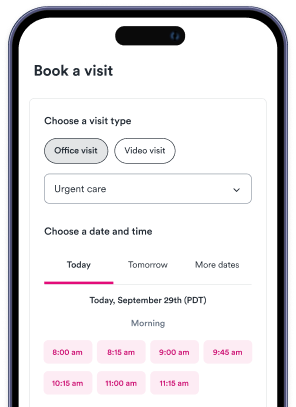
From the clinic or your couch. Find high quality, same-day urgent care for you and your kids. Book an urgent care visit today.

Diarrhea and vomiting together are miserable, but in most healthy adults and older children, viral gastroenteritis runs its course in 1–3 days without any specific treatment. The real danger isn't the infection itself — it's dehydration, which can develop quickly when fluids are lost through both vomiting and diarrhea simultaneously. The NIDDK (NIH) notes that knowing the warning signs of significant dehydration is the key to deciding whether to rest at home or head to urgent care.
The most common cause is viral gastroenteritis — an infection of the stomach and intestines by viruses such as norovirus or rotavirus. Norovirus is the leading cause of acute gastroenteritis in the U.S. year-round; rotavirus is more common in children. In summer, foodborne illness from bacteria like Salmonella, Campylobacter, E. coli, and Staphylococcus aureus becomes more prevalent because warm temperatures accelerate bacterial growth in improperly stored food. The CDC's food safety guidance notes that food left out at temperatures above 40°F can become unsafe within 2 hours in normal conditions, and within just 1 hour in temperatures above 90°F — a common summer scenario at picnics and cookouts.
Replacing lost fluids is the priority. The NIDDK recommends starting with small, frequent sips of oral rehydration solutions (ORS) — these contain the right balance of sodium, potassium, and glucose to replace what's lost through vomiting and diarrhea. Plain water alone is not adequate for significant fluid loss because it doesn't replace electrolytes and can further dilute sodium levels. Once vomiting subsides, gradually reintroduce bland foods: crackers, toast, rice, applesauce, and bananas. Avoid dairy, fatty or fried foods, high-sugar beverages, and alcohol until recovered. Most adults can manage mild-to-moderate gastroenteritis entirely at home with consistent oral hydration.
According to NIDDK guidance, adults should seek medical care if they cannot keep any fluids down for more than 24 hours, develop signs of dehydration (dizziness when standing, not urinating for 6 or more hours, dark or absent urine, dry mouth and throat, unusual confusion), have a fever above 104°F (40°C), notice blood in stool or vomit, or if symptoms last longer than 3 days without improvement. Older adults (over 65), pregnant women, people with a weakened immune system, or those with chronic health conditions like diabetes or kidney disease should seek evaluation sooner, as they are at higher risk of severe dehydration and complications.
Children become dehydrated faster than adults and require lower thresholds for medical evaluation. According to AAFP guidelines on pediatric dehydration, call the pediatrician or go to urgent care if a child has not urinated in 6–8 hours (or an infant has fewer than 3 wet diapers in 24 hours), is not producing tears when crying, has a dry mouth or sunken eyes, is unusually sleepy or hard to wake, has a fever above 104°F, has blood in their stool or vomit, or is an infant under 12 months. Diarrhea is especially dangerous in newborns and young infants, who can become severely dehydrated within 24 hours, according to NIDDK guidance.
Both cause diarrhea, vomiting, nausea, and stomach cramping, but they differ in onset and severity. Viral gastroenteritis typically has an incubation period of 24–48 hours after exposure. Foodborne illness from bacterial toxins can cause symptoms within hours of eating contaminated food. The CDC notes that bacterial food poisoning is more likely to cause high fever, bloody stool, and severe abdominal cramping. If multiple people who shared a meal all become ill simultaneously, food poisoning is the probable cause. Some bacterial causes — such as Salmonella or E. coli O157:H7 — require medical evaluation because they can cause serious complications, particularly in children and older adults.
Seek urgent care if you cannot keep fluids down and are showing signs of dehydration, if you have bloody stool or vomit, if you have severe abdominal pain (not just cramping), if you have a high fever (above 104°F in adults), if you suspect a medication reaction or poisoning, or if symptoms have lasted more than 3 days without improvement. IV fluids and anti-nausea medication can be administered at most urgent care centers, making it unnecessary to go to the emergency room for most cases of severe dehydration from gastroenteritis.
If you or your child can't keep fluids down, are showing signs of dehydration, or symptoms have lasted more than a day or two without improving, urgent care can help — with IV fluids, anti-nausea medication, and same-day evaluation. No appointment necessary. Find a location near you at https://www.solvhealth.com/.
Viral gastroenteritis (the most common cause) typically resolves within 1–3 days, though it can last up to 10 days in some cases. Vomiting usually subsides within 24–48 hours; diarrhea may persist a few days longer. If symptoms are worsening after 3 days or haven't resolved by day 10, see a doctor.
Start with small sips of clear fluids — oral rehydration solutions, broth, or diluted juice. Avoid plain water alone for significant dehydration, as it doesn't replace electrolytes. Once vomiting subsides, gradually introduce bland, easy-to-digest foods: crackers, toast, rice, applesauce, and bananas. Avoid dairy, fatty foods, high-fiber foods, and alcohol until fully recovered.
Take a child to urgent care or call the pediatrician if the child has not urinated in 6–8 hours (or has had fewer than 3 wet diapers in 24 hours for infants), is not producing tears when crying, has a dry mouth, is unusually sleepy or difficult to wake, has a fever above 104°F, or has blood in their stool or vomit. Infants under 12 months with diarrhea should be evaluated promptly.
Loperamide (Imodium) can reduce diarrhea frequency in adults with non-bloody, non-infectious diarrhea. The CDC recommends against using it if you have bloody diarrhea or if the diarrhea is caused by certain bacterial infections (like C. difficile), as slowing the bowel can worsen these conditions. Do not give Imodium to children without consulting a doctor.
Food poisoning and viral gastroenteritis cause similar symptoms, but food poisoning often has a shorter incubation period (symptoms start within hours of eating the contaminated food) and may be more severe at onset. Bacterial food poisoning is more likely to cause high fever, bloody stool, and severe abdominal cramping. If multiple people who ate the same meal become ill at the same time, food poisoning is the likely cause. The NIDDK notes that distinguishing the two often requires testing.
From the clinic or your couch. Find high quality, same-day urgent care for you and your kids. Book an urgent care visit today.

Dr. Linda Halbrook is a Board-Certified Family Medicine physician with over 40 years of experience, dedicated to providing comprehensive care to patients across Texas. She retired from practice but currently serves on the Clinical Services Committee of CommonGood Medical, a non-profit organization serving the uninsured in Collin County.
Medically reviewed
View this article's sources and history, and read more about Solv's Content Mission Statement, editorial process, and editorial team.
Solv has strict sourcing guidelines and relies on peer-reviewed studies, academic research institutions, and medical associations. We avoid using tertiary references.
Solv’s team of medical writers and experts review and update our articles when new information becomes available.
Written by Solv Editorial Team
Medically reviewed by: Dr. Rob Rohatsch, MD
From the clinic or your couch. Find high quality, same-day urgent care for you and your kids. Book an urgent care visit today.