Urgent care near me
 Key points
- Ear pain after flying is usually ear barotrauma — pressure difference across the eardrum caused by altitude changes — which resolves on its own in most cases.
- Swimmer's ear (otitis externa) is an outer ear canal infection caused by water remaining in the ear, creating a moist environment for bacteria.
- Middle ear infections (otitis media) can follow swimming or upper respiratory infections and cause deeper, more severe pain than swimmer's ear.
- The key distinguishing sign: swimmer's ear causes pain when the outer ear is pulled or pressed; middle ear infection typically does not.
- Persistent ear pain lasting more than 48 hours, fever, drainage from the ear canal, or hearing loss warrant a clinic visit.
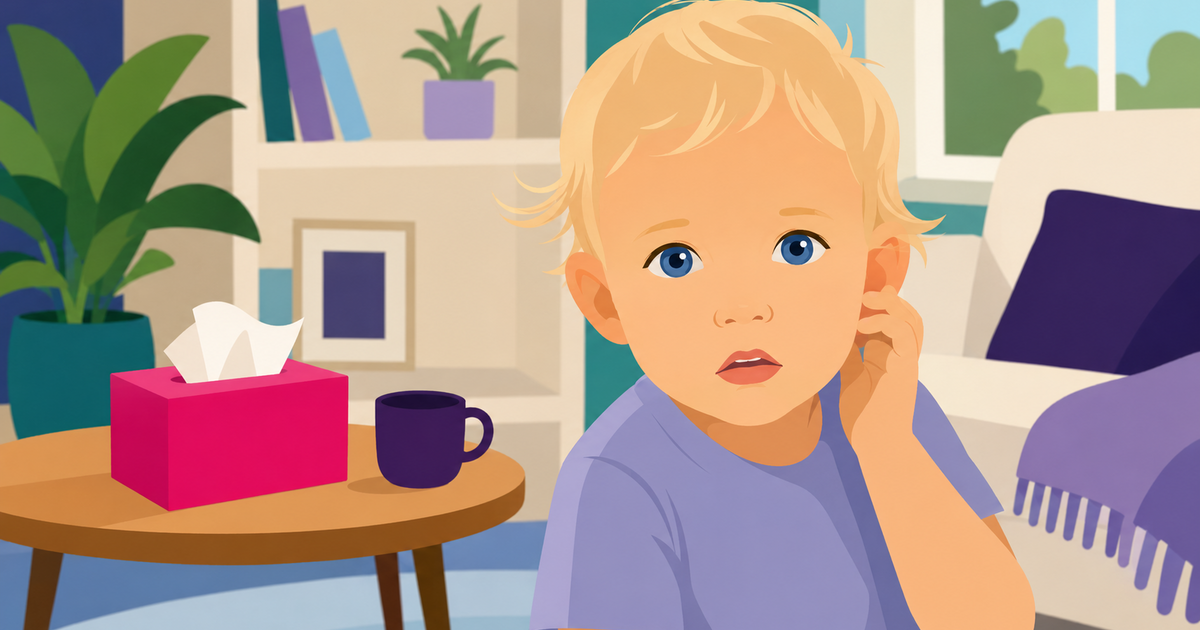
You've just landed after a long flight or picked your child up from swim practice, and now they're tugging at their ear and crying. Ear pain is one of the most common childhood complaints, and it has several distinct causes that look and feel different from one another. Figuring out what's actually going on determines how you respond — and whether your child needs to be seen by a provider right away or can be managed at home while you watch and wait. Here's a clear breakdown of the three most common culprits: ear barotrauma from flying, swimmer's ear, and middle ear infection.
Ear barotrauma: when altitude changes cause pressure pain
During takeoff and landing, cabin pressure changes rapidly. The Eustachian tube — a narrow channel connecting the middle ear to the back of the throat — normally adjusts this pressure difference automatically. In children, the Eustachian tube is shorter, more horizontal, and floppier than in adults, making it less efficient at equalizing pressure. When equalization doesn't happen fast enough, the pressure difference across the eardrum causes stretching and pain. This is called ear barotrauma, or barotitis media.
The sensation ranges from a mild uncomfortable fullness to sharp pain, and some children become inconsolable during descent. Most cases resolve within an hour or two after landing as the Eustachian tube equalizes on its own. Helping your child swallow, yawn, or chew gum during descent can activate the muscles that open the Eustachian tube. For infants and toddlers who can't chew gum, nursing, drinking from a bottle, or using a pacifier during descent accomplishes the same thing. The Valsalva maneuver — gently blowing out against pinched nostrils with the mouth closed — helps older children, though care must be taken not to blow too forcefully.
If your child had an active head cold or upper respiratory infection during the flight, Eustachian tube swelling can make barotrauma more severe and longer-lasting. Nasal decongestant sprays used 30 minutes before descent can help in these situations, though this should be discussed with your child's pediatrician beforehand, particularly for young children.
Ear pain that persists beyond 24 hours after landing, or that's accompanied by muffled hearing, dizziness, or any drainage, warrants evaluation to rule out eardrum rupture or a secondary ear infection.
Swimmer's ear: infection on the outside
Swimmer's ear — the clinical name is otitis externa — is an infection of the outer ear canal, the skin-lined tube between the outer ear and the eardrum. It is not an infection of the middle ear. When water lingers in the ear canal after swimming (or bathing), it softens the skin and creates a warm, moist environment where bacteria multiply. Pseudomonas aeruginosa and Staphylococcus aureus are the most common bacterial culprits, according to published clinical data from the CDC.
The hallmark symptom of swimmer's ear is pain with manipulation of the outer ear. Pulling back on the outer ear (the pinna) or pressing on the small triangular flap of cartilage at the ear canal entrance (called the tragus) will produce pain — sometimes sharp pain — in a child with swimmer's ear. Parents often notice the child flinching when touching the side of the face near the ear, or refusing to let anyone near the affected ear.
Other symptoms include itching inside the ear canal, a feeling of fullness, and sometimes a clear or milky discharge. The outer ear may appear red or slightly swollen. Hearing can be muffled if swelling or discharge partially blocks the canal.
Swimmer's ear requires prescription treatment — typically antibiotic ear drops such as ofloxacin or ciprofloxacin/dexamethasone — and usually clears in 7–10 days. During treatment, the ear should be kept dry: use a cotton ball coated in petroleum jelly during showers and avoid swimming until the course of drops is complete. Do not insert cotton swabs into the ear canal; they disrupt the skin's natural protective barrier and can worsen infection.
To prevent swimmer's ear, tip the head to each side after swimming to drain water out. Over-the-counter preventive drops containing diluted acetic acid can help dry the canal after swimming in children who are prone to recurrence.
Middle ear infection: infection on the inside
Acute otitis media — the common middle ear infection — is one of the most frequently diagnosed conditions in childhood. Unlike swimmer's ear, it involves the space behind the eardrum, not the ear canal. It most often follows an upper respiratory infection when inflammation and congestion block the Eustachian tube, allowing fluid to accumulate and bacteria or viruses to grow in the middle ear space.
Swimming itself is not a direct cause of middle ear infections, but a child who is already fighting a cold or sinus infection may be more susceptible in the days following swim exposure. The pain of a middle ear infection typically feels deeper and more throbbing than swimmer's ear, and — crucially — is not worsened by pulling the outer ear or pressing the tragus. Parents sometimes press on the ear expecting to reproduce pain and are surprised when their child doesn't react. That's actually a diagnostic clue pointing away from swimmer's ear and toward a middle ear source.
Additional signs of otitis media include fever, nighttime crying, a child who pulls at their ear unprompted, and temporary muffled hearing. Infants may be especially irritable, feed poorly, or have trouble sleeping.
Current guidelines from the American Academy of Pediatrics support a 48–72 hour watchful waiting approach for mild-to-moderate cases in children over 2 years with one-sided infection and no high fever. Antibiotics are recommended for children under 6 months, for anyone with both ears infected, for severe pain, or for fever above 102.2°F (39°C). Amoxicillin remains the first-line antibiotic when treatment is indicated. If symptoms worsen or do not improve within 48–72 hours of watchful waiting, the child should be seen again.
Comparing the three: a quick reference
The table below summarizes the key differences between the three conditions — though a provider visit is always the right call when you're uncertain or symptoms are persistent.
- Ear barotrauma: Occurs during or after flight, resolves within hours to a day, no fever, no discharge, pain with pressure change not outer ear manipulation
- Swimmer's ear (otitis externa): Occurs after swimming, pain with outer ear manipulation, itching, possible discharge, no fever in early stages
- Middle ear infection (otitis media): Often follows cold or respiratory illness, deep throbbing pain, fever common, outer ear manipulation does not worsen pain, hearing may be muffled
When to visit urgent care
While mild flight-related barotrauma can be managed at home with supportive care, swimmer's ear and middle ear infections generally need a provider's assessment for proper diagnosis and, when indicated, prescription treatment. Bring your child in to be seen if ear pain has lasted more than 48 hours without improvement, if there is any visible discharge from the ear canal, if your child has a fever above 102°F, if hearing seems significantly affected, or if pain is severe enough to disrupt sleep or eating. You should also seek evaluation if a child under 6 months has any ear pain — watchful waiting guidelines don't apply to infants this young. Solv can help you quickly find a same-day pediatric urgent care appointment near you so your child gets the right diagnosis and treatment without a long wait.
Frequently asked questions
How can I tell if my child has swimmer's ear or an ear infection?
Gently pull on the outer ear or press the small flap of cartilage at the ear canal entrance (the tragus). Pain with this manipulation suggests swimmer's ear. Middle ear infections cause pain deeper in the ear and aren't worsened by touching the outer ear.
How do I treat ear barotrauma from flying?
Most flight-related ear pressure resolves within hours. To speed it up, try yawning, swallowing, chewing gum, or the Valsalva maneuver. For infants, nursing or giving a pacifier during descent helps. Pain lasting more than 24 hours after landing should be evaluated.
What is swimmer's ear and how is it treated?
Swimmer's ear is an infection of the outer ear canal caused by water remaining after swimming. Treatment is prescription antibiotic ear drops and usually clears within 7–10 days. Keep the ear dry during treatment.
Can I treat my child's ear pain at home?
For mild flight-related barotrauma, home measures are appropriate. Swimmer's ear and ear infections generally require prescription treatment. OTC pain relievers and warm compresses manage pain while awaiting care.
Does my child need antibiotics for an ear infection?
Not always. Many ear infections in children over 2 resolve without antibiotics. Current guidelines recommend watchful waiting 48–72 hours for mild cases in children over 2. Antibiotics are recommended for children under 6 months, severe pain, fever over 102.2°F, or both ears infected.

Dr. Linda Halbrook is a Board-Certified Family Medicine physician with over 40 years of experience, dedicated to providing comprehensive care to patients across Texas. She retired from practice but currently serves on the Clinical Services Committee of CommonGood Medical, a non-profit organization serving the uninsured in Collin County.
How we reviewed this article
Medically reviewed
View this article's sources and history, and read more about Solv's Content Mission Statement, editorial process, and editorial team.
6 sources
Solv has strict sourcing guidelines and relies on peer-reviewed studies, academic research institutions, and medical associations. We avoid using tertiary references.
- Swimmer's ear . Centers for Disease Control and Prevention. (May 18, 2021) (otitis externa)
- Ear barotrauma. MedlinePlus, National Library of Medicine. (January 10, 2022)
- Ear infections in children. National Institute on Deafness and Other Communication Disorders, NIH. (May 12, 2017)
- Lieberthal AS, et al. The diagnosis and management of acute otitis media. Pediatrics. (March 2013)
- Ear infections. HealthyChildren.org, American Academy of Pediatrics. (November 21, 2022)
- Acute otitis externa: an update. American Family Physician. (December 1, 2012)
Solv’s team of medical writers and experts review and update our articles when new information becomes available.
May 15 2026
Written by Solv Editorial Team
Medically reviewed by: Dr. Rob Rohatsch, MD
May 16 2026
Edited by Solv Editorial Team
May 19 2026
Edited by Solv Editorial Team
May 23 2026
Edited by Solv Editorial Team
May 26 2026
Edited by Solv Editorial Team
June 03 2026
Edited by Solv Editorial Team