Urgent care near me
Sane-day doctor visits
Feel better faster. Get care today.
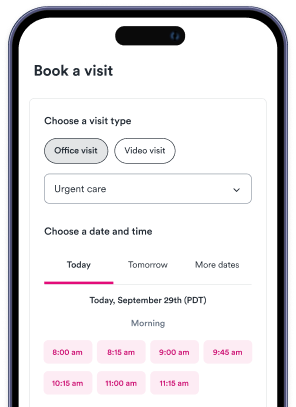
From the clinic or your couch. Find high quality, same-day urgent care for you and your kids. Book an urgent care visit today.
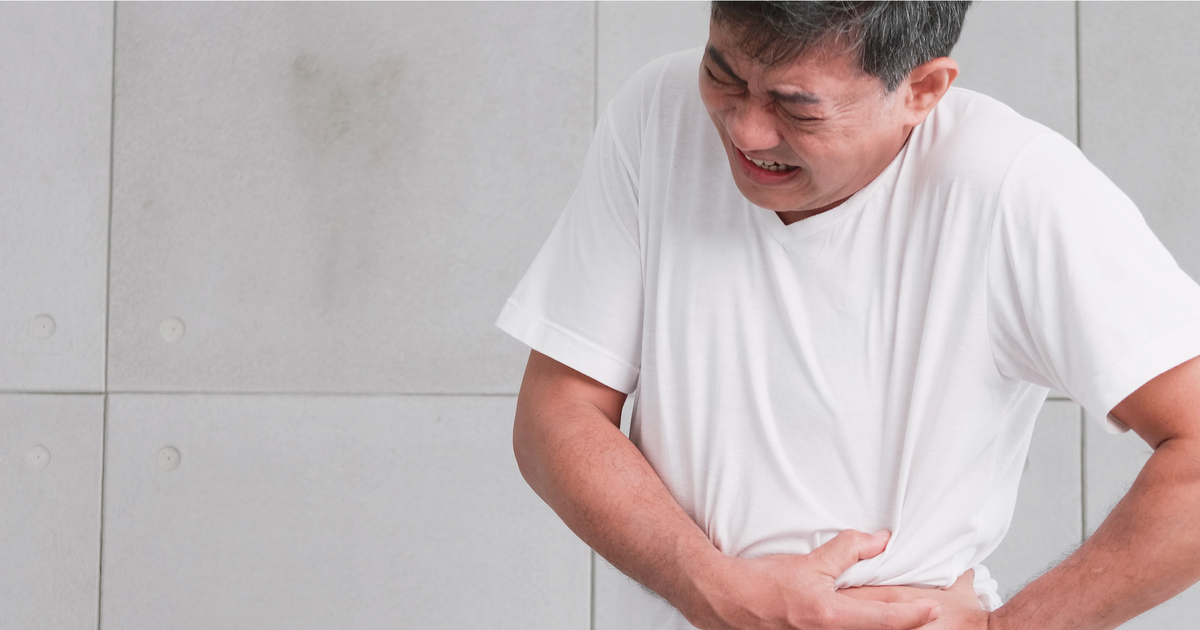
Yes — urgent care can evaluate and treat kidney stones in most non-emergency presentations. If you have flank pain and suspect a kidney stone, an urgent care center can order imaging to confirm the diagnosis, manage your pain, prescribe medications to help the stone pass, and determine whether you need higher-level care. The key question is whether your symptoms are stable enough for urgent care or severe enough to warrant an emergency room visit.
Urgent care is an appropriate first stop for kidney stone symptoms when your pain is manageable, you are not running a fever, and you are not vomiting uncontrollably. The National Institute of Diabetes and Digestive and Kidney Diseases (NIDDK) notes that many kidney stones pass on their own with supportive care — hydration, pain management, and watchful waiting.1 Urgent care can provide exactly that care, along with the diagnostic imaging needed to confirm a stone is present and assess its size and location.
Urgent care cannot perform surgical procedures such as shock wave lithotripsy, ureteroscopy, or percutaneous nephrolithotomy. If imaging shows a large stone (typically over 6–7mm), a stone that is obstructing the kidney, or any signs of infection, the urgent care provider will refer you to a urologist or send you to the ER.
The hallmark symptom is severe, cramping pain that typically starts in the side and back, below the ribs, and may radiate to the lower abdomen and groin. The Urology Care Foundation describes the pain as coming in waves and fluctuating in intensity as the stone moves through the urinary tract.2 Other common symptoms include:
If you also have a fever or chills alongside any of the above, go to the emergency room — this combination may indicate a kidney infection, which is a more serious condition requiring IV antibiotics and hospital-level care.
Urgent care providers use a combination of history, physical exam, and diagnostic tests to confirm a kidney stone diagnosis:1
For stones that are small enough to pass on their own, urgent care treatment typically includes:
Go directly to the emergency room — do not go to urgent care — if you experience any of the following:
An infected obstructed kidney can deteriorate quickly. If this is your presentation, you need IV antibiotics and emergency urology consultation — resources urgent care does not have.
After being evaluated and treated at urgent care, follow these steps to support passage of the stone and prevent complications:
The Urology Care Foundation and NIDDK both emphasize that most kidney stones are preventable with lifestyle modifications:1,2
Kidney stone pain comes on fast and demands immediate attention. If your symptoms are stable, urgent care offers same-day diagnosis and treatment without the long wait of an emergency department. Use Solv to find an urgent care center near you, confirm they have on-site imaging, and get seen today.
If your pain is severe or comes in intense waves, driving is not safe — have someone drive you or take a rideshare. Kidney stone pain often spikes unpredictably, which makes it dangerous to drive. If you also have a fever, are vomiting, or cannot sit upright comfortably, go to the ER rather than urgent care. When in doubt, call for a ride.
Yes, in most cases. Urgent care manages the acute episode — pain relief, diagnosis, and medications to help the stone pass — but follow-up with a urologist is recommended if the stone does not pass within four weeks, if you have recurrent stones, or if imaging shows a stone larger than 5–6mm. A urologist can perform stone composition analysis, evaluate underlying metabolic conditions, and discuss procedures for stones that cannot pass on their own.
The clearest sign is a sudden, complete relief of flank and groin pain. Straining your urine with a mesh strainer or fine gauze will catch the stone — it may look like a small pebble, grain of sand, or crystal, typically 1–7mm in size. Bring any stone you catch to your follow-up appointment for lab analysis. Stone composition identifies the type (calcium oxalate, uric acid, struvite, etc.) and guides targeted prevention strategies.
Urgent care may prescribe NSAIDs or opioids for pain, anti-nausea medication, and tamsulosin (an alpha-blocker) to help the stone pass faster. IV fluids and IV pain medication may also be given on-site.
Most small stones (under 5mm) pass within one to two weeks with hydration and supportive care. Stones between 5–7mm may take up to four weeks. Stones larger than 7mm are unlikely to pass on their own and usually require a procedure.
Calcium oxalate stones are the most common type. After passing one, consider reducing high-oxalate foods — spinach, beets, nuts, chocolate, and soy — and limit sodium and animal protein. Counterintuitively, adequate dietary calcium (from food, not supplements) actually reduces stone risk by binding oxalate in the gut before it reaches the kidneys. A 24-hour urine collection test, ordered by a urologist, can identify your specific metabolic risk factors and guide a targeted prevention plan.
You should seek urgent care for kidney stones if you experience severe pain, especially in your back, side, or lower abdomen, blood in your urine, the inability to urinate, and fever above 100.4°F.
After visiting urgent care for kidney stones, it's important to follow the home instructions provided by your healthcare provider. These instructions may include how to take prescribed and over-the-counter medication, foods and drinks to avoid, how much water to drink, and when to follow up with your primary care physician or urologist. You may also need to undergo follow-up testing to check for any remaining stones or kidney damage.
From the clinic or your couch. Find high quality, same-day urgent care for you and your kids. Book an urgent care visit today.

Medically reviewed
View this article's sources and history, and read more about Solv's Content Mission Statement, editorial process, and editorial team.
Solv has strict sourcing guidelines and relies on peer-reviewed studies, academic research institutions, and medical associations. We avoid using tertiary references.
Solv’s team of medical writers and experts review and update our articles when new information becomes available.
Written by Solv Editorial Team
Medically reviewed by: Dr. Rob Rohatsch, MD
Edited by Solv Editorial Team
Edited by Solv Editorial Team
Edited by Solv Editorial Team
Edited by Solv Editorial Team
Edited by Solv Editorial Team
Edited by Solv Editorial Team
From the clinic or your couch. Find high quality, same-day urgent care for you and your kids. Book an urgent care visit today.