Urgent care near me
Sane-day doctor visits
Feel better faster. Get care today.
From the clinic or your couch. Find high quality, same-day urgent care for you and your kids. Book an urgent care visit today.
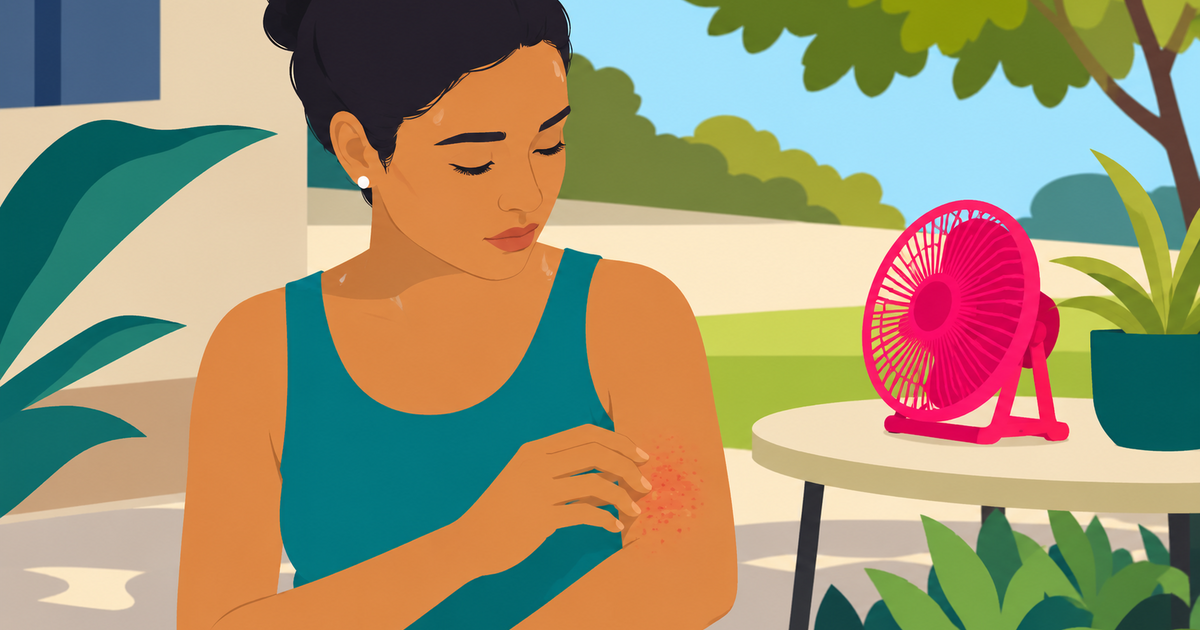
Heat rash — medically called miliaria — is not the same thing as heat exhaustion, and it's not caused by sunburn. It happens when sweat glands become blocked, trapping sweat beneath the skin and triggering an inflammatory response that produces small bumps, itching, and sometimes blisters. According to StatPearls (NIH), heat rash is common in hot, humid environments and typically resolves on its own once the skin cools — but certain forms can impair sweating and raise the risk of heat-related illness if left unaddressed.
Miliaria occurs when eccrine sweat gland ducts become obstructed, according to StatPearls (NIH). This happens when sweat production exceeds the skin's ability to clear the ducts — common during intense heat, high humidity, fever, or in skin folds and areas covered by tight clothing. The blockage causes sweat to leak into surrounding skin layers, producing inflammation. Certain factors increase risk: wearing non-breathable synthetic fabrics, using heavy moisturizers or petroleum-based products that clog pores, exercising intensively in the heat, being on bed rest in a warm environment, and having obesity (which increases skin-to-skin friction in folds). The three main types — miliaria crystallina, miliaria rubra, and miliaria profunda — are classified by the depth of the blockage.
Miliaria crystallina — the mildest type — looks like tiny, clear or white fluid-filled blisters on the skin surface, about 1–2 mm wide. It is not itchy and often goes unnoticed except cosmetically. Miliaria rubra, the most common type in adults and sometimes called prickly heat, produces small red papules (bumps) that may have a central blister and cause itching or a prickling sensation. It most commonly affects the trunk, neck, armpits, groin folds, and under the breasts — areas where skin is covered by clothing or where skin touches skin. Miliaria profunda causes larger, flesh-colored bumps that do not rupture at the surface; this type can significantly impair sweating and is associated with an increased risk of heat exhaustion.
The primary treatment for heat rash is cooling the skin and reducing the factors that caused the blockage. StatPearls (NIH) emphasizes that patients should be encouraged to move to a cool, air-conditioned environment, take cool showers, and wear loose-fitting, breathable clothing (cotton or moisture-wicking fabric). Keep affected areas clean and dry. For itching associated with miliaria rubra, calamine lotion provides relief. A mild topical 1% hydrocortisone cream can help with the inflammation and itch of uncomplicated miliaria rubra. Critically, avoid applying heavy creams, ointments, or petroleum-based products (like petroleum jelly) to heat rash — these further block sweat ducts and worsen the condition.
Yes — these are distinct conditions that can occur together but are not the same thing. Heat rash is a skin condition caused by blocked sweat ducts. Heat exhaustion is a systemic condition caused by the body overheating, characterized by heavy sweating, weakness, cool and pale skin, a fast or weak pulse, nausea, and possible fainting. You can have heat rash without heat exhaustion, and vice versa. However, miliaria profunda can impair sweating across large areas of skin, which reduces the body's cooling capacity and increases the risk of progressing to heat exhaustion or heat stroke in hot conditions.
See a doctor if the rash does not improve within a few days of cooling measures, if signs of infection develop (increased redness and warmth, swelling, pus or yellow discharge, pain, or a hot and spreading redness that suggests cellulitis), if you develop a fever alongside the rash, or if you have a widespread rash covering much of your torso and feel overheated or dizzy — which may indicate impaired sweating from miliaria profunda. Infected heat rash requires oral or topical antibiotic treatment. Heat rash in infants also warrants prompt evaluation given their limited ability to regulate temperature.
If your heat rash looks infected, isn't clearing up, or you're feeling unwell alongside the rash, urgent care can assess it and prescribe antibiotics if needed — often the same day. Find a nearby urgent care and book a visit at https://www.solvhealth.com/.
The most common type (miliaria rubra, or prickly heat) appears as small red bumps or papules — sometimes described as a goosebump-like cluster — most often on the trunk, neck, armpits, groin folds, and under the breasts. The rash may itch or cause a prickling sensation. Miliaria crystallina looks like tiny clear or white water blisters on the skin surface and is usually not itchy. Miliaria profunda produces deeper flesh-colored bumps and is less common.
Miliaria crystallina typically resolves within hours once the skin cools. Miliaria rubra (prickly heat) usually clears within a few days to 1–2 weeks with consistent cooling and skin care. Miliaria profunda may persist longer if the person continues to be exposed to heat and humidity. Recurrence is common if exposure conditions don't change.
The fastest resolution comes from cooling the skin. Move to a cool, air-conditioned environment, take a cool shower or bath, and wear loose, lightweight, breathable clothing. Keep the affected area clean and dry. Calamine lotion or a mild 1% hydrocortisone cream (for miliaria rubra only — not infected rash) can soothe itching. Avoid heavy moisturizers or petroleum-based products that can clog sweat glands further.
No. Heat rash is not caused by an infection and cannot spread from person to person. It results from physical blockage of sweat glands and the inflammatory response that follows. However, if a heat rash becomes secondarily infected with bacteria, that infection can potentially spread through direct contact.
Signs of secondary infection in a heat rash include increasing redness and warmth around the bumps, swelling, pus or yellow discharge from the blisters, a spreading area of skin that feels hot and looks inflamed (cellulitis), and fever. An infected heat rash needs antibiotic treatment — see a doctor or go to urgent care.
From the clinic or your couch. Find high quality, same-day urgent care for you and your kids. Book an urgent care visit today.

Dr. Linda Halbrook is a Board-Certified Family Medicine physician with over 40 years of experience, dedicated to providing comprehensive care to patients across Texas. She retired from practice but currently serves on the Clinical Services Committee of CommonGood Medical, a non-profit organization serving the uninsured in Collin County.
Medically reviewed
View this article's sources and history, and read more about Solv's Content Mission Statement, editorial process, and editorial team.
Solv has strict sourcing guidelines and relies on peer-reviewed studies, academic research institutions, and medical associations. We avoid using tertiary references.
Solv’s team of medical writers and experts review and update our articles when new information becomes available.
Written by Solv Editorial Team
Medically reviewed by: Dr. Rob Rohatsch, MD
From the clinic or your couch. Find high quality, same-day urgent care for you and your kids. Book an urgent care visit today.