Urgent care near me
Wegovy pill from $149/month
The FDA-approved weight loss pill is here
No injections. Just once-daily Wegovy® with proven results—up to 17% average weight loss in trials.
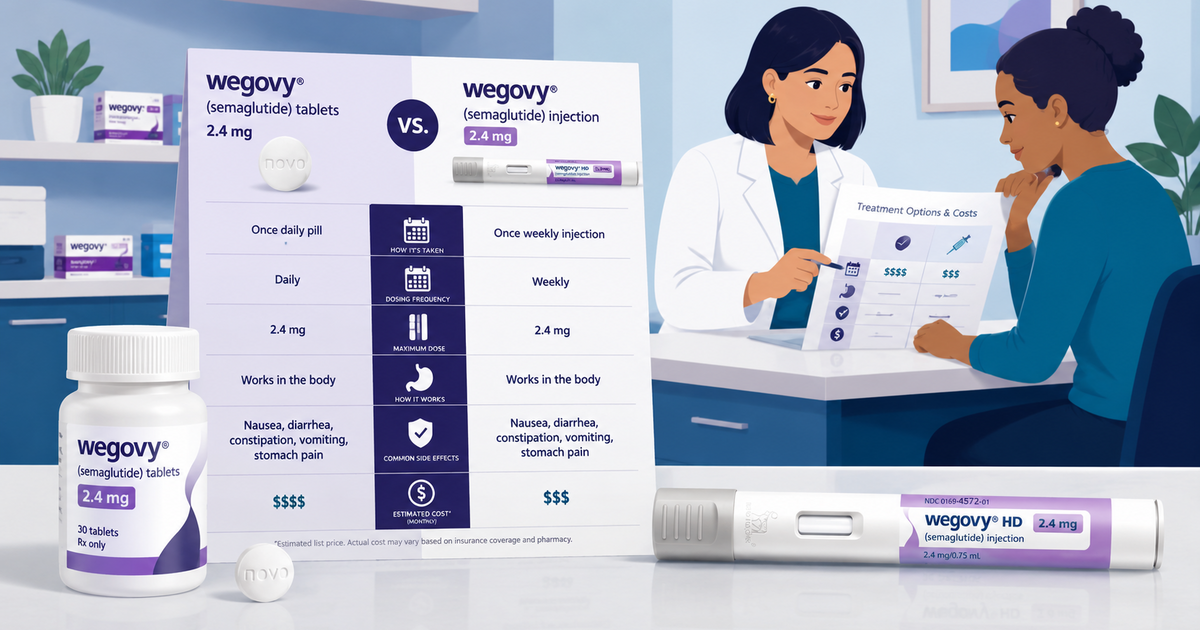
Bottom line: The new Wegovy® pill (oral semaglutide 25 mg once daily) and the Wegovy® weekly shot (semaglutide injection 2.4 mg) help people lose a similar amount of weight on average. Trials show about 14% average weight loss with the pill over 64 weeks and ~15% with the injection over 68 weeks, when paired with healthy eating and activity. Your best choice comes down to your routine, cost and coverage, and how you prefer to take medicine.
Feature | Wegovy pill | Wegovy shot |
|---|---|---|
How you take it | One tablet daily in the morning on an empty stomach with ≤ 4 oz water; wait ≥ 30 minutes before any food, drink, or other oral meds | One injection weekly (abdomen, thigh, or upper arm) |
Typical dose ramp | 1.5 mg daily, increased every ~30 days to a max 25 mg | Titrated weekly to a maintenance dose of 2.4 mg |
Average weight loss in trials | ~14% at 64 weeks | ~15% at 68 weeks |
FDA-approved uses | Chronic weight management in adults with obesity/overweight; reduces risk of heart attack, stroke, or CV death in adults with CVD | Same adult approvals; also approved for chronic weight management in adolescents ≥12 years with obesity |
Common side effects | Nausea, diarrhea, vomiting, constipation, abdominal pain, headache, fatigue (class-typical) | Same class-typical profile |
Who should avoid | People with personal/family history of medullary thyroid carcinoma or MEN 2, or allergy to semaglutide | Same |
Typical out-of-pocket offers* | Cash-pay $149–$299/month by dose; as low as $25/month with eligible commercial insurance | Cash-pay commonly $349/month; as low as $25/month with eligible commercial insurance |
Availability | Rolling out at major U.S. pharmacies and via select telehealth platforms | Widely available |
*Manufacturer savings and cash-pay offers change; check your pharmacy or prescriber for current pricing.
Yes — very close. In the pivotal oral study (64 weeks), adults taking the Wegovy pill lost an average of ~14% of body weight versus ~2% on placebo; nearly 1 in 2 lost ≥15%, and about 1 in 4 lost ≥20%. In Wegovy injection studies (68 weeks), adults lost ~15% on average versus ~2–3% on placebo. Individual results vary, and both are meant to be used with a reduced-calorie diet and increased physical activity.
Additionally, both the pill and injection carry an FDA indication to reduce the risk of major cardiovascular events (CV death, heart attack, or stroke) in adults with established cardiovascular disease and either obesity or overweight.
You may be a candidate for either form if you’re an adult with obesity (BMI ≥30) or overweight (BMI ≥27) plus a weight-related condition (such as high blood pressure or high cholesterol). The injection is also approved to help adolescents 12 years and older with obesity manage weight; the pill isn’t approved for people under 18 at this time. Always review your medical history and medications with a clinician before starting.
Answer: Take one tablet first thing in the morning on an empty stomach with no more than 4 oz of water, then wait at least 30 minutes before eating, drinking (including coffee), or taking any other oral medicines. If you miss a dose, skip it and take the next day’s dose as usual. Your provider will typically increase your dose every 30 days to a maximum of 25 mg. Don’t crush, cut, or chew the tablet.
Why this matters: Semaglutide can’t be absorbed well if food, beverages, or other pills are in the stomach. Sticking to the timing rules preserves effectiveness.
Answer: Inject once weekly, the same day each week, into the abdomen, thigh, or upper arm (subcutaneously). Dosing is gradually increased to the 2.4 mg maintenance dose, unless you and your clinician decide otherwise. Your provider will coach you on pen use and dose-escalation schedules.
Important: Wegovy slows stomach emptying, which can affect absorption of other oral medicines — talk to your clinician about timing if you take morning meds or drugs that must pass through the stomach quickly.
Both forms share class-typical side effects and safety considerations:
Most common: Nausea, vomiting, diarrhea, constipation, abdominal pain, headache, dizziness, fatigue, and reflux. These tend to be most noticeable during dose increases and often improve with time.
Serious risks (uncommon but important):
Pancreatitis: severe, persistent abdominal pain (may radiate to back). Stop the medicine and get care if this happens.
Gallbladder problems (gallstones/gallbladder inflammation).
Kidney problems related to dehydration from GI symptoms.
Diabetic retinopathy changes in people with type 2 diabetes.
Increased resting heart rate.
Mental health changes, including depression or suicidal thoughts — seek care urgently for new or worsening symptoms.
Pulmonary aspiration risk during surgery or deep sedation due to delayed gastric emptying — tell your surgical and anesthesia teams that you take Wegovy; they may give you special instructions on when to hold doses.
Boxed warning: In rodents, semaglutide caused thyroid C-cell tumors. Don’t use Wegovy if you or a family member has medullary thyroid carcinoma (MTC) or MEN 2. Report neck lumps, hoarseness, trouble swallowing, or shortness of breath.
Pregnancy and breastfeeding: Wegovy can harm an unborn baby; people planning pregnancy are advised to stop Wegovy 2 months before trying to conceive. Breastfeeding isn’t recommended while taking the tablets. Discuss risks and timing with your clinician.
Drug interactions and combinations: Do not use Wegovy with other semaglutide products (e.g., Ozempic/Rybelsus) or other GLP-1 receptor agonists. Seek medical advice before combining with insulin or sulfonylureas due to hypoglycemia risk.
With commercial insurance: Many plans still review GLP-1 coverage case-by-case, but manufacturer savings programs can bring copays for either form as low as $25/month for eligible patients when the drug is covered.
Cash-pay (no insurance): Wegovy pill currently lists $149–$299/month depending on dose; the injection often runs around $349/month for self-pay offers. The list price insurers use for coverage decisions is similar to the injection’s list price (about $1,349/month). Actual out-of-pocket costs vary by dose, pharmacy, and any promotions.
Tip: If you’ve been quoted a high price at one pharmacy, ask your prescriber about savings cards and check reputable pharmacies again — prices and promotions can change quickly. If you prefer virtual care, many clinicians can prescribe Wegovy through telemedicine; with Solv, you can also find nearby clinics for in-person help with titration, side effects, or injection training.
The starter dose of the Wegovy pill is now stocked at pharmacies nationwide, with higher doses rolling in shortly after launch, according to the manufacturer and national reporting. It’s also available through select telehealth providers. The injection has broad pharmacy availability as well. Supply has improved compared with early shortages, but demand can vary by location and dose strength.
Avoid unapproved versions. The FDA warns that compounded or “research-only” GLP-1 products may be unsafe or dosed incorrectly and haven’t been reviewed for quality or effectiveness. Always fill prescriptions at state-licensed pharmacies and check that your product is the FDA-approved brand your clinician prescribed.
Zepbound® (tirzepatide) weekly injection is a dual GIP/GLP-1 medicine also FDA-approved for chronic weight management in adults. Like Wegovy, it carries a boxed thyroid-tumor warning and similar GI side effects. Your clinician may discuss it if you’re open to injections and seeking another option.
Only Wegovy currently offers an FDA-approved oral form for weight loss (the 25 mg pill). Other oral semaglutide tablets (e.g., doses used for type 2 diabetes) are not approved for weight management.
Choosing between them: If you hate needles or prefer daily routines, the pill can be a great fit — just be sure you can wait 30 minutes before coffee/breakfast and other oral meds every morning. If you prefer a weekly routine and don’t mind injections, the shot may be simpler. Cost, coverage, side effects, and how your other medicines fit into your schedule often decide it.
Start low, go slow. Dose increases are purposeful; they help your GI tract adjust and can reduce nausea. Don’t rush titration without talking to your provider.
Stay hydrated and protein-forward. Fluids, small frequent meals, and prioritizing protein can help nausea and support lean mass while losing weight. (Your provider or dietitian can personalize this.)
Plan for procedures. Tell surgeons and anesthesiologists you’re on semaglutide; you may get special instructions about holding doses before sedation.
Expect long-term treatment. Obesity is chronic. Stopping GLP-1 therapy often leads to weight regain; your care team can help with long-term plans that fit your life.
The Wegovy pill is taken orally once daily, while the Wegovy shot is an injection taken once weekly. Both have similar effectiveness in terms of weight loss, with trials showing about 14% average weight loss with the pill over 64 weeks and about 15% with the injection over 68 weeks. The choice between the two often comes down to personal preference, cost, and insurance coverage.
Wegovy is suitable for adults with obesity or overweight, along with a weight-related condition such as high blood pressure or high cholesterol. Additionally, the Wegovy injection is approved for adolescents aged 12 and above with obesity. However, the pill is not approved for use in people under 18.
Common side effects for both the Wegovy pill and the injection include nausea, vomiting, diarrhea, constipation, abdominal pain, headache, dizziness, fatigue, and reflux. These side effects are typically most noticeable during dose increases and often improve over time.
The cost of Wegovy varies depending on whether you have insurance and the specific insurance plan. With eligible commercial insurance, the cost can be as low as $25 per month. For those paying out of pocket, the Wegovy pill costs between $149 and $299 per month depending on the dose, while the injection typically costs around $349 per month.
Yes, the Wegovy pill is available at major U.S. pharmacies and through select telehealth platforms. The Wegovy injection is also widely available. It's important to always ensure that the product you receive is the FDA-approved brand prescribed by your clinician.
No injections. Just once-daily Wegovy® with proven results—up to 17% average weight loss in trials.

Dr. Linda Halbrook is a Board-Certified Family Medicine physician with over 40 years of experience, dedicated to providing comprehensive care to patients across Texas. She retired from practice but currently serves on the Clinical Services Committee of CommonGood Medical, a non-profit organization serving the uninsured in Collin County.
Medically reviewed
View this article's sources and history, and read more about Solv's Content Mission Statement, editorial process, and editorial team.
Solv has strict sourcing guidelines and relies on peer-reviewed studies, academic research institutions, and medical associations. We avoid using tertiary references.
Solv’s team of medical writers and experts review and update our articles when new information becomes available.
Written by Solv Editorial Team
Medically reviewed by: Dr. Rob Rohatsch, MD
Edited by Solv Editorial Team
Edited by Solv Editorial Team
Edited by Solv Editorial Team
Edited by Solv Editorial Team
Edited by Solv Editorial Team
No injections. Just once-daily Wegovy® with proven results—up to 17% average weight loss in trials.